


Ready to drive incremental growth with influencers?
If ditching the randomness of influencer campaigns and building a predictable, ROI-first influencer program sounds like a plan. Consider talking to our team!


Forensics
Find out how this beauty brand wins shelf space, fan loyalty, and ad performance against billion-dollar competitors by working with influencers.

Contents
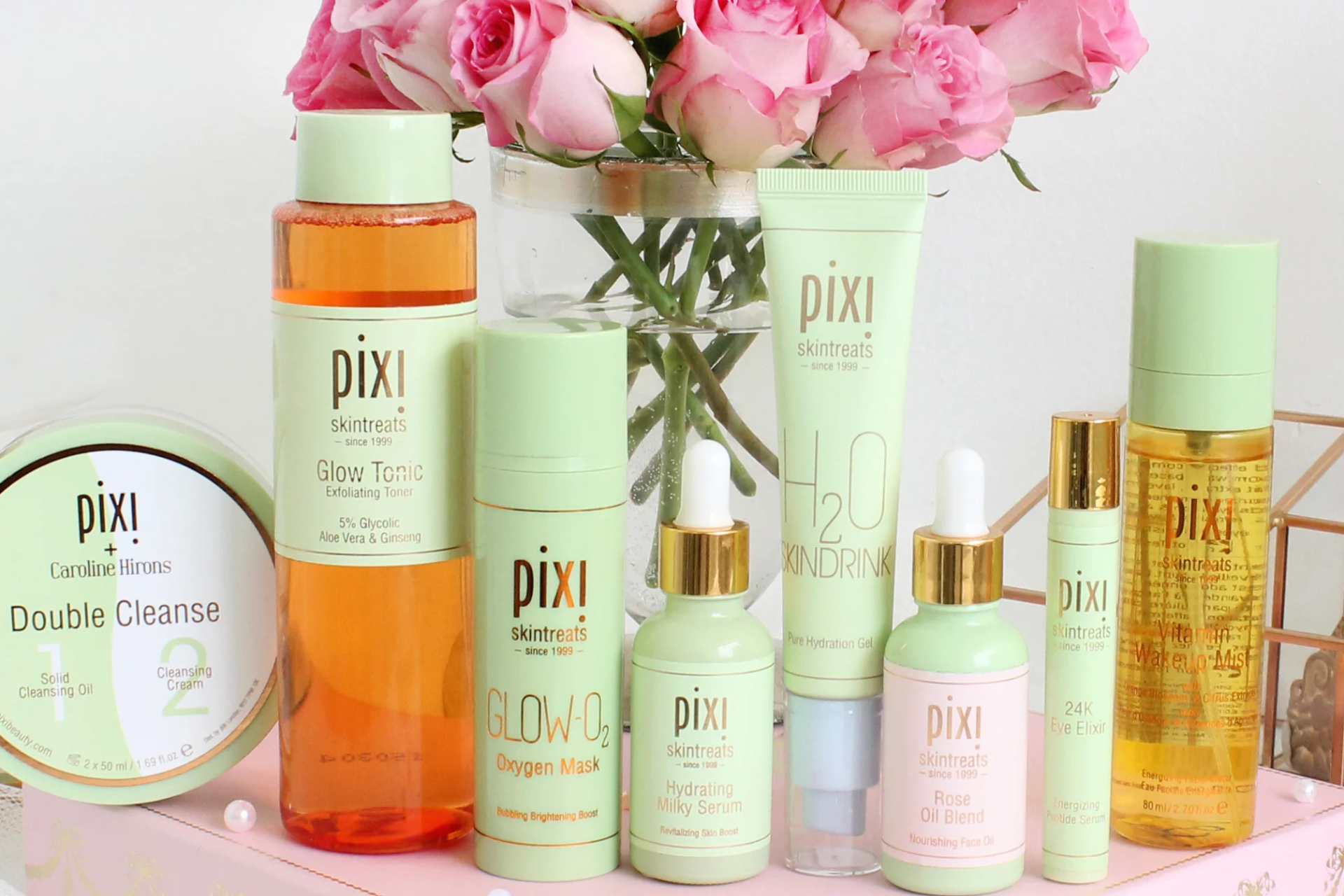
We have done influencer marketing breakdowns for a few beauty brands in the past, including Rhode, Glossier, and Topicals. If you read any of them, you might think Pixi beauty is no different. They all host influencer events. They all do PR mailers. They all run ambassador programs. On the surface, it really does look the same across the board.
But there are nuances to every playbook. For example, how a brand picks who to invite to events. How they brief creators for paid ads. How they design their application form. Every brand makes different choices inside these tactics, and those choices are what separate a program that just exists from one that actually drives results.
In this breakdown we're covering Pixi Beauty's influencer program. Pixi has been selling skincare since 1999, and their influencer program has had time to settle into a system that works across cities, product launches, and retail partners. We break down five parts of it:
If you sell snacks, sneakers, supplements, or kitchen tools, almost everything in here can give you ideas as well.
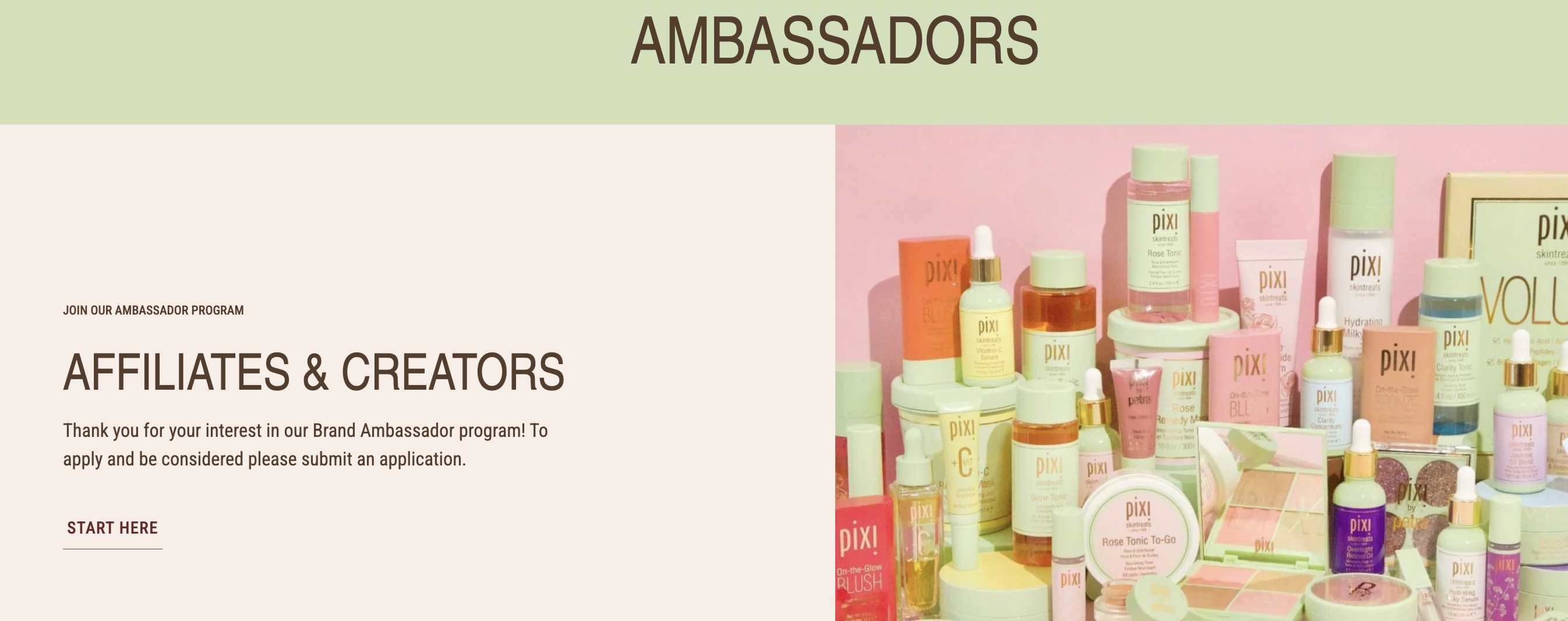
Pixi runs its influencer ambassador program through an application process. The landing page is one short paragraph and a button. It leads to a Google Form. That is the whole journey from interest to application.
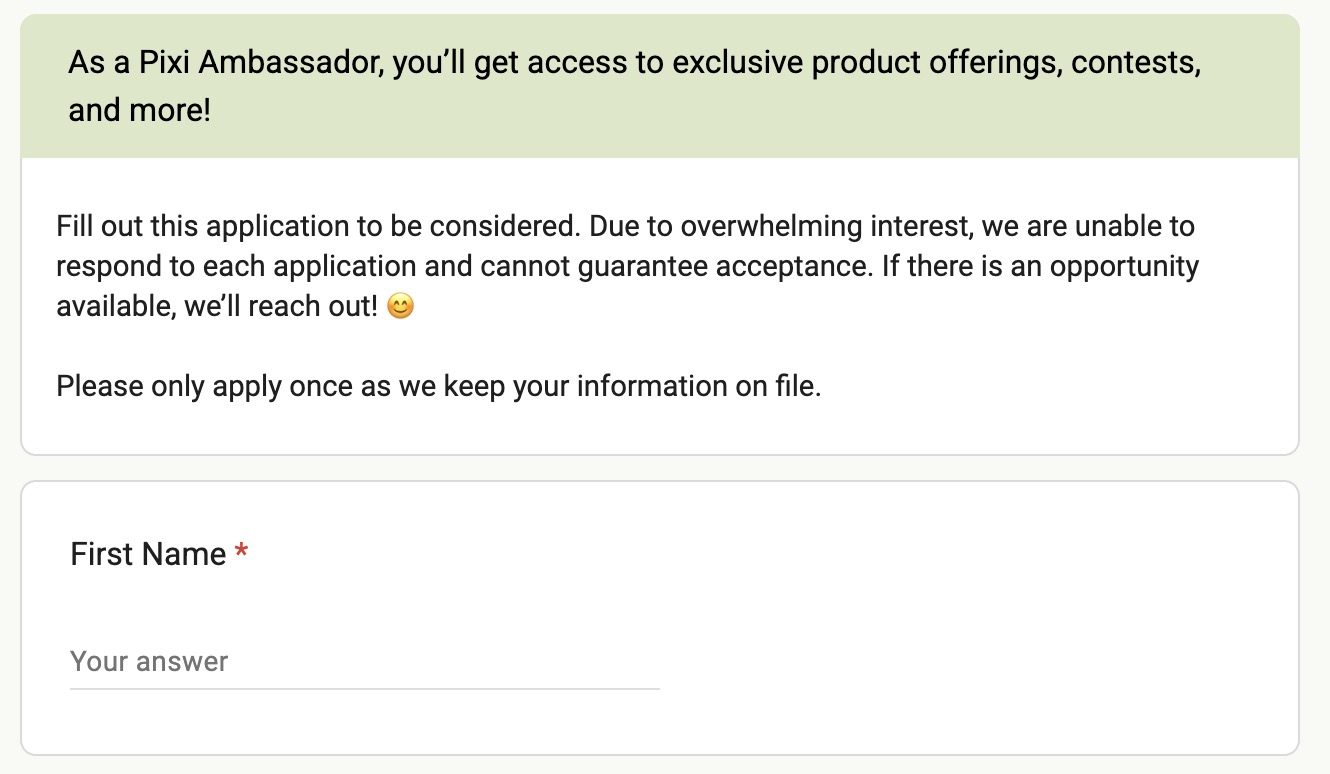
The form asks for the basics: name, email, links to Instagram, YouTube, and TikTok, follower counts on Instagram and TikTok, and the applicant's full shipping address.
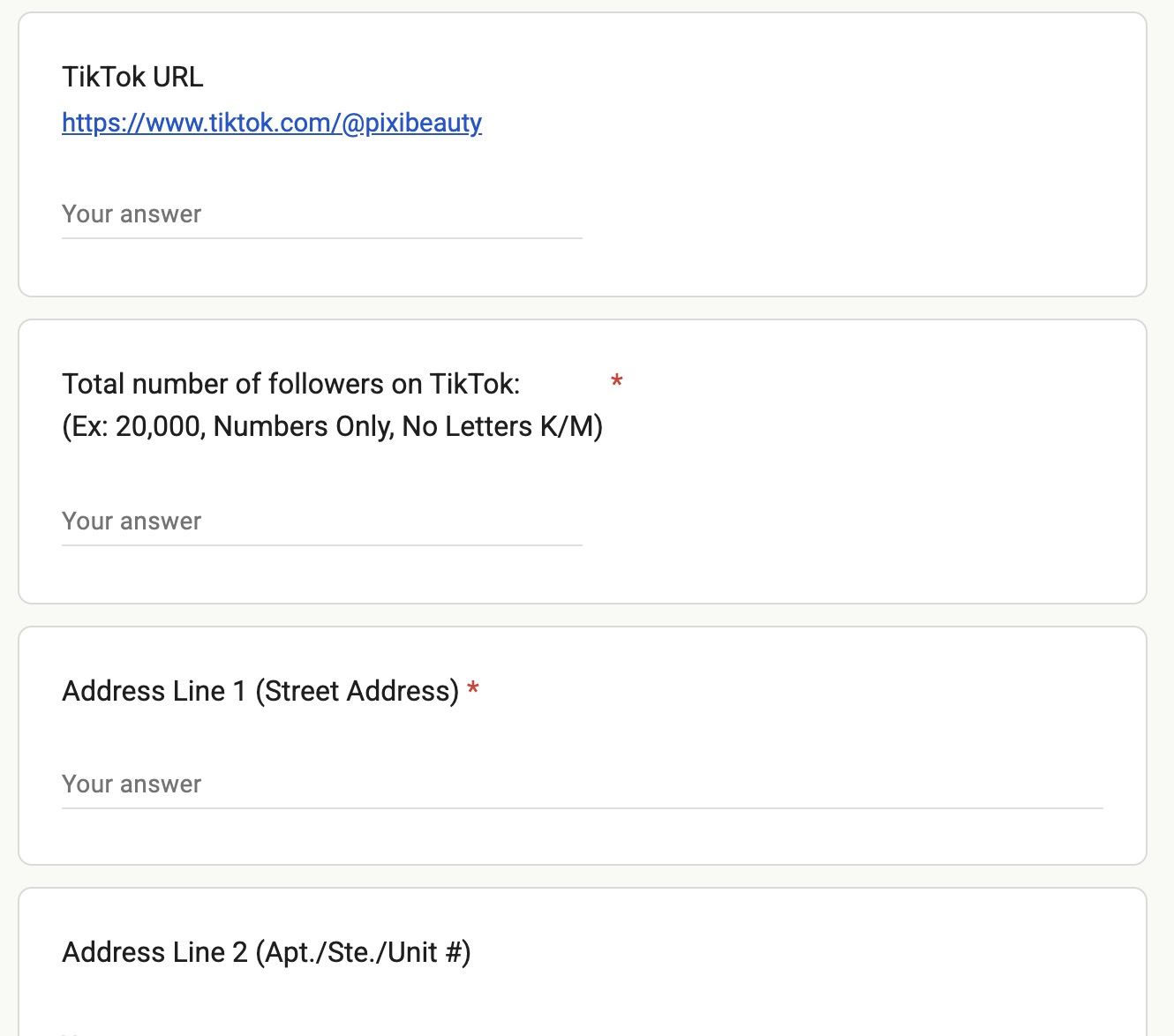
The address ask is interesting. Most brands collect it only after they accept a creator. Pixi asks for it upfront, and the benefit is operational.
When someone is accepted, the team can ship a welcome package the same week without going back for missing details. The cost is a slightly longer form, which probably filters out the more casual applicants.
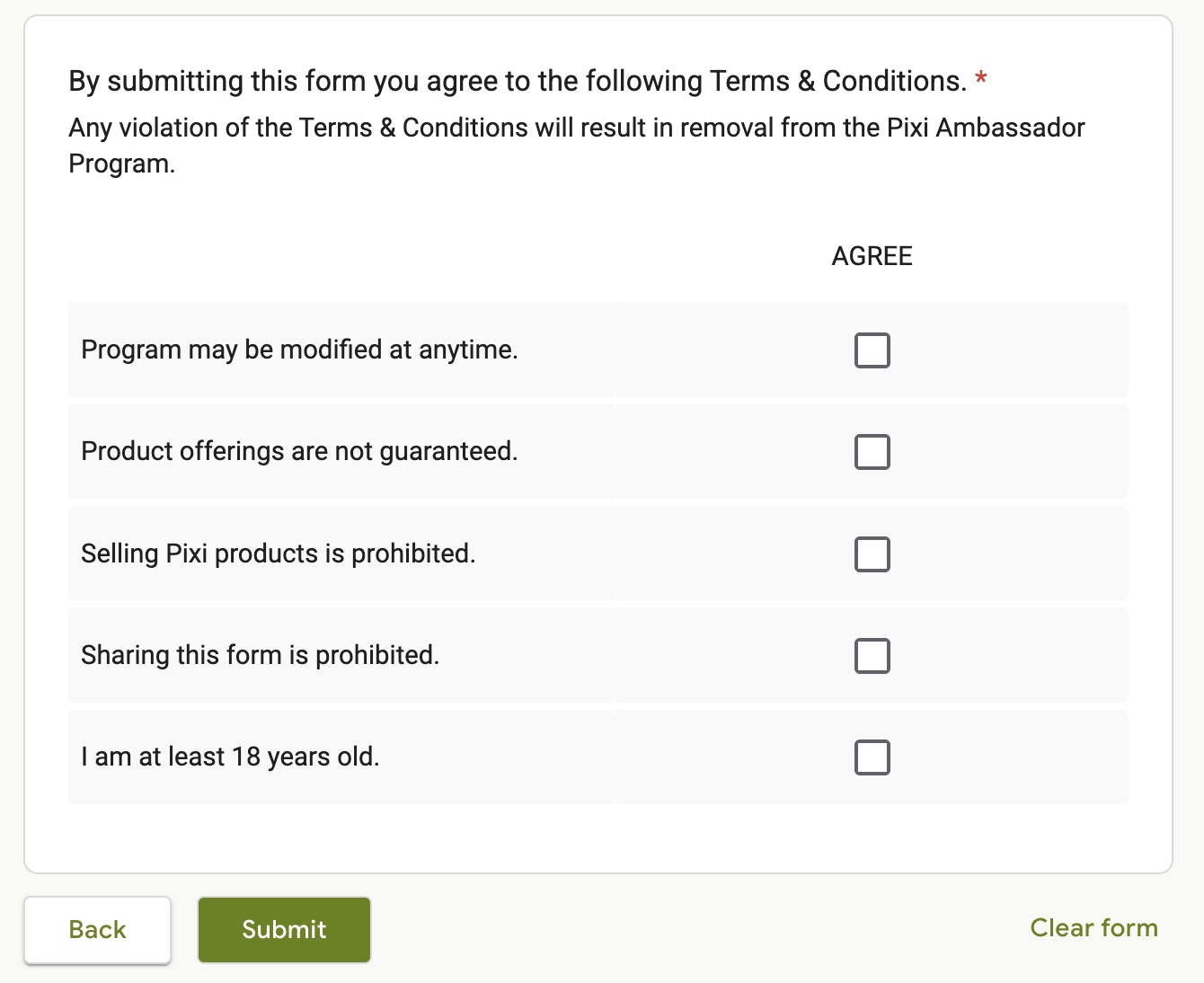
The terms creators agree to are short and clear. Do not resell Pixi products, do not share the form, and you must be at least 18. Nothing flashy.
There is one area where Pixi leaves value on the table.
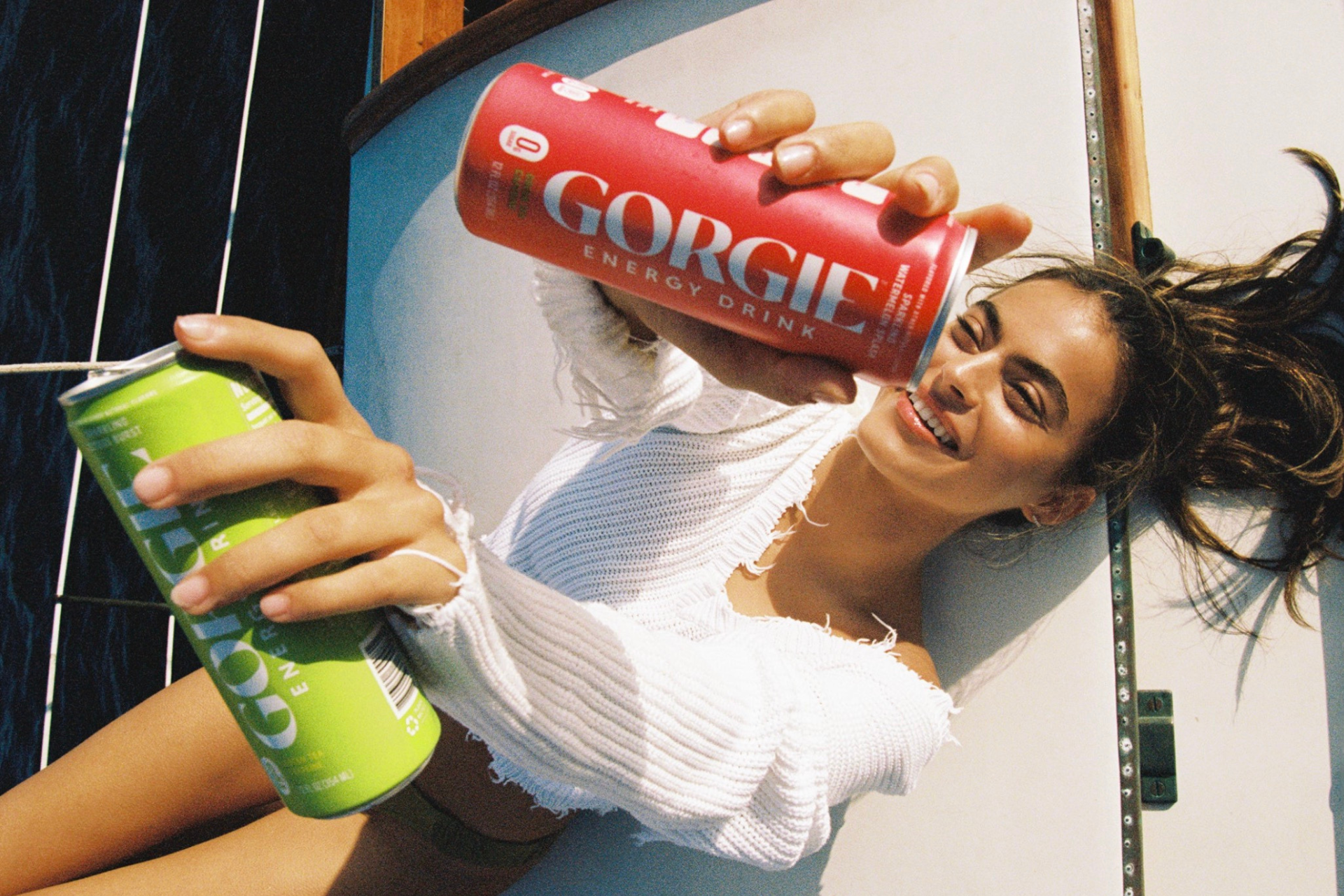
The landing page itself does almost no selling of the program. There is no list of perks, creator quotes, or any pictures to show what the experience of being a Pixi ambassador looks like. Compare this to Poppi or Gorgie, where the ambassador page is built like a pitch.
Pixi's page assumes the creator already wants in. That works for creators who are already fans of the brand, but it likely loses creators who are on the fence and need a reason to apply.
👉 Collect shipping addresses inside the application form, not after acceptance. It makes the form longer but lets you ship a welcome kit the same week someone is accepted, with zero back-and-forth.
👉 Set honest expectations about your response rate inside the form. A single line saying you cannot reply to every applicant saves your team hours and stops creators from chasing for a status update. If there is a timeline in which they can expect a reply, mention that.
👉 On your landing page for creators list the perks, name the program, and show real ambassadors on the page so creators who are on the fence have a reason to apply.
Pixi runs a steady calendar of in-person events for creators across different cities. Some are tied to a product launch (like the recent Summer '26 collection, or Pixi on the Glow collection).
Others are built around a cultural moment they want to own with a specific audience. For example, a Mother's Day event when they wanted to get into the new-moms community.
.jpg)
These events give creators a fresh, organic reason to post about the brand without it feeling like another ad.
There are a few things we noticed across multiple Pixi events from the pictures we saw online.
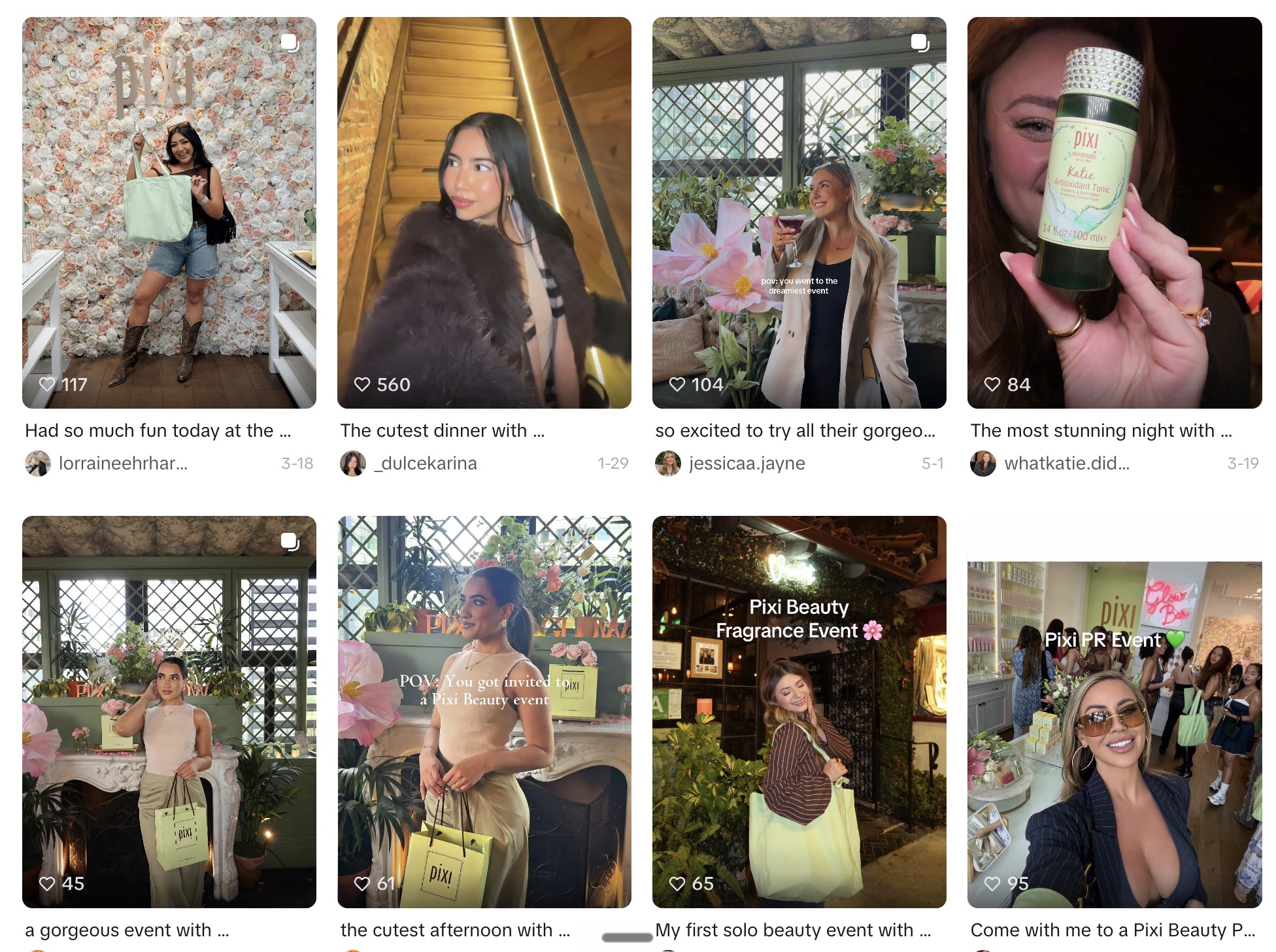
The spaces are heavily styled and on-brand. The colors, florals, signage, and table setups all carry the Pixi look, so anywhere a creator points their phone, the brand is already in the frame. Most events also include a dedicated photo moment (usually a branded wall or backdrop) where every attendee can grab a great shot with the brand name in the background.
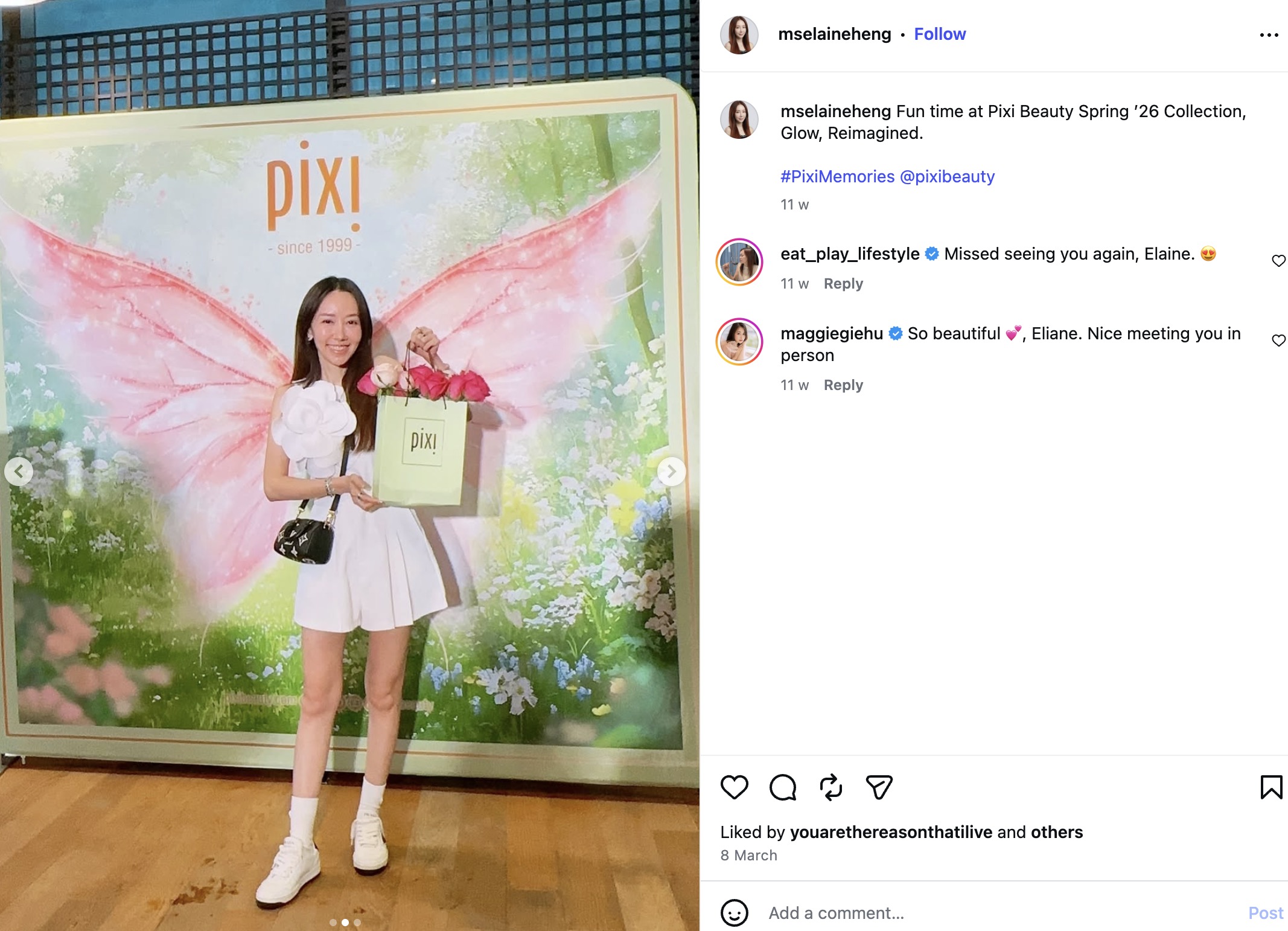
When people (the online audience) see five different creators post from the same event, each with a slightly different angle in front of the same Pixi backdrop, the brand starts to register in a way that one post never could.
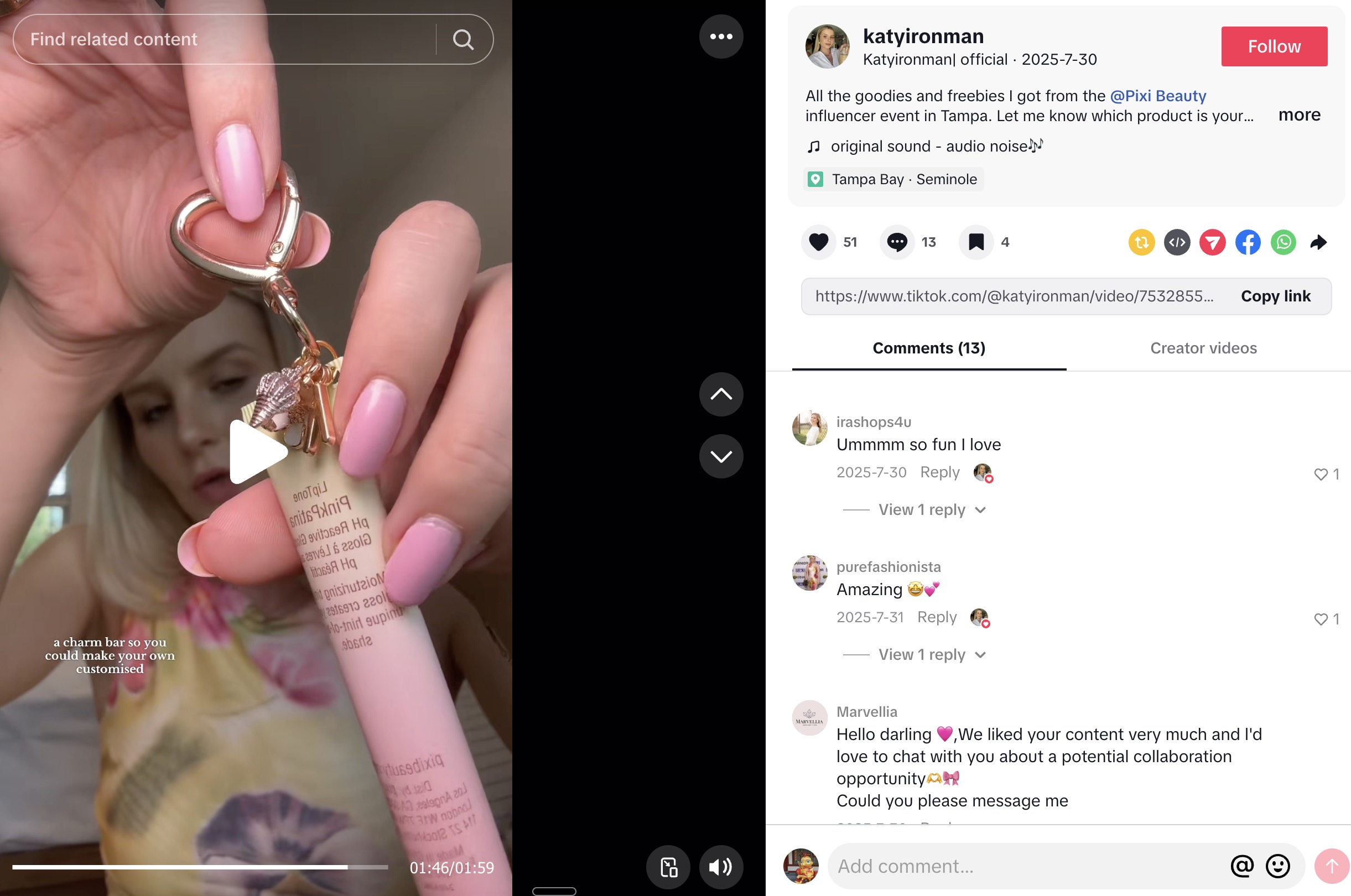
Most of the events we looked at included a small hands-on activity such as, making bag charms, or building flower bouquets.
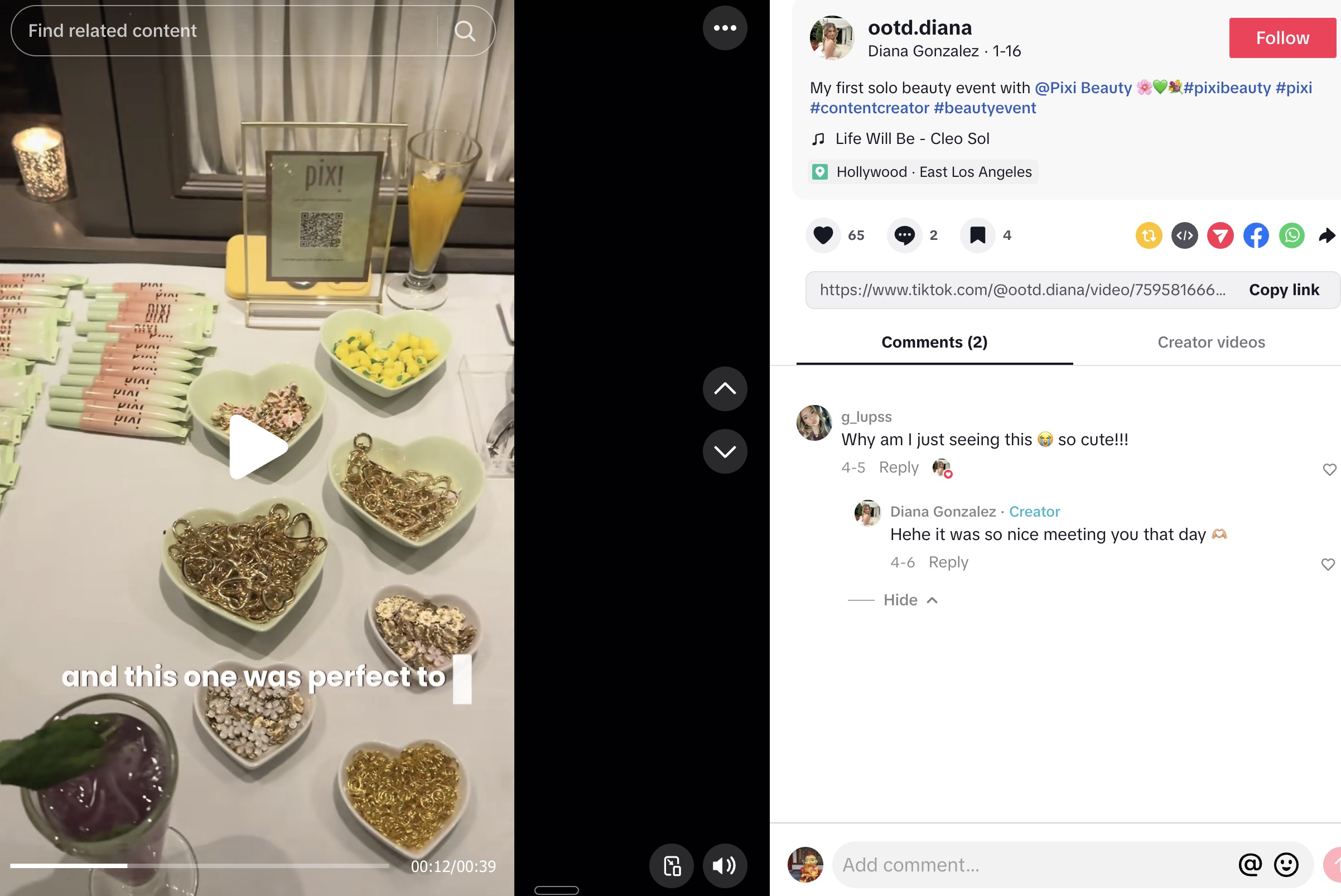
It gives creators content they wouldn't otherwise have. "Here's the charm I picked" or "look at the bouquet I made" is more interesting to post than another shot of holding a gift bag.
It also gets creators talking to each other. We noticed a lot of group photos, creators with creators, not just creators with products.
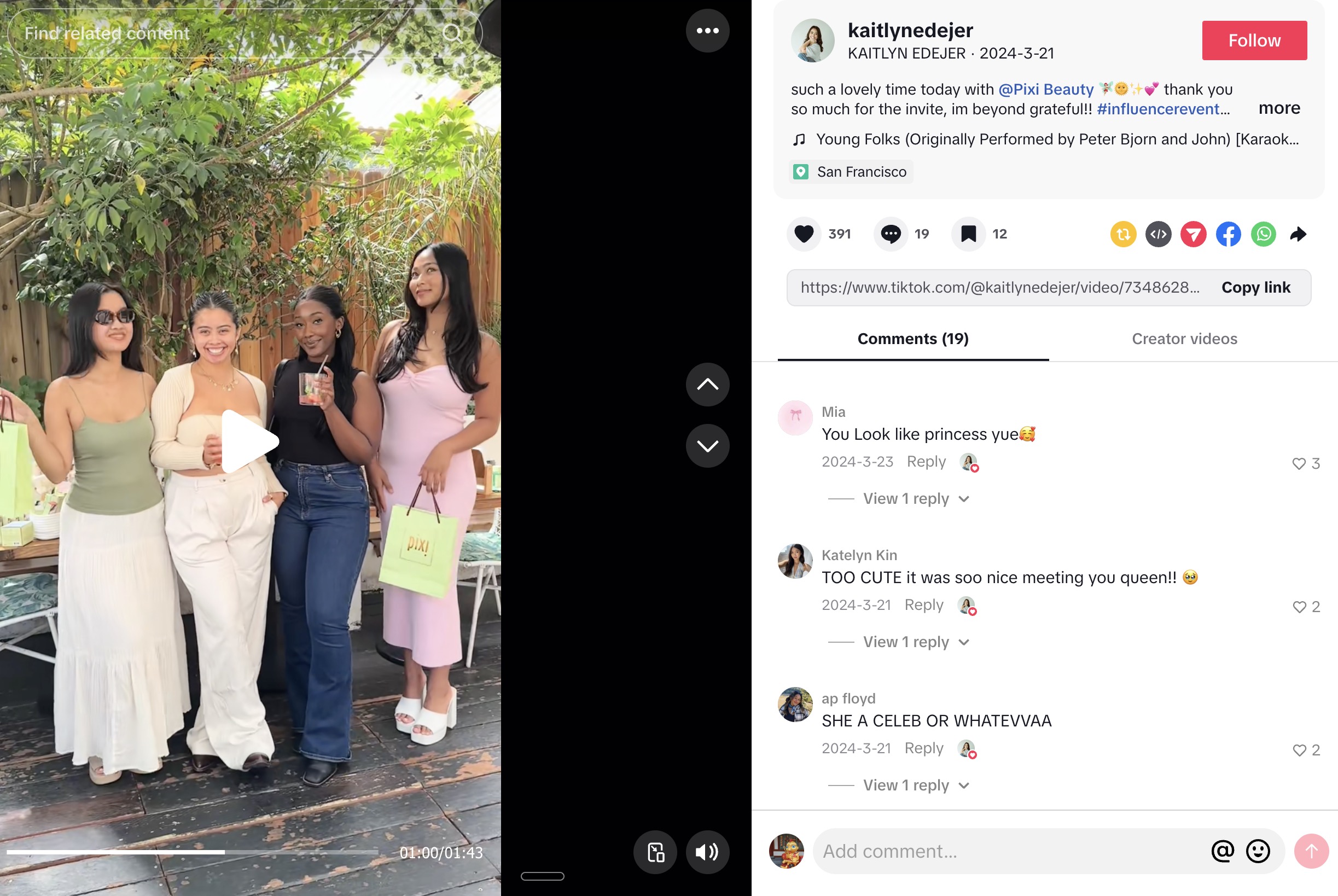
This matters because what keeps good influencers loyal to a brand today is the feeling of being part of a group they actually want to belong to. Free product and a commission bump help, but they don't build that. Events that engineer creator-to-creator interaction do.
We don't know exactly how Pixi decides who to invite to each event. Our best guess is that it skews toward creators who've driven results before, or who already talk about the brand without prompting. That works two ways at once: it rewards the people earning their spot, and it gives everyone else on the roster a reason to keep showing up for the brand in hopes of making the next list.
👉 Tie every event to a moment, not just a product. Pick the reason first: a launch, a holiday, an audience you want to win. If the only thing creators can post about is your SKU, you're asking them to make another ad. If they can post about Mother's Day or a seasonal launch with your brand naturally in the frame, It feels like they are sharing their own content, and your brand is naturally plugged into it.
👉 Build one shared visual asset into every event, something every attendee will naturally photograph. Some ideas for you to steal:
👉 The creator-to-creator relationships built at your event are what keep your roster loyal long after the campaign ends. Make sure you have designed the event around an activity where creators can interact with each other without feeling rushed.
A big chunk of Pixi's paid ads on Meta are not traditional brand creative. They are built on content that came from their creators. Looking at Pixi's ad library, a clear pattern shows up. Many of the ads are short clips of a single creator using or showing a product.
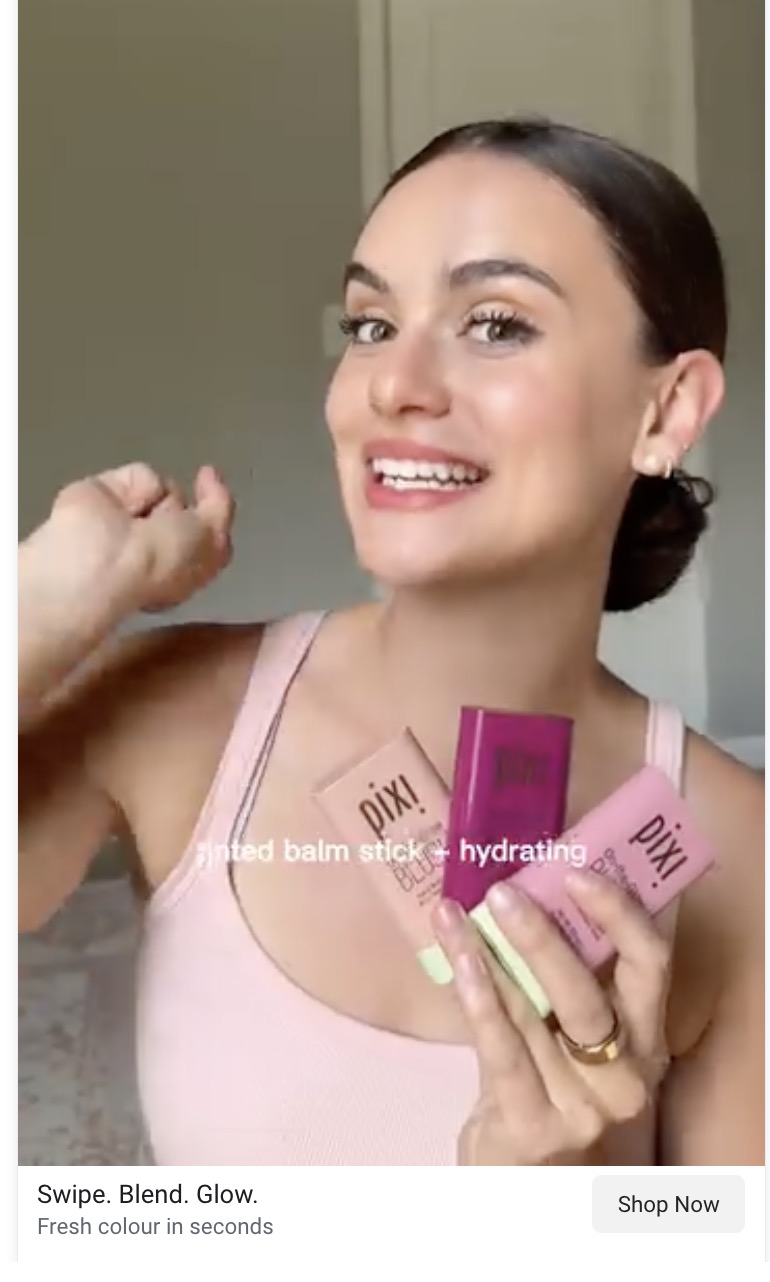
The ad feels like a recommendation from someone you might follow, not a brand interrupting your feed. Performance ads built on creator content tend to beat traditional brand creative on both click-through rate and cost per acquisition, because the format matches the environment it sits in.
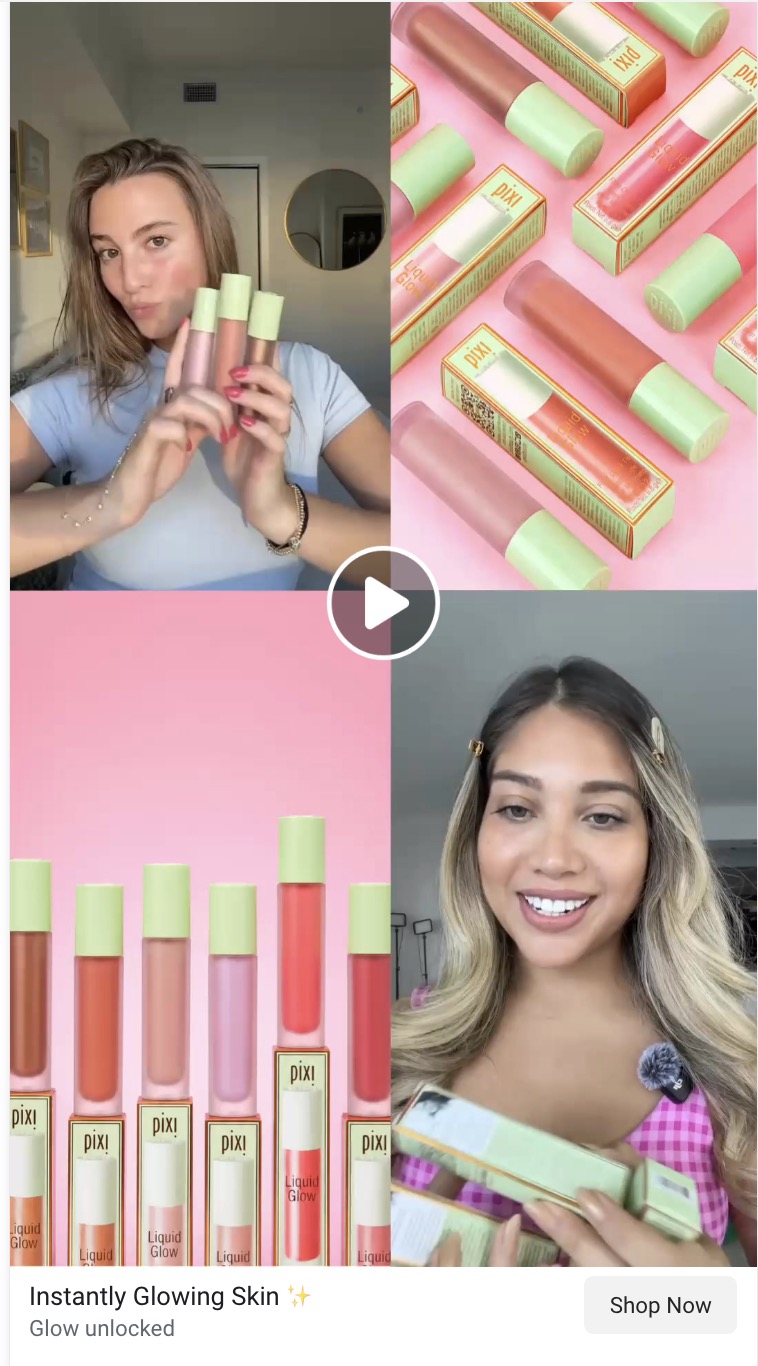
For the creator, this is one of the most valuable things a brand can offer. They get paid for content they were going to make anyway, often with a usage fee on top of the original collaboration. For Pixi, every good creator post becomes a potential ad asset, which means their content library grows every time they work with someone new.
👉 Whenever you want to use creator content in your ads, always ask for usage rights. You might have to pay an extra fee for it, depending on the number of days you are going to run the ads. Remember that you can't run ads on creator content just because your product features in there, or you're paying them affiliate commission on it.
👉 Test creator-made content against your traditional brand creative. Run them side by side in the same ad set and let cost per acquisition pick the winner.
👉 Brief creators with ad use in mind. Ask for a hook in the first three seconds and a clear call to action at the end, so the content can run straight into paid without a re-edit.
Reposting is one of the lowest-effort ways to multiply the return on every creator collaboration you already paid for. But a lot of brands are not doing that. They onboard a creator, the creator posts about the product, the post does well on the creator's profile, and then nothing. The content just sits there. The brand never repurposes it.
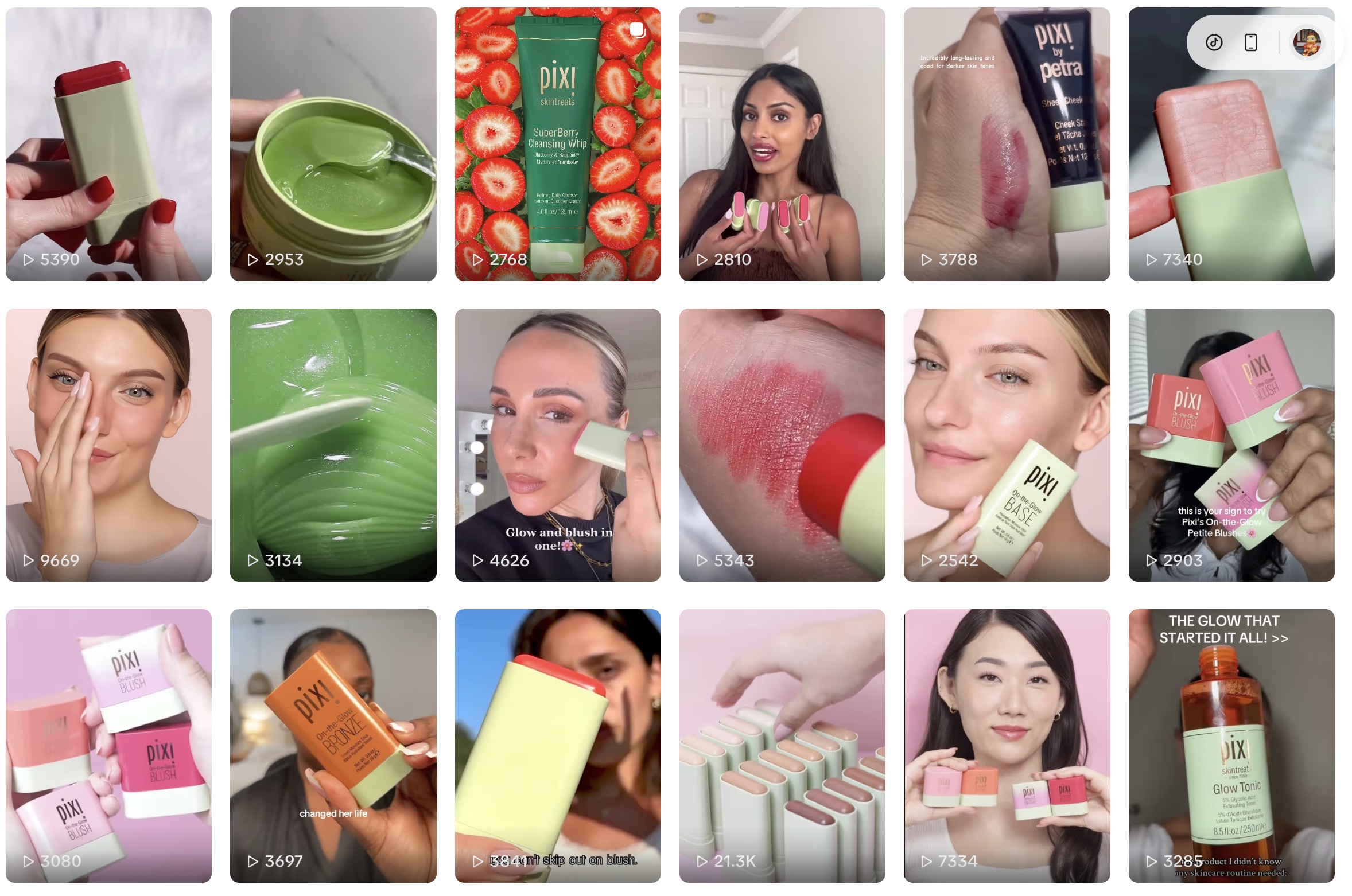
But not Pixi. They regularly repost creator content on their own social accounts and tag the original creator. It is one of the simplest things a brand can do with influencer marketing, and it pays off in three ways at once.
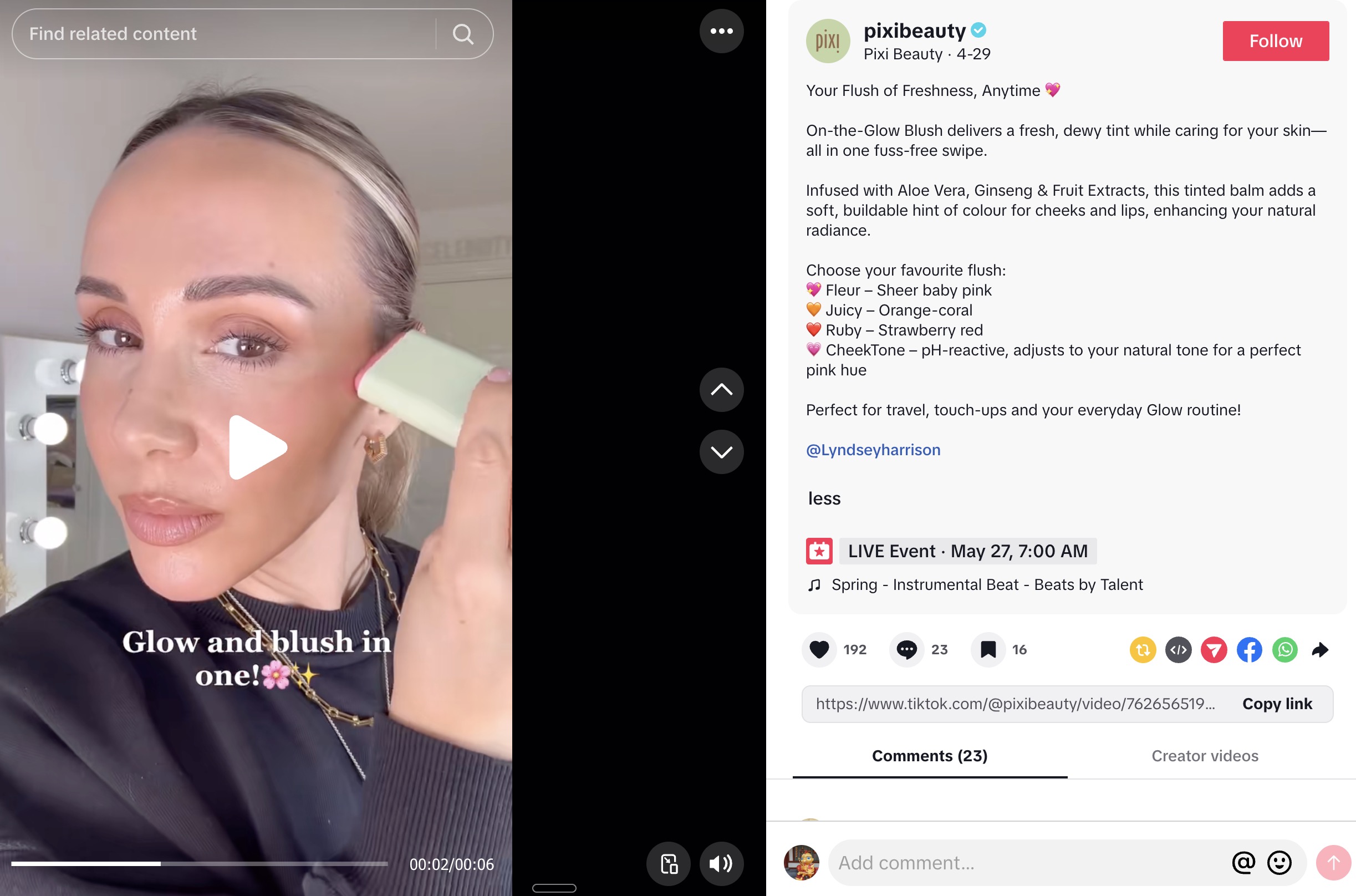
The reason this is underused at most brands is not that it is complicated. But things get busy. New launches come up, new creators get onboarded, and the content that came in last month gets forgotten. Have someone on the team own the repost flow, and there is a simple system to track what has come in and what is worth reposting.
👉 Make repost rights part of every creator agreement upfront. Get permission to use the content on your own organic feed, not just in your ads, so nothing sits in legal limbo when you want to share it.
👉 Set up a weekly slot on your social calendar that is reserved for reposting creator content. Without a fixed slot, the content gets buried under launches and announcements.
👉 Always tag and credit the original creator when you repost. It costs nothing, it makes the creator feel valued, and it often gets them to engage with or reshare your post.
When a brand lands on the shelf at a major retailer like Target, the work is only half done. The other half is selling fast enough to keep that shelf space. If the product moves slowly in the first few months, the retailer pulls it. So driving people into Target stores to actually buy is in the brand's interest, especially in the early months after launching.
Pixi leveraged influencers to do exactly this.
Some creators went to a Target and filmed inside the store, walking up to the Pixi section and showing the product on the shelf. That content does the most direct job because it shows a real person finding it in the exact place you want viewers to find it.
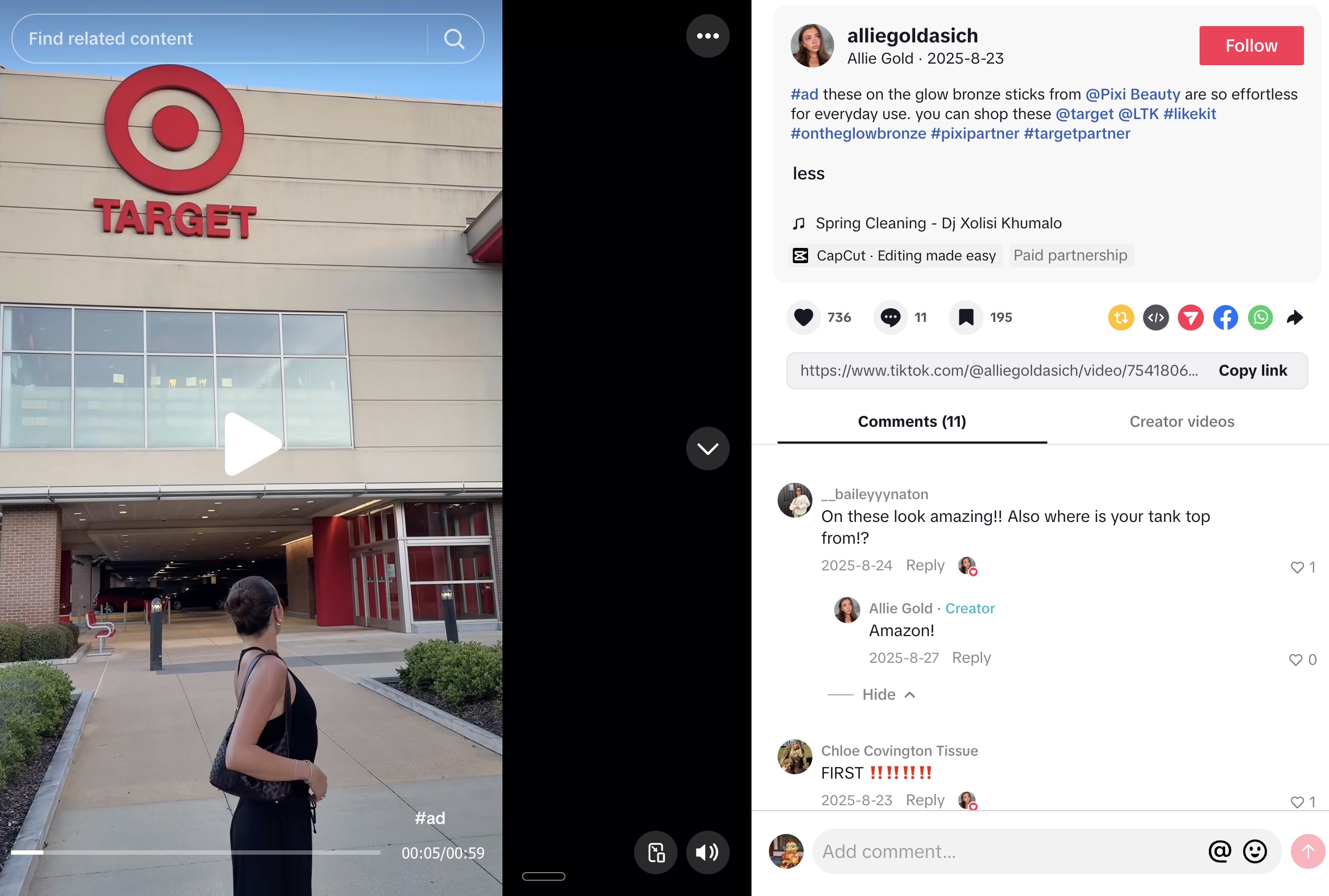
Other creators filmed at home and just mentioned in the video or caption that Pixi is now available at Target. There was no store visit and just the announcement.
Often, when brands think about launching retail stores, the only playbook we see is that creators go into the store and shoot the products on the retail shelves. That's not the only way to do it, and Pixi shows us that.
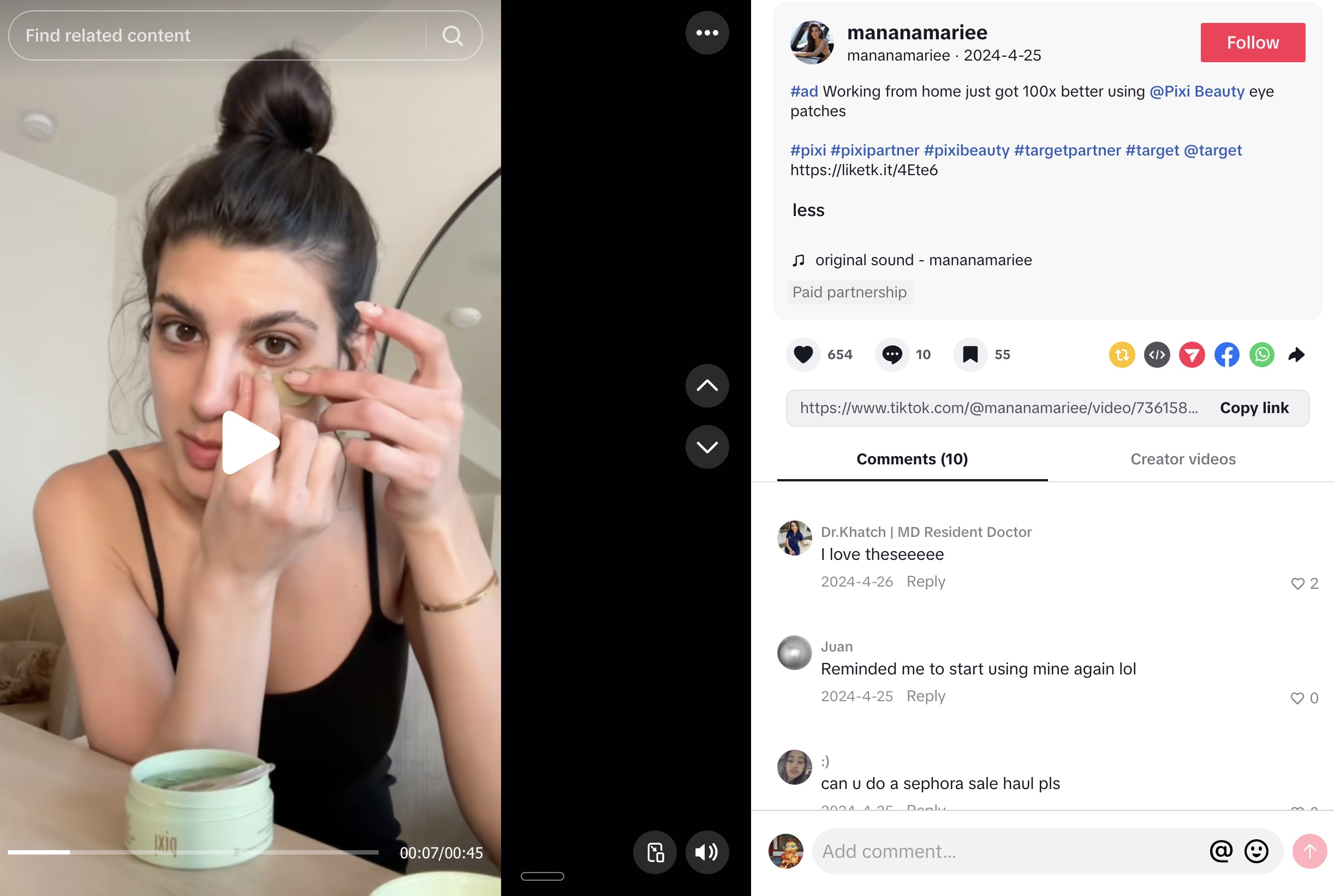
Not every creator lives near a Target. Sending product to a creator in a smaller city and asking them to drive an hour to film inside a store adds friction, and you might lose the post entirely. Letting them film at home means you get the content either way, and the core message that Pixi is now at Target still reaches their audience.
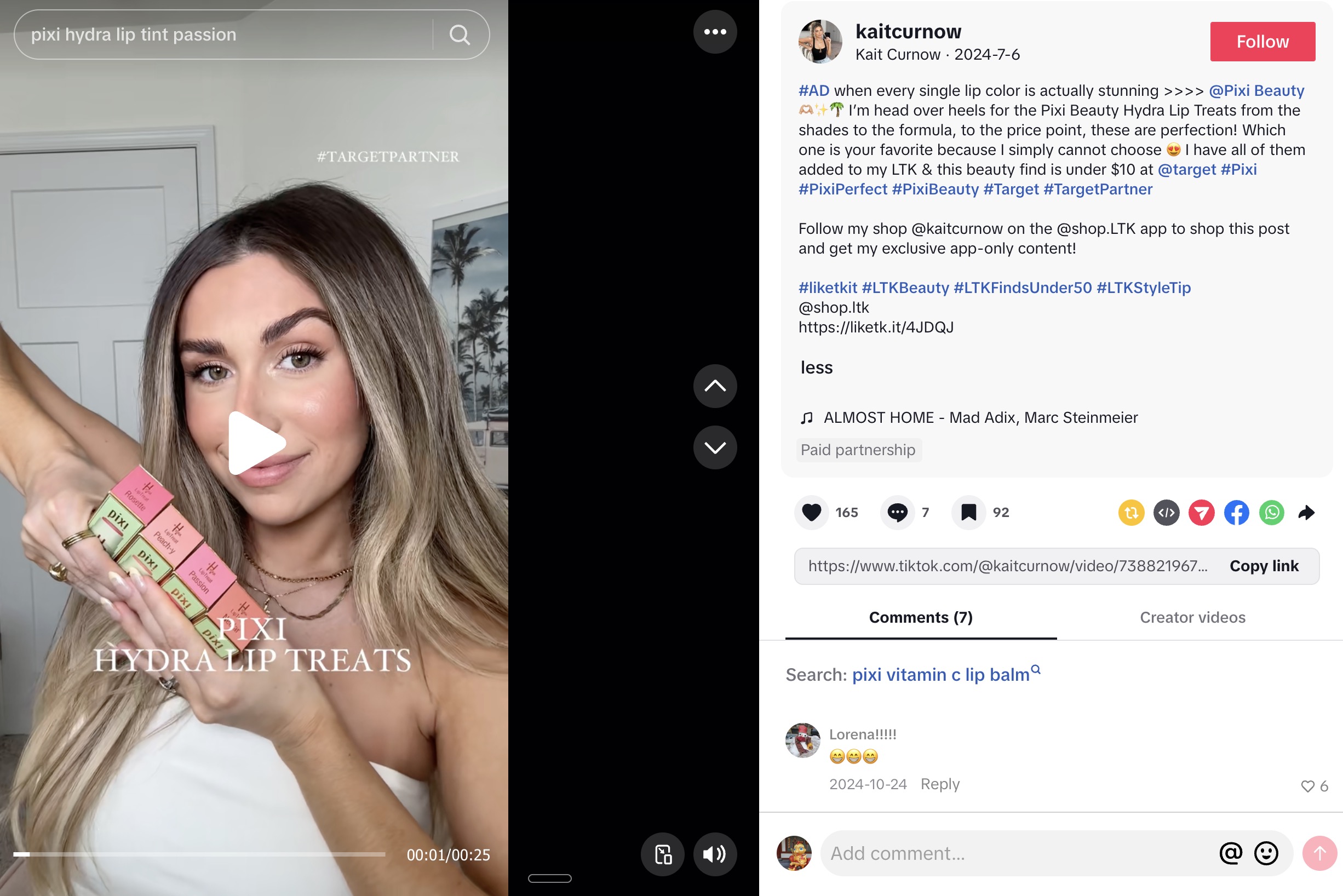
The in-store version probably converts better. But the at-home version still does the awareness job, and it lets you work with a much wider group of creators without logistics getting in the way.
We touched on a similar idea in our Poppi breakdown. Creators are not just a channel for driving sales to your website anymore. They are one of the most effective ways to get any message in front of a specific audience, whether that message is "buy this on our site," "we are now at Target," "we just launched a new shade," or "we are running an event in your city." Most people spend more time on Instagram and TikTok than on any one brand's website, so if you want them to know something, a creator post is often the fastest way to get it in front of them.
👉 When you launch in retail, run a mix of in-store and at-home creator content. The in-store videos convert harder, the at-home ones spread the announcement to creators who can't easily visit a store.
👉 Give creators the location detail they need to pass on. Mention the chain, the section it sits in, and the price so their viewers know exactly where to find you next time they walk into the store.
👉 Leverage creators for messages, not just sales. New retail launches, shade drops, events, partnerships, any update worth knowing is worth sending through your creator roster.
The brands running influencer programs like Pixi beauty all have one thing in common. They moved off spreadsheets and email threads early. Their influencer program lives inside a single system that handles the operational work in the background, so the team can spend their time on the parts that actually need a human: building creator relationships, briefing the next event, and deciding strategy.
That is what SARAL is built for. It's an all-in-one influencer platform you can use to find creators, run your outreach, manage relationships, ship free products, generate tracked coupon codes and affiliate links, host your application page, organize the content creators send you, and see what is actually driving sales.
Everything we walked through in this breakdown, from the events through the application form, can be done inside one platform instead of across ten tabs. If you want to see what running your program inside SARAL would look like for your brand, book a demo with the team. They will walk through your setup and show you what your day-to-day looks like once the operational work stops eating your week.
Sign up for a 7-day email course on the unique "Predictable Influence" strategy used by top brands like Grüns, Obvi, Tabs Chocolate.

If ditching the randomness of influencer campaigns and building a predictable, ROI-first influencer program sounds like a plan. Consider talking to our team!
