


.avif)
Ready to drive incremental growth with influencers?
If ditching the randomness of influencer campaigns and building a predictable, ROI-first influencer program sounds like a plan. Consider talking to our team!


Affiliate Marketing
Your flat-rate affiliate program is losing your best creators. Here's how to build tiers that keep them motivated and loyal to your brand.


Contents
In affiliate programs, a single commission rate works when your program is small. But once you have 50 or 100 creators, you're managing a group with different levels of effort, skill, and results. Your top performer and your least active creator are getting the same deal. It creates a motivation problem.
Tiers solve this by giving creators something to work toward: a next level of involvement, recognition, or reward within your program.
So the question is, how do you structure your affiliate program tiers? Should you increase commission at each level? What type of perks to add?
There's no single right answer. The structure that works for a skincare brand with high margins and a cult following will be different from what works for a brand with a subscription model. It depends on your margins, your goals, the type of creators you want to attract, etc.
In this article, we'll show you 5 types of affiliate program tier structures. For each one, we'll cover what changes between tiers, why brands use it, where it works well, and where it falls short.
This is the simplest tier structure. The commission rate increases as creators reach higher sales milestones.
For example, everyone starts at 10% commission, moves to 15% after $1,000 in cumulative sales, and reaches 20% after $5,000. The thresholds and rates will vary based on your margins. Once a creator reaches a tier, they stay there. It gives creators something concrete to work toward.
Here's how Obvi, a supplement brand, structures its commission ladder. They also layer in a nice detail: repeat customer orders earn 15% commission regardless of tier, which rewards creators for bringing in buyers who stick around.
.avif)
Why brands like this structure:
Where this structure falls short is with creators who care about more than earnings.
If your program attracts lifestyle creators or micro-influencers who want to feel like brand insiders, who want early access to new products, or who want a genuine relationship with your team, a commission bump alone won't keep them around. They'll eventually drift toward brands that make them feel more valued beyond just the payout.
You'll either need to layer additional incentives on top (which starts turning this into a hybrid model) or accept that this structure will naturally retain sellers and lose community-driven creators.
In this structure, the commission rate stays flat across every tier. What changes is what creators get beyond the payout: the products they receive, the access they're given, and how closely they're brought into your brand's inner circle.
For example, a creator at your base tier might get a one-time welcome package. At the next level, they start receiving free product every month, early access to new launches, and a personal discount for their own purchases. At the top tier, they can get branded merch or invites to brand events.
The progression feels less like climbing a pay scale and more like becoming an insider. Each tier brings creators deeper into the brand experience, which makes them harder to poach because no other brand can replicate that specific relationship.
YesStyle's influencer program is a great example of this structure. The commission rate across their three tiers (Rising Star, Star, Superstar) barely changes: 10%, 10%, and 11%. The real difference between tiers is almost entirely perks.
.jpg)
Why brands like this structure:
The perks you offer need to be things creators can't just go buy themselves.
A branded sticker pack or a water bottle isn't going to move anyone. But a factory tour where they see how your products are made, or a direct line to your founders, or a masterclass with a makeup artist if your creators are beauty influencers? Those are experiences worth working towards.
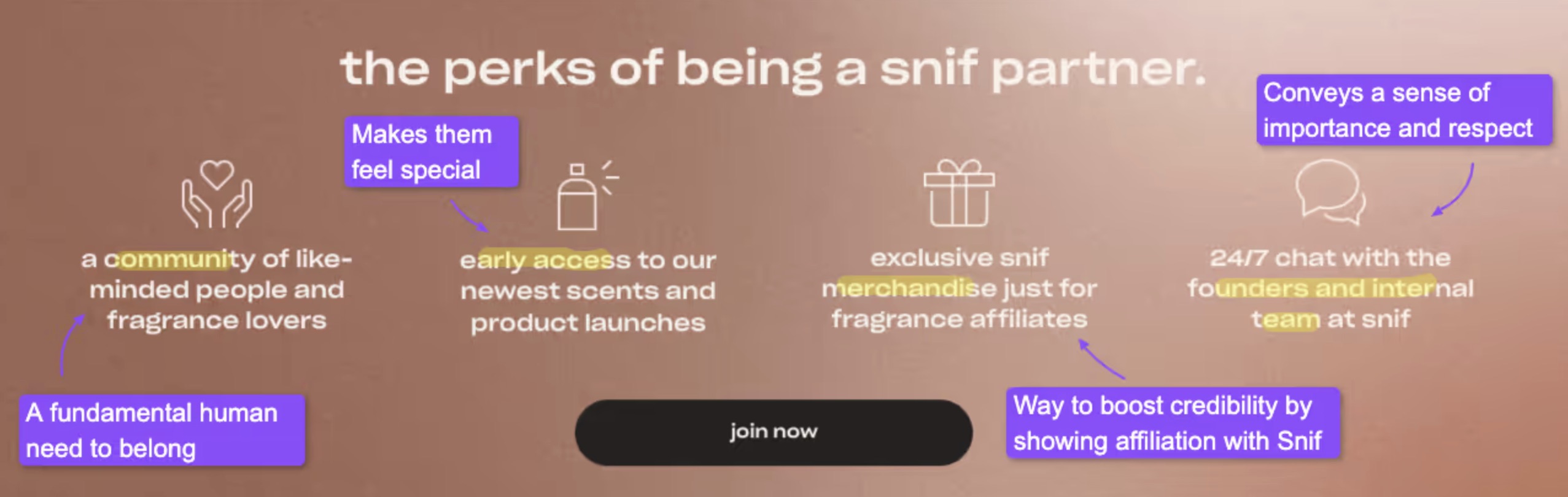
Snif's (the fragrance brand) influencer marketing program is a good example. Among their partner perks is 24/7 chat access with the founders and internal team. That kind of direct relationship with the people running the brand is something money can't buy.
In this influencer tier structure, the way influencers work with your brand changes as they move up.
At the first level, you have seeding. This is where every creator starts. You send them free products with no obligation to post. The goal here is volume and discovery. You're casting a wide net to find people who genuinely connect with what you sell.
Creators who post about your product and show genuine interest move into the affiliate stage. They get a unique discount code and earn commission on sales. The relationship is still mostly hands-off, and there's no upfront cost to you. You're only paying when they drive results.

The next level is brand ambassador. These are creators who have proven they can sell and who consistently show up for your brand. They get higher commissions, early access to new products, exclusive perks, and invites to brand events. There's more collaboration, and the creator starts feeling like a recognized partner.
At the top, you have paid partners. This is your top 5-10%. These creators get monthly retainers, custom deals, and a closer creative relationship with your team. The brand might run paid ads through their account or bring them into product development conversations.
Why brands like this structure:
The challenge with this structure is that it requires judgment calls that the other models don't.
A commission ladder promotes creators automatically when they hit a number. A perks escalator does the same. But deciding who gets moved from "affiliate" to "brand partner" involves evaluating content quality, brand alignment, reliability, and audience fit on top of sales performance. That means someone on your team needs to actively manage these transitions and have conversations with creators about expectations at each level. It's more work to run, but it's also how you build the kind of creator relationships that competitors can't easily replicate.
This structure ties tier movement to creator activity like posting frequency, content output, or engagement rather than sales alone. A creator who consistently shows up and posts about your brand moves up.
You're rewarding the behavior that leads to sales rather than the sales themselves. A creator who posts four times a month is building awareness, generating content you can repurpose, and keeping your brand visible to their audience. Over time, that consistency compounds into revenue.
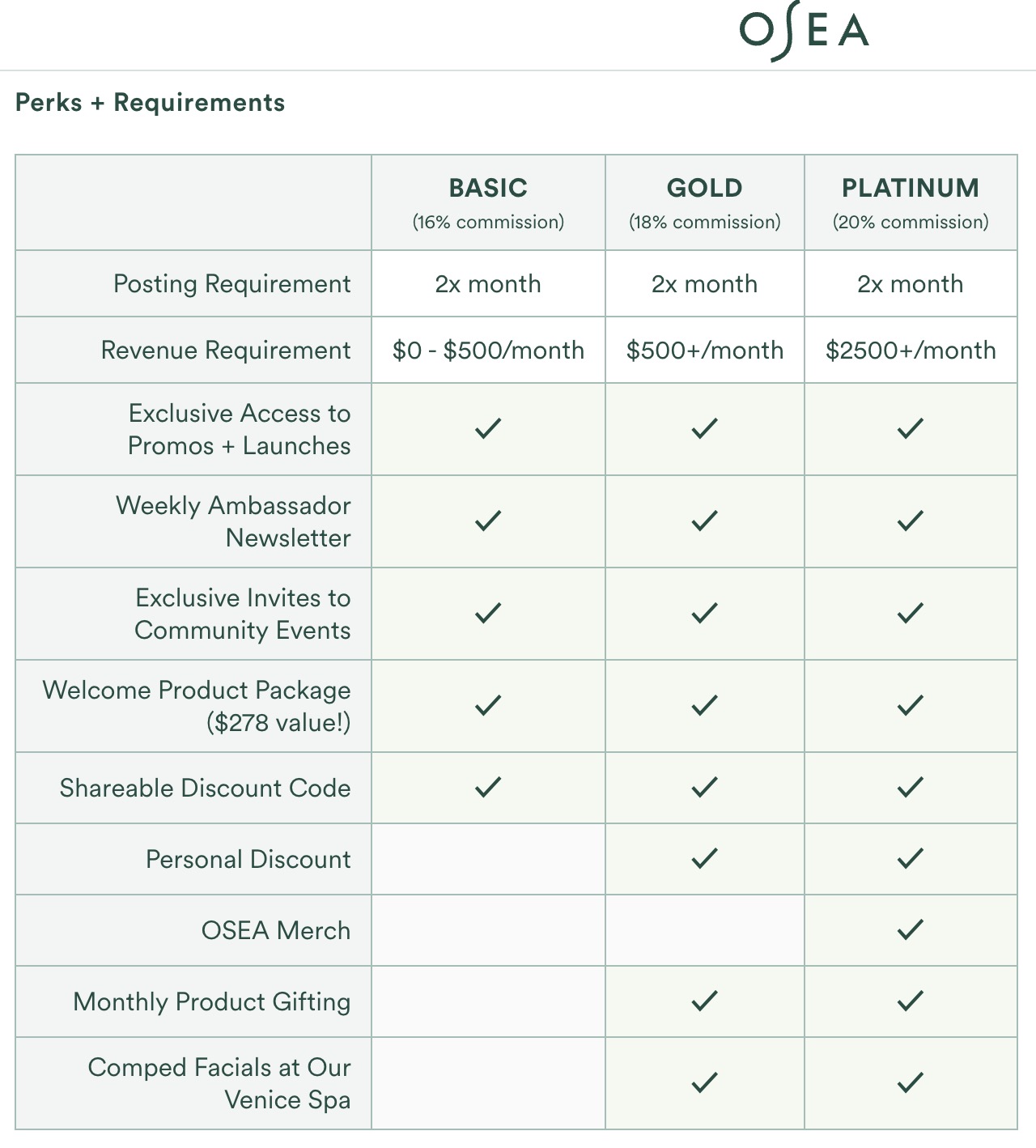
For example, OSEA's ambassador program has an activity component built in. Every tier requires creators to post at least twice a month to stay eligible for their benefits, regardless of how much revenue they're driving.
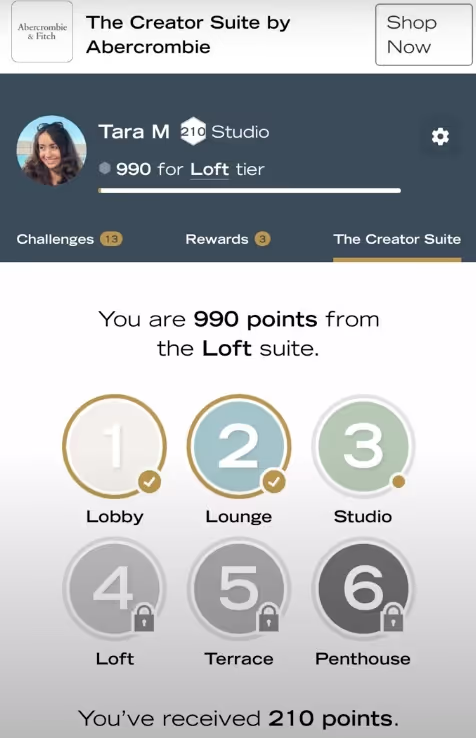
Abercrombie's Creator Suite program is also another example of tier progression via activities. Creators earn points by completing challenges, and those points move them through six levels, from Lobby all the way up to Penthouse. Commission increases at each stage (10% up to 25%), but the path there is driven by what creators do, not just what they sell.
Why brands like this structure:
Where this structure runs into trouble is when posting frequency becomes the goal in itself. A creator can technically hit "four posts per month" with low-effort stories that don't move anyone to buy. If you're going to reward activity, you need some baseline for what counts. That might mean specifying content types (feed posts and reels count, story reposts don't) or reviewing content quality periodically to make sure the volume is actually meaningful. Without that guardrail, you end up paying for noise.
This structure doesn't change a creator's ongoing commission or tier status. Instead, it places specific rewards at certain milestones along the way. Hit a milestone, collect the reward, but the commission rate stays the same as before.
Pura Vida does this well with their Rewards Shop. Creators unlock specific products at each sales milestone: 1 sale gets you five original bracelets, 3 sales earn a charm bracelet, 5 sales a branded tee, and it keeps going all the way up to 75+ sales for a PV sweatshirt. The rewards are the motivation.
.png)
Why brands like this structure:
The limitation is that milestone bonuses don't build long-term loyalty the way a tier promotion does.
Getting a $25 bonus feels good in the moment, but it doesn't change how a creator sees their relationship with your brand. There's no status shift, no sense of belonging to an inner circle. Once the reward is collected, the creator is right back where they started, looking at the next checkpoint. If the gaps between milestones are too wide or the rewards aren't compelling enough, the momentum stalls and creators drift away. This structure works best when paired with tight milestone spacing and rewards that feel genuinely worth the effort.
Once you've picked your tier structure, you'll need a way to actually run it. Tracking milestones, updating commission rates, notifying creators when they level up: doing all of this manually gets messy as your program grows.
SATHI, a Shopify affiliate platform, lets you set up milestone-based rewards right inside your campaign settings. You define the trigger (like total sales crossing a certain amount, or a creator bringing in a specific number of orders), pick the reward (a cash bonus, a free product, or a commission tier upgrade), and the platform takes care of tracking and execution. When a creator hits a milestone, they're notified automatically, and their rewards are applied without any manual intervention from your team.
.png)
There's so much more you can do with SATHI:
SATHI is built specifically for Shopify brands, so it connects directly to your store and goes live in under 15 minutes. It's built by the same team behind SARAL, which has helped hundreds of DTC brands run influencer and affiliate programs profitably.
Book a demo of SATHI to see how it can help you build and manage your affiliate tiers →
Sign up for a 7-day email course on the unique "Predictable Influence" strategy used by top brands like Grüns, Obvi, Tabs Chocolate.

If ditching the randomness of influencer campaigns and building a predictable, ROI-first influencer program sounds like a plan. Consider talking to our team!
