


.png)

Ready to drive incremental growth with influencers?
If ditching the randomness of influencer campaigns and building a predictable, ROI-first influencer program sounds like a plan. Consider talking to our team!


Influencer Marketing
Your influencer program doesn't need a total redo. It needs you to find problems that are causing it to fail, and fix them.


Contents
You've got a solid influencer marketing strategy. You're reaching out to influencers, shipping products, and building an ambassador program. On paper, it should be working. But the results aren't there.
Maybe your influencer outreach is great, and you're shipping products to 50 influencers, but only 3 posted. Or your affiliates post regularly, but you're not getting sales from them. Or you're spending 20 hours a week buried in spreadsheets, and losing touch with your creator community.
The fix is usually not to dismiss influencer marketing, or scratch everything and start over. You have to find the weak link.
We've worked with hundreds of e-commerce brands running influencer programs, and the same problems come up over and over again. So we wrote them down, along with what actually works to fix them. Find your problem below, read the fix, and get back on track.
You've shipped out 50 products to influencers you found on Instagram. Maybe 2-3 posted. The rest just took the free stuff and didn't post or respond.
🤷 Why this happens: You probably didn't set any expectations before shipping.
You just said "we'd love to send you something" and left it at that. The influencer received it, maybe liked it, but never felt any reason or nudge to post. Also, you might be sending to people who have no real connection to your product category. For example, sending indulgent cookies to fitness influencers just because they have a lot of followers is not going to work. They'd probably never post about it.
✨ How to fix it: Before you ship anything, set the expectation right. Say:
“We'd love to send this over - if you enjoy it, it'd be great if you shared it with your audience. Want me to ship it your way?”
It's not a contract, but it plants the seed that a post is part of the deal.
What not to do:
Find your ideal influencer instead of just any influencer. If you sell protein bars, don't send them to a fashion influencer who happened to post a gym selfie once. Send to someone who regularly talks about snacks, nutrition, or fitness fuel.
Influencers are posting about your product. But when you look at the content, it's not something you'd repost on your brand's page.
Maybe they just held up the product and said "love this" without any context or story around it. Or they talked about a feature that isn't really your main selling point.
🤷 Why this happens: Influencers know how to make content for their audience. But they don't automatically know what matters to your brand. What to emphasize, what angle to take, what your customers care about. Without any direction, they'll default to whatever feels easiest or most natural for their usual content style. And that might not line up with how you want your product to come across.
✨ How to fix it: Send a simple creative brief before they post. Share with them:
Think about whether your brief is realistic for the average creator.
Triangl Bikini had this exact issue. Their initial brief asked influencers to shoot their swimsuits on the beach, on a body, with sand or ocean in the background.
Sounds great in theory. But in practice, most influencers couldn't pull off that kind of shoot easily. The photos kept coming back looking off.
So they changed the brief to flat lay images of the swimsuit instead. It was still on-brand, still looked great, but now influencers could shoot it at home. The result was way more usable content that actually matched what the brand wanted.
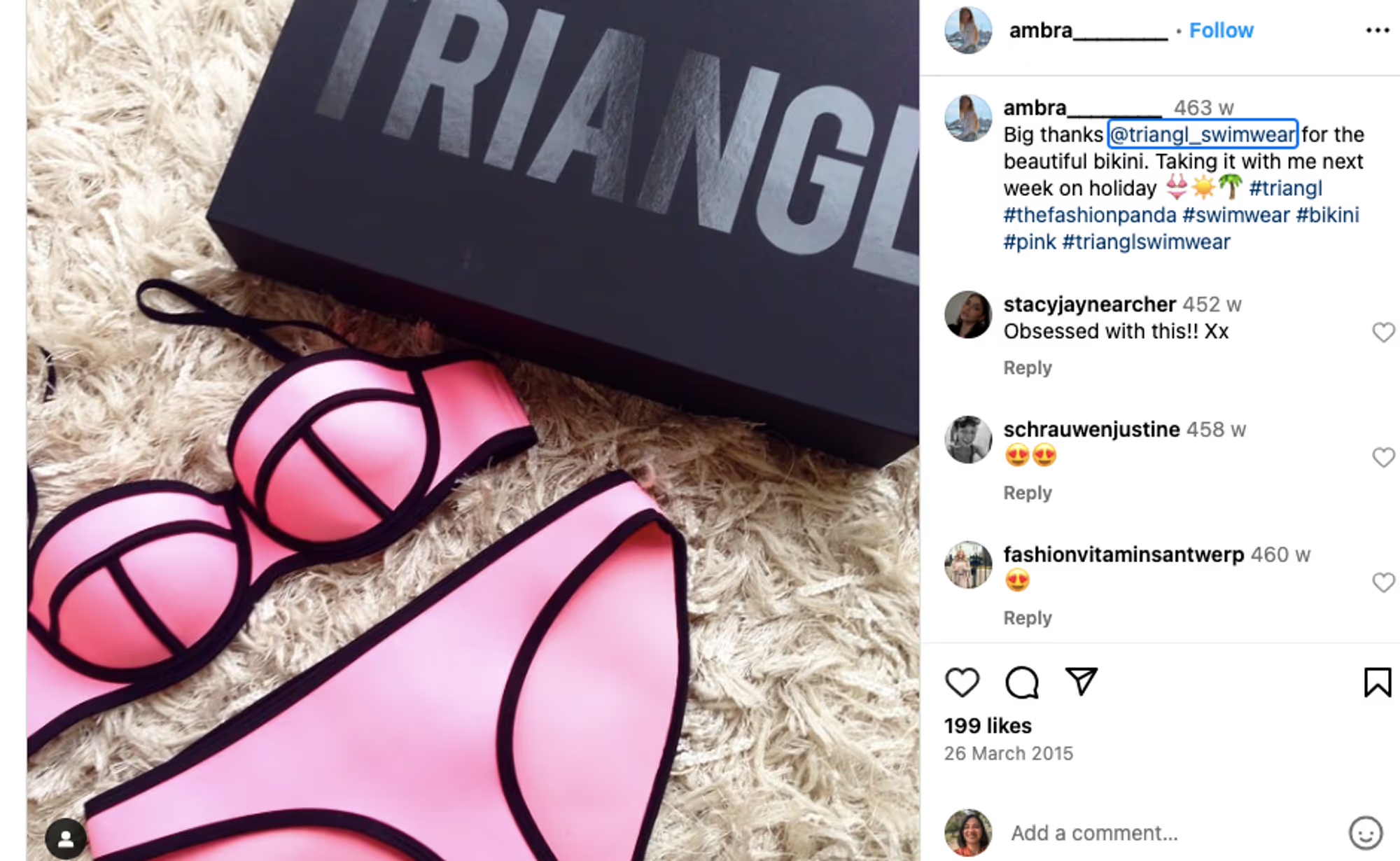
Sometimes the fix isn't getting better influencers, it's making the brief easier to execute well.
If you're not sure what makes a brief actually work, here's a guide on writing creative briefs that get you usable content.
Influencers are posting content that looks decent, but when you check your dashboard, their discount codes have barely been used.
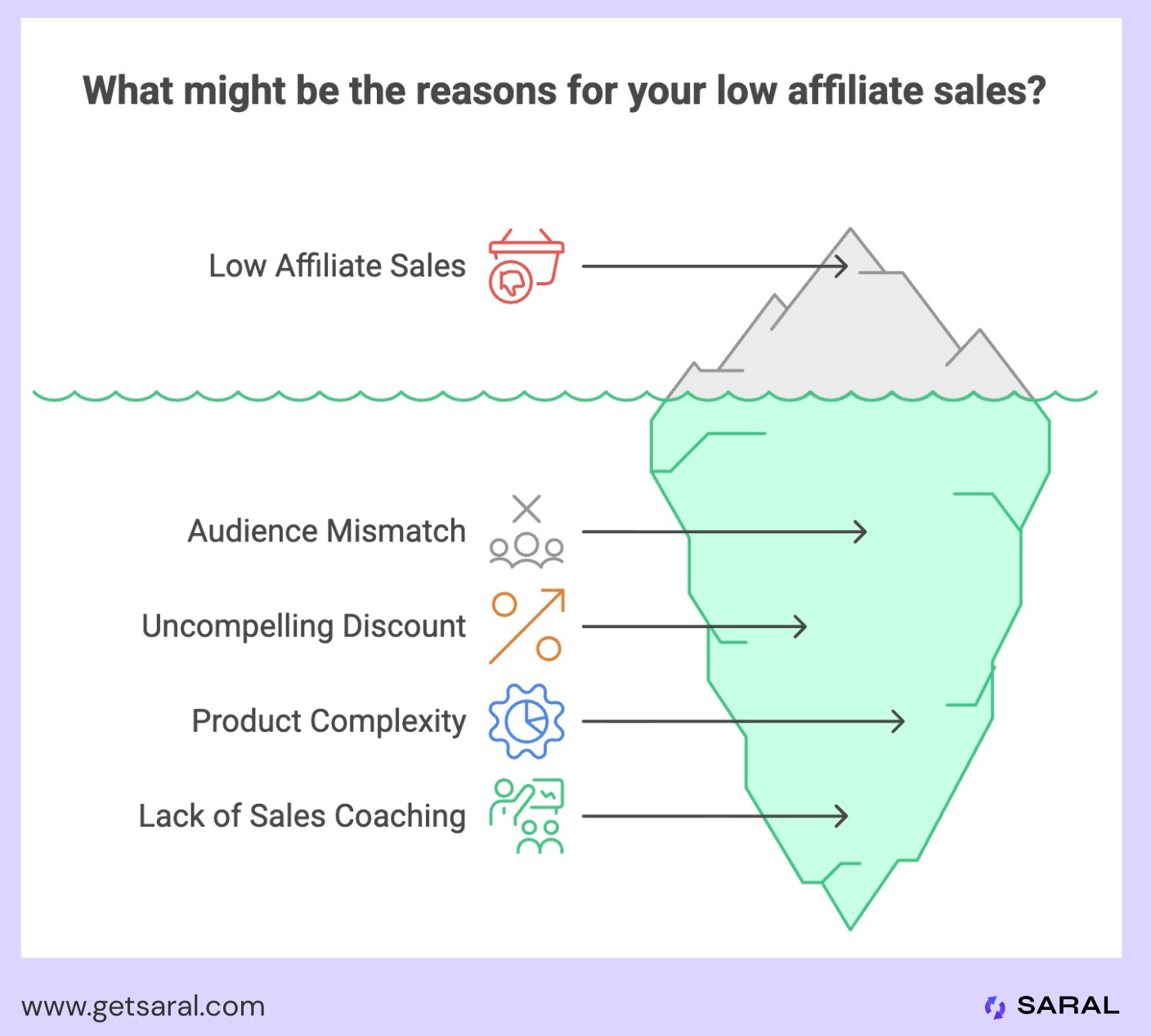
🤷 Why this happens: This one usually isn't a single issue. It could be a few things stacking up.
The influencer's audience might just not be buyers. There are plenty of accounts where people love to watch, like, and comment, but never actually purchase anything.
Or the discount isn't compelling enough. If your site already has a 15% off pop-up and the influencer is offering 10% off, nobody's going to bother with their code.
Some products just don't sell from one Instagram post.
If your product is complex, new to the market, or requires people to change a habit (for example, switching from coffee to tea), one post won't do it. Someone might need to see it three or four times from different angles before they understand why they need it. In that case, the issue isn't the influencer. It's that you're measuring a single post like it should close the sale when it's actually doing awareness work.
✨ How to fix it: Make sure the influencer's code offers something better than what's publicly available on your site.
Coach the influencer on how to actually sell, not just showcase. Share examples of posts that actually converted well for your brand and show them what a good CTA looks like. There's a big difference between "I love this product, link in bio" and "I've been using this for 3 weeks and here's what changed. Use my code SARAH20 for 20% off, it's the best deal they offer."
If codes still aren't moving after you've done this, look at which influencers are driving clicks vs which are just posting. Pull the UTM data. Sometimes the issue isn't the CTA but that you have the wrong five people in your affiliate program.
Your ambassador program has been running for a few months. In the beginning, they were posting regularly. But now, most of them have gone quiet. They'll post once in a while if you remind them, but they just don't seem motivated to keep going.
🤷 Why this happens: Influencers are busy. They're juggling multiple brand partnerships, creating their own content, and living their lives. It's easy for your program to slowly slide down their priority list, even if they genuinely like your brand.
And yes, they might be earning commission. But if that commission rate has been the same since day one and there's nothing new to work toward, it stops being exciting. People are wired to want the next level. When there's nothing ahead to unlock, even a good deal starts to feel stale.
It's the same reason a job with no raises and no promotions eventually loses good people. If there's no upside to doing better, people settle into doing the minimum.
✨ How to fix it: Create tiers in your ambassador program so there's always something to work toward.
For example, everyone starts at tier one with a 15% commission. When someone hits 20 sales in a month, they move to tier two, which gets you 20% commission plus a monthly free product. When they hit 50 sales, they're at tier three with 25% commission, free monthly product, and an exclusive invite to events.
Osea's influencer program has a tiered structure:
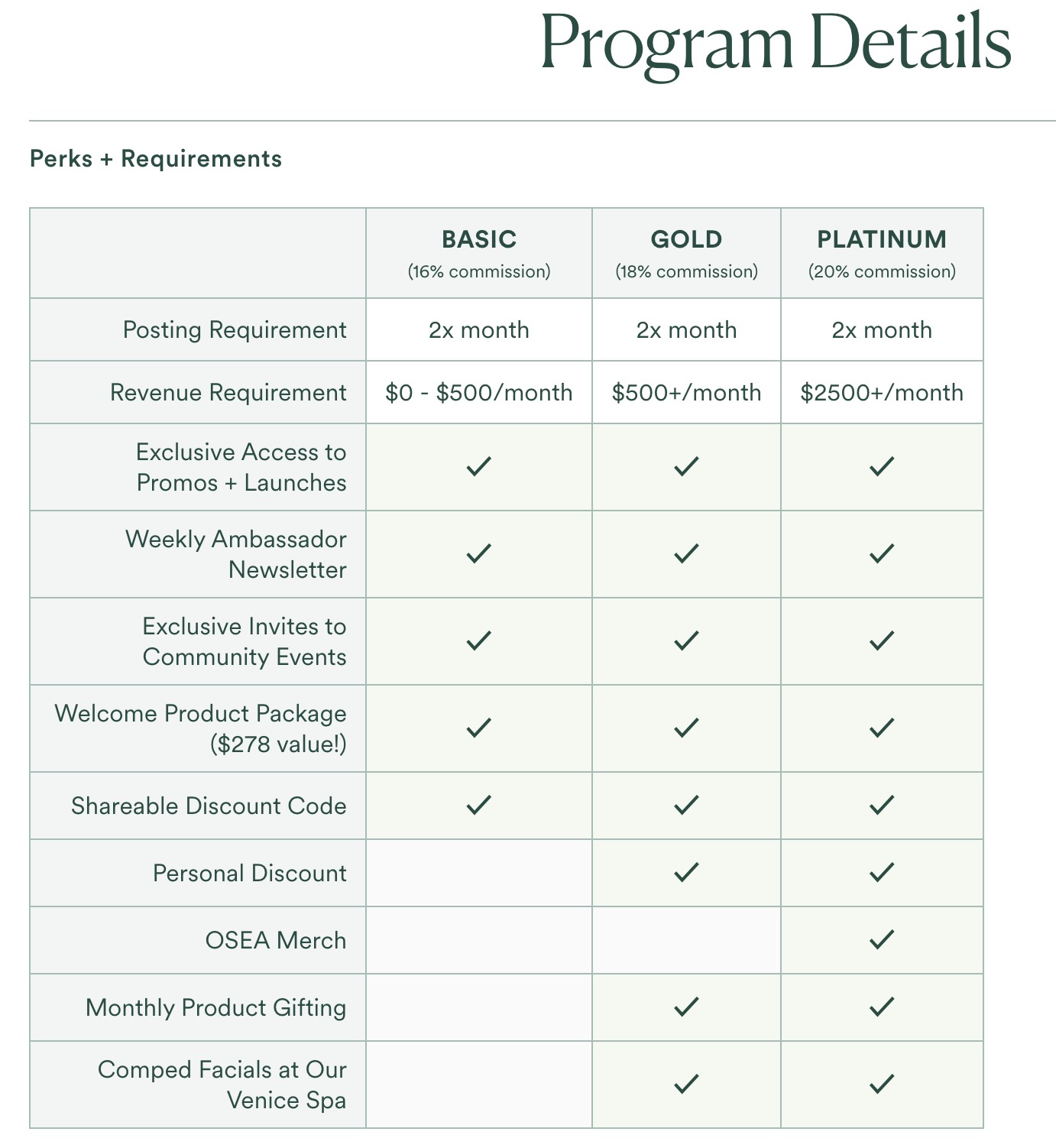
Make the tier thresholds realistic. If tier two requires 100 sales a month and most of your ambassadors are doing 8, nobody's going to bother trying. The first jump should feel achievable, so creators get a taste of moving up.
The exact numbers depend on your margins, but the point is that your best creators should feel like their effort is being recognized and rewarded. And the creators in the lower tiers should be able to look at the tier above them and think, "I could get there if I posted a bit more."
You can also make the perks about more than just money. Higher tiers could get featured on your brand's page, get invited to product development conversations, or receive surprise gifts. Sometimes, the recognition and the feeling of being an insider matter just as much as the commission bump.
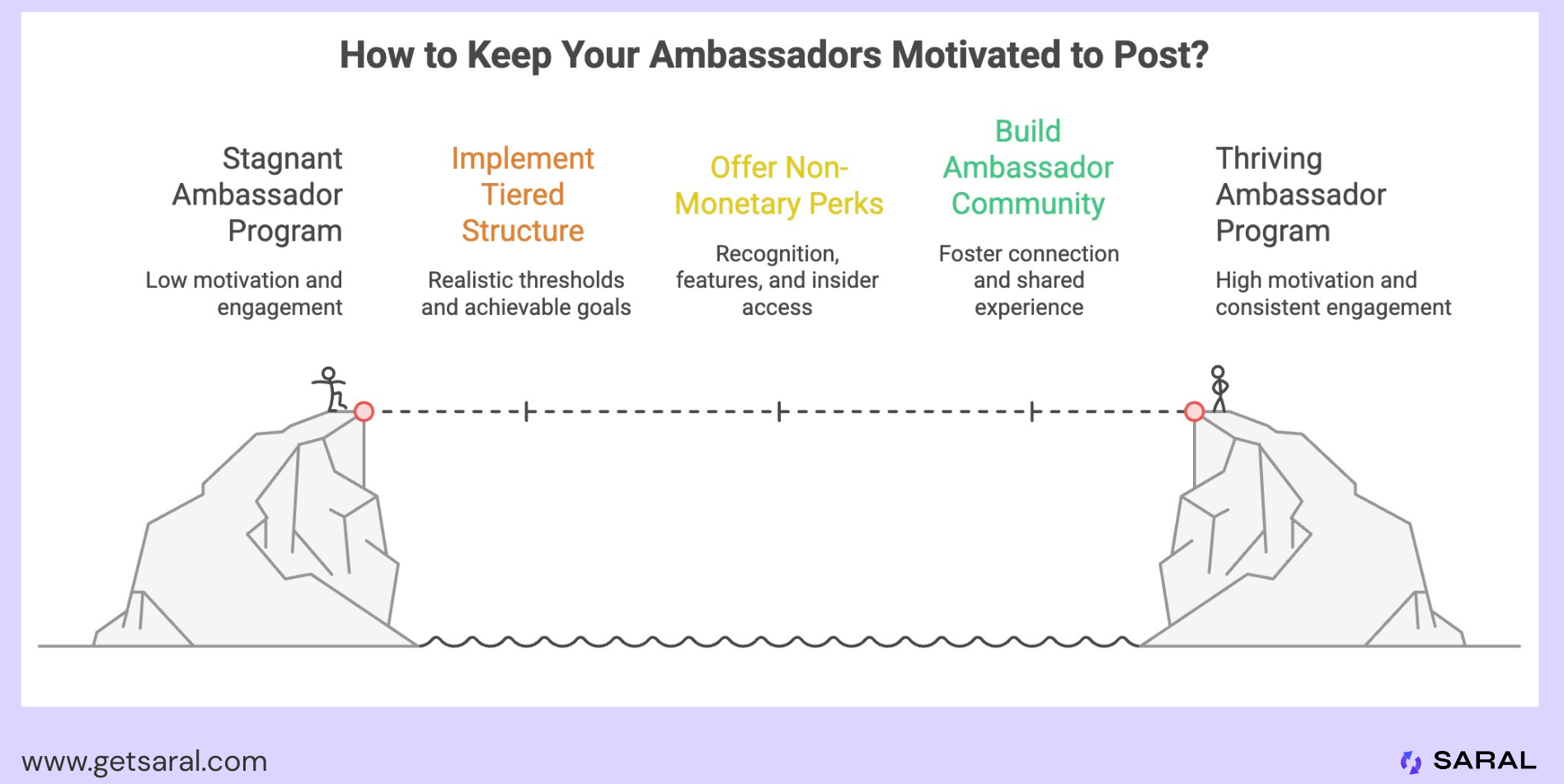
Commissions and perks keep people posting. But belonging keeps people around. Create a space where your influencers can actually connect. It can be a private Facebook group, a Slack channel, or a WhatsApp group. Somewhere they can share wins, ask questions, swap tips, and feel like they're part of something bigger than just another brand deal.
When your ambassadors know each other and feel like they're part of a crew, they're far less likely to go quiet.
Want to build this? Here's a guide on creating affiliate communities →
You've got 30 ambassadors, and you're drowning. Tracking who posted, following up with who didn't, generating codes, shipping products, checking analytics, it's eating up 20 hours a week. You barely have time to actually talk to your influencers or think about strategy because the admin work has taken over.
🤷Why this happens: When you had 5 influencers, spreadsheets, and email worked fine. But the tools that got you to 30 ambassadors can't get you to 100. You're probably using a spreadsheet to manage your program. Every new influencer you add makes the whole thing slower.
✨ How to fix it: This is the point where you either need to hire a big team (that's not very efficient, is it?) or use a platform that automates processes for you. You need everything in one place so you're not bouncing between six tabs to answer a simple question like "did this influencer post last month?"
This is what SARAL is built for.
It brings your entire influencer workflow into one place: find influencers, send outreach sequences that automatically follow up, ship products and track deliveries, generate affiliate links and discount codes, and see exactly how each influencer is performing.
Kulin, a performance marketing agency managing multiple brands, was stuck in the same place. Spreadsheets everywhere, hours lost to manual tracking, creator relationships slipping through the cracks.
After switching to SARAL, their team now saves 2-3 hours every day on tasks that used to eat up their week. Reporting that took hours now takes 30 minutes. And when they log in Monday morning, everything they need is in one place.
Read the full story of how Kulin did it →
The time you save on admin is time you can spend actually building relationships, which is what makes influencer marketing work long-term.
This blog covers five of the most common problems. But influencer programs can break in a lot more ways. Outreach that gets ignored, influencers don't post on time for a launch, or your CMO or CFO is convinced of the ROI.
We put together a spreadsheet with 30 influencer marketing problems, what's probably causing each one, and how to fix it.
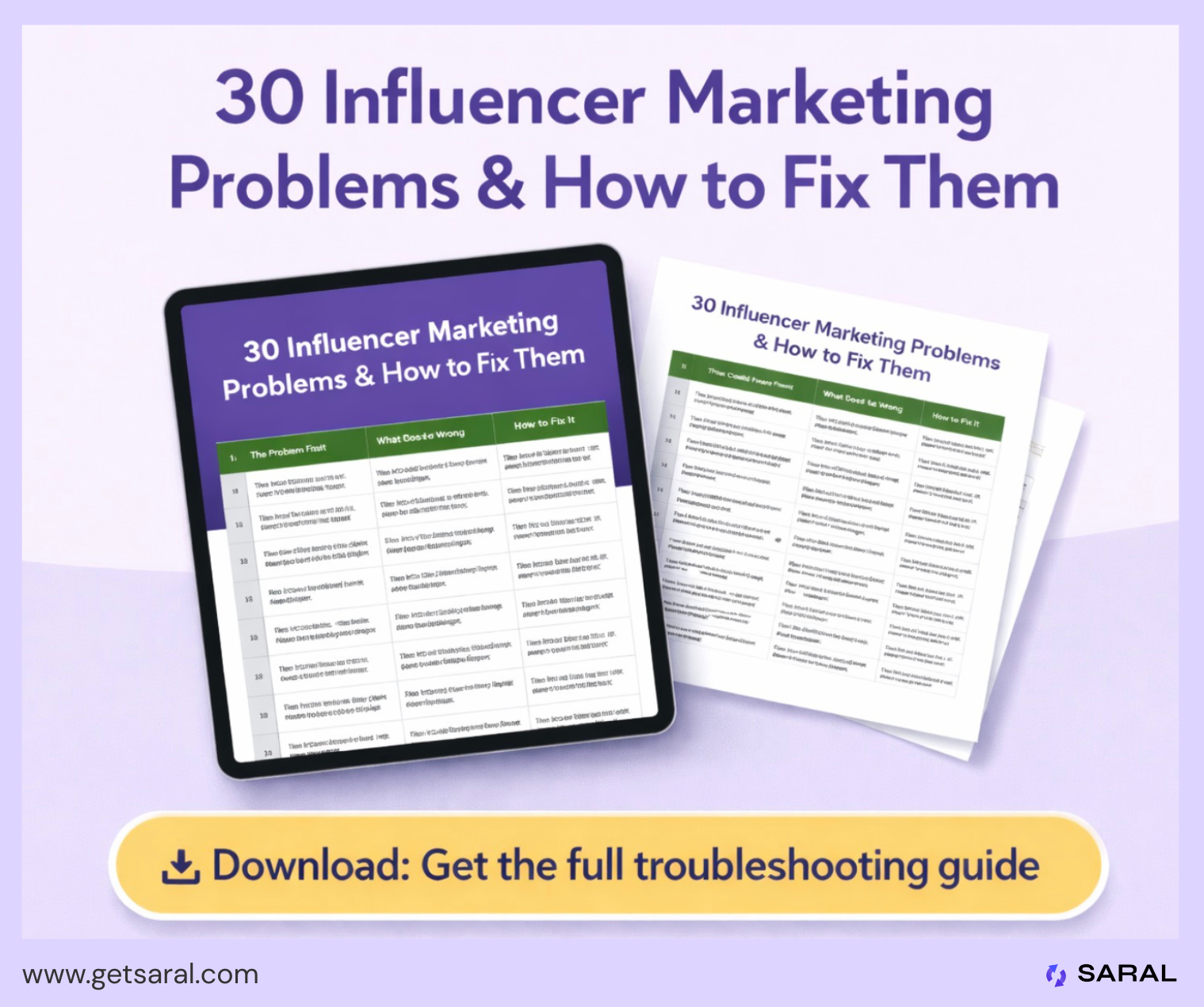
Keep it bookmarked. Share it with your team. Pull it up the next time something's not working, and you're not sure where to look.
Get the Full Troubleshooting Guide →
Most influencer programs don't fail because of a bad strategy. They fail because one part of the process breaks down and nobody catches it. Run through these five problems against what you're doing now, you'll find the weak link faster than you think.
Sign up for a 7-day email course on the unique "Predictable Influence" strategy used by top brands like Grüns, Obvi, Tabs Chocolate.

If ditching the randomness of influencer campaigns and building a predictable, ROI-first influencer program sounds like a plan. Consider talking to our team!
