


Ready to drive incremental growth with influencers?
If ditching the randomness of influencer campaigns and building a predictable, ROI-first influencer program sounds like a plan. Consider talking to our team!


Meta
Learn how DTC brands use mid-tier influencers to create authentic campaigns, increase engagement, and drive stronger marketing ROI.
Contents
Did you know that countless DTC brands still swing between two extremes when it comes to influencer marketing? They either scale their influencer marketing campaigns with only low-cost nano creators or gamble on celebrity influencers that charge top dollar to reach audiences.
Where nano creators often lack the scale to consistently drive meaningful revenue, celebrity influencers charge massive fees, inflating CAC and diluting ROI.
As a result, several DTC brands end up chasing either cheap reach or expensive visibility. They do all this while entirely ignoring the mid-tier influencers.
Adding mid-tier influencers (50-100k followers) to the mix with nano and celebrity influencers often hits the influencer marketing sweet spot.

Mid-tier creators or influencers often deliver the best balance of trust, engagement, scalability, and conversion. All this while ensuring reasonable affordability that keeps your CAC from spiraling.
More and more DTC brands are realizing the same! This is why 73% of brands today prefer partnering with mid-tier influencers, given their engagement-to-cost ratio.
So, if you are still building the cheapest possible nano roster or chasing after one big name per quarter, this guide is for you. It will tell you:
Let’s get cracking!
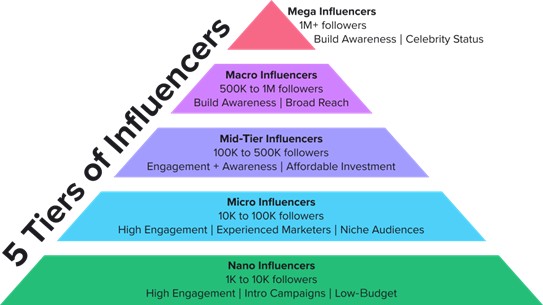
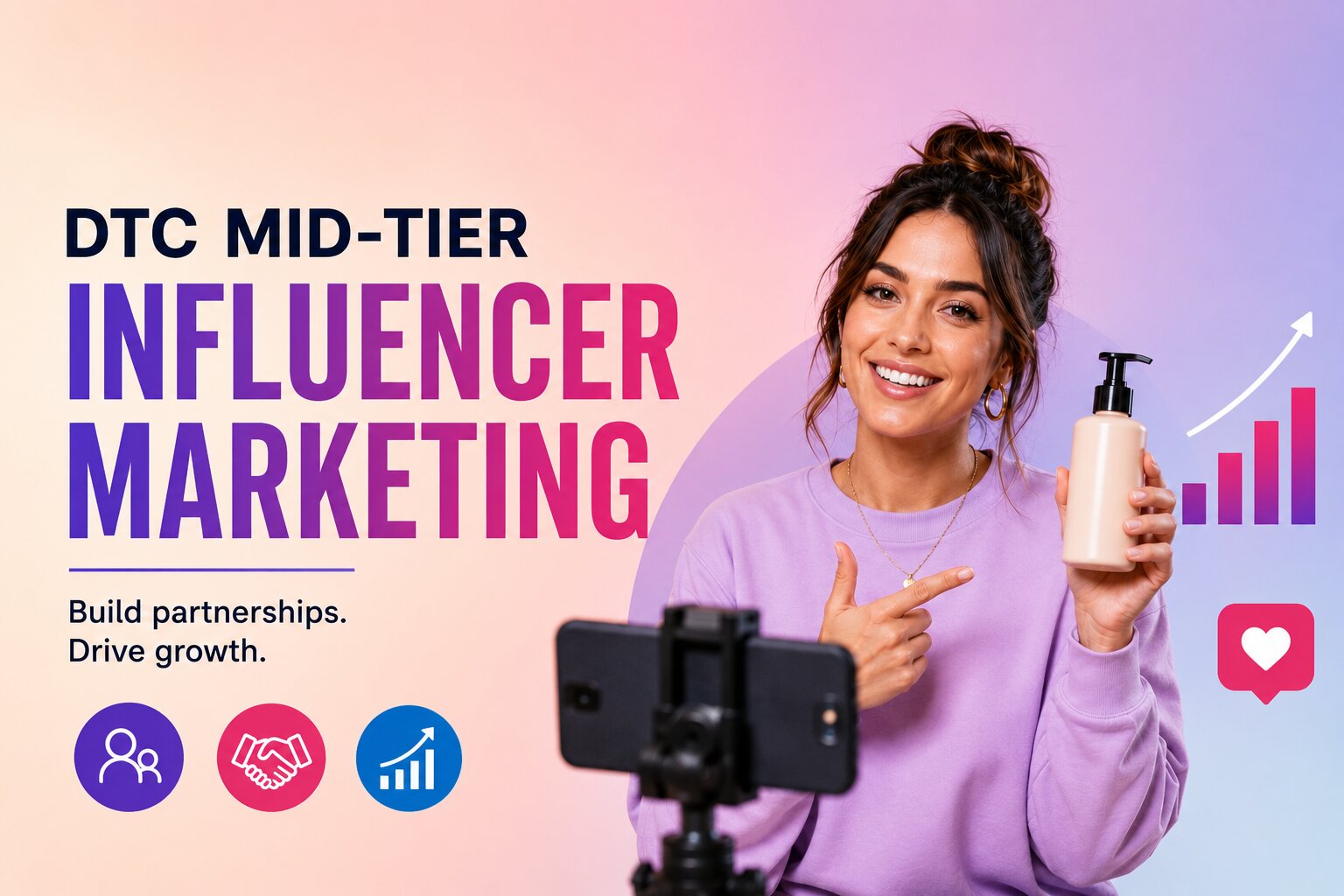
In a nutshell, a mid-tier influencer is a content creator with 100k to 500k followers across social media platforms.
They are big enough that a single post moves the needle on your brand's awareness, but small enough that comments are still genuine conversations and not bot soup.
How do they compare to other tiers?
When it comes to engagement rates, mid-tier creators average 1.5–3% engagement rates on Instagram.
Whereas, on TikTok, mid-tier influencer engagement rates are even higher at 6% to 8% on a healthy account.
Anything significantly below these statistical benchmarks would be your cue to start digging into the quality of the influencer’s audience before you spend a single dollar.
In practice, nano-influencers usually have loyal audiences, but their reach is too limited to drive large-scale sales on their own.
Celebrity influencers have massive reach, but their audiences are often less engaged and less trusting.
Here, mid-tier influencers sit right in the middle. They are big enough to drive real sales, but still trusted enough that people actually listen to their recommendations.
1. The Reach-Trust Balance
Mid-tier creators enable DTC brands to scale without losing trust. This is rare among other tiers because nano-creators are big on audience trust but low on brand reach. Macro-creators are big on reach, but their posts can feel like an ad. Whereas mid-tier creators deliver both reach and trust.
They are large enough to drive meaningful traffic and sales, yet close enough to their audience that whatever they recommend feels personal rather than scripted.
This balance matters! Your campaign doesn’t just get impressions. It also gets attention, clicks, saves, comments, and conversions. For many DTC brands, this tier is where the best ROI lives.
2. Cost Efficiency at Scale
Mid-tier influencers charge a fraction of what macro-creators charge while providing a significantly higher reach than nano influencers.
Influencer marketing yields an average return of $5.78 per $1 spent, and mid-tier creators are often at the center of campaigns that hit those numbers. This is because they balance reach, engagement, and acquisition efficiency better than either end of the influencer spectrum.
3. Content Quality and Versatility
Mid-tier creators generate polished content. Not just decent, as is often the case with nano-tiers, which typically have limited resources and budgets!
Mid-tier influencers create high-quality content that stays relevant and is usable beyond a single post. This matters because the real money doesn’t just come from a single post, posted on the influencer’s handle.
You take their best content, run it as a paid ad, and reach way more people. This way, the video clips they make pay you back twice. To do this, ensure you negotiate content reusability rights within your contract before the campaign begins.
This way, when a mid-tier influencer content piece works, you can distribute it further without having to renegotiate.
4. Audience Data You Can Actually Use
Mid-tier creator accounts have sufficient historical data on past audience behaviors. As a DTC brand, you can study their handles to see:
With nano creators, you're basically guessing! With mid-tier, you're making a decision based on real data.
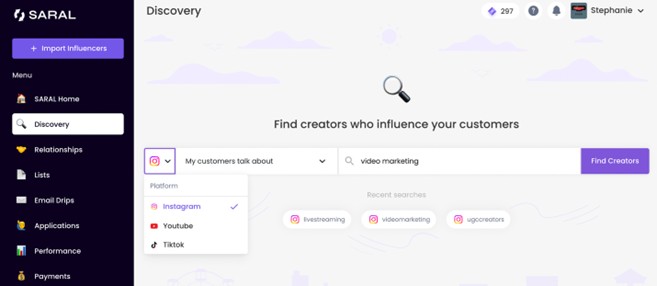
Despite the availability of certain user-friendly influencer marketing tools, several DTC teams still manually scout mid-tier influencers.
They start by browsing Instagram and copying a seemingly relevant influencer handle into a spreadsheet. They repeat this process for hours on end and end up with a list that is essentially an educated guess.
A robust discovery tool like SARAL collapses this workflow into minutes, and with higher accuracy.
A mid-tier influencer discovery tool should allow you to automate filtering creators by:
SARAL’s discovery engine indexes over 200 million influencer profiles across Instagram, TikTok, and YouTube, with filters for:
And more...
These filters help DTC brands find the right mid-tier influencers in minutes, not hours.
Another standout feature SARAL offers brands that seek mid-tier influencers is “LookalikesAI”. How does this work?
Suppose you have already identified 10 to 15 high-performing mid-tier creators, but now want to find a hundred like them to scale your campaign, SARAL can help. How? By analyzing your saved creators and finding similar profiles within its database automatically.
So, if one 220K skincare creator drove your best ROAS last quarter, you can find 100 more like her with SARAL’s “LookalikesAI” feature.
SARAL’s Chrome extension can spot creators for you while browsing TikTok or Instagram, study their engagement rate, fee estimates, and save them to a list without switching tabs.
For discovery-heavy teams, this single feature kills hours of friction per week.
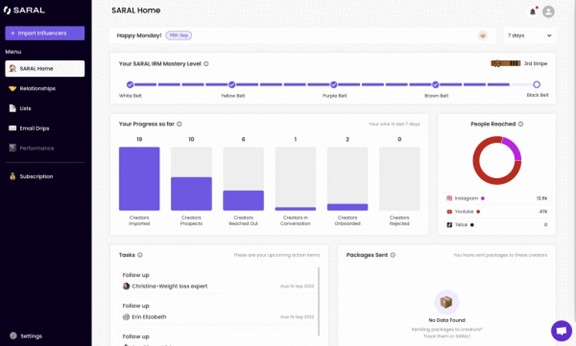
Working with SARAL, as its name suggests, is easy. To build a mid-tier influencer list with the help of this tool, follow these steps.
Also know that SARAL’s built-in rate calculator pre-screens for budget fit before you reach out to creators that are out of your price range.
Know that mid-tier influencers constantly receive brand partnership offers. So, if they open your email, they will compare it with four others already sitting in their inbox.
They will choose to reply to those that sound personalized, respectful and offer timely and fair payouts. This is why you must not use generic outreach templates, especially for this tier.
You must write short, personalized emails that show that you know the creator’s content. Cut to the chase and explain why they’re a fit for the brand, and mention budget or partnership terms upfront.
Also, the first email to an influencer rarely converts, and follow-up emails drive most replies. Therefore, send at least 2 follow-up emails per mid-tier creator. Consider this as a baseline.
With the help of SARAL, you can automate bulk personalized emails and schedule follow-ups that mimic human sending patterns. These emails bypass spam filters and let you contact hundreds of mid-tier creators without sounding generic.
Personalized opener: Reference a specific recent post. Not something generic like, “love your content!”
Give a brand fit in one line: Why is their audience right for your product? Be specific.
Clear ask: In the email, clearly mention the deliverables you need, the timeline to be adhered to, and the compensation you will provide. No, “let’s hop on a quick call to discuss.”
Low-friction CTA: “Reply yes” beats “book a 30-minute intro”.
Follow-up sequence: Send three follow-up emails over 10–14 days.
Hey [Name],


We watched your Tuesday Reel on barrier repair, and honestly, it's the best breakdown of over-exfoliation we came across this month.


We make a ceramide serum that fits right into the routine you were talking about in your last reel. We would love to send a unit your way and explore a paid Reel + Story slot for May.


Budget is $X for one Reel with whitelisting rights for 60 days.


Are you open to it? Please let me know by [date/day]


Cheers,
Team [Brand name]
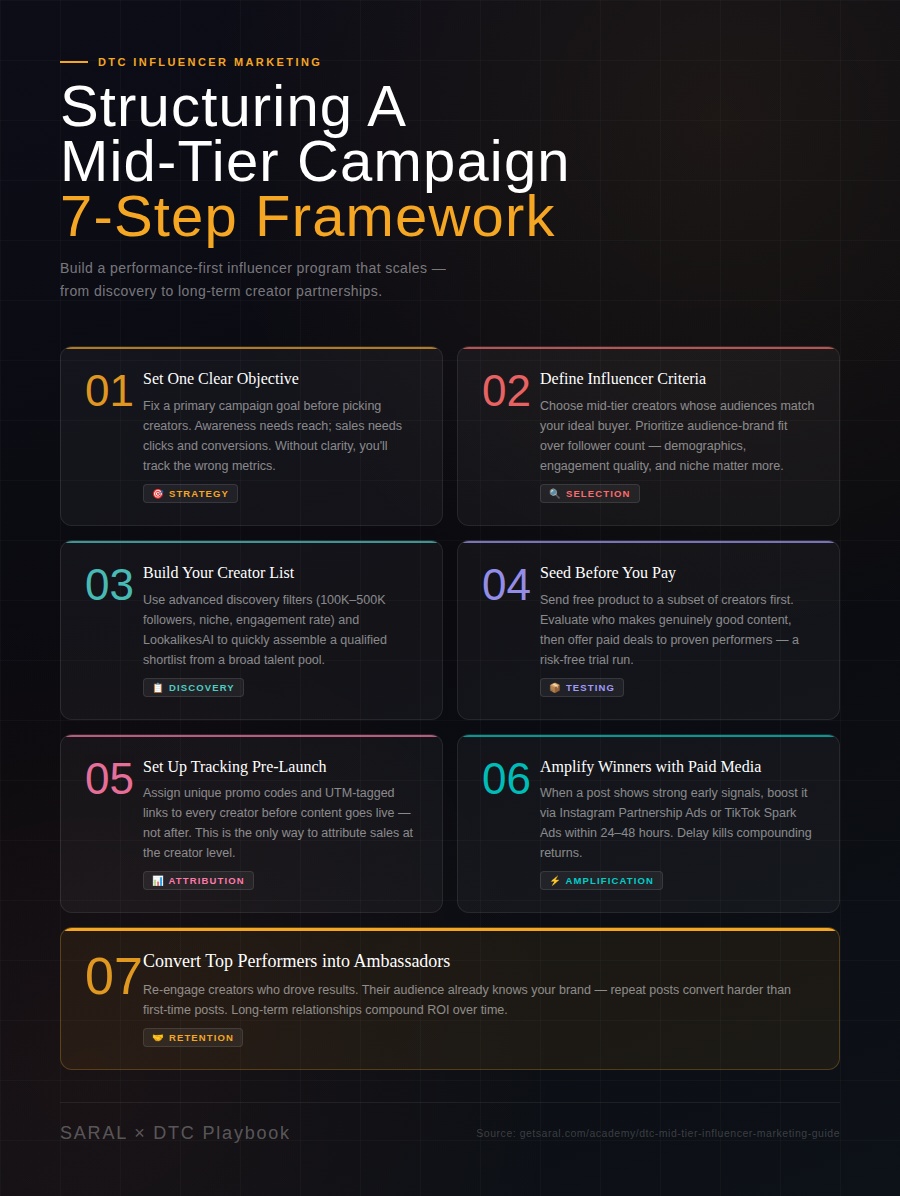
Step 1 — Set One Clear Objective per Campaign
Fix your primary goal for every campaign you wish to deploy. Different goals need different types of creators and different ways of measuring success.
For example, if your goal is brand awareness, you need more reach and views. But if your goal is sales, you need your campaign to garner clicks, conversions, and purchases.
Without a clear goal, brands end up choosing the wrong influencers, tracking the wrong metrics, and going over budget.
Step 2 — Define Your Mid-Tier Influencer Criteria
Choose mid-tier influencers whose audiences already match your ideal buyers. And, just because a creator has a huge number of followers doesn't mean they will buy your product.
Successful influencer campaigns usually have one thing in common. They get their audience-brand fit right! Follower count comes after this. Platforms like SARAL can tell you whether a creator’s audience actually matches your target customer. This tool goes beyond follower count to filter creators by demographics, engagement quality, niche relevance, past brand collaborations, content style, and more.
Step 3 — Build Your Creator List with SARAL
SARAL offers advanced discovery filters plus the LookalikesAI feature to quickly assemble a qualified mid-tier influencer shortlist.
Because SARAL indexes creators broadly without requiring marketplace opt-in, you access a wider pool of mid-tier talent. This fares better than other platform-only tools that only show creators who've signed up.
Step 4 — Seed Before You Pay
It may not be wise to pay every influencer upfront. Instead, send a few of them your product for free first. See who actually makes good content with it. Then take the ones who did well and offer them a paid deal.
It's like a trial run. You're not betting money on someone you've never worked with. Instead, you're testing them first, then paying the winners.
SARAL lets you ship products to influencers directly from within the platform, without manually managing shipping via separate tools or spreadsheets. This makes seeding scalable rather than a logistical nightmare.
Step 5 — Set Up Tracking Before Launch
Assign unique promo codes and UTM-tagged links to every creator before launch, not after. Because then you'll have no way to know which creator actually drove sales.
SARAL automatically generates unique tracking links and discount codes so you can measure conversions, engagement, and ROAS at the creator level. This gives you attribution without relying on cookies that no longer work anyway.
Step 6 - Amplify Winners with Paid Media
If and when a mid-tier influencer post performs well, be sure to amplify it further on Instagram Partnership Ads or TikTok Spark Ads.
Do this within 24–48 hours of strong early signals, as a delay kills compounding returns. Brands that skip this step are leaving the largest ROI lever on the table.
Step 7 — Convert Top Performers into Ambassadors
If a mid-tier creator performed well once, work with them again. Their audience already knows your brand, which means the next post hits harder than the first. The longer the relationship, the easier it is to sell.
Pick one north star and measure it throughout the campaign.
Mixing ROAS, CPA, and EMV on a single dashboard muddies the calls and delays budget decisions. Therefore, choosing and measuring one primary metric per campaign keeps the program accountable.
SARAL's campaign dashboard pulls all of these into one place at the creator level, so you can argue your case to the CFO with numbers, not vibes.
Also Read: How To Choose Influencer Marketing KPIs?
Choosing Reach Over Relevance
Reach without fit is just noise. Know that a mid-tier influencer with 300K irrelevant followers is worse than a micro influencer with 50K perfectly-matched ones.
Skipping the Authenticity Audit
If a creator's engagement rate falls significantly below Instagram's mid-tier benchmark of 2.73%, investigate before you invest in them. Bought followers are still a reality.
One-and-Done Partnerships
Mid-tier creators build purchase intent in your audience rather than just providing them repeated exposure. A single post rarely converts. A 3-post arc with retargeting almost always does.
No Content Rights = No Amplification
Failing to negotiate content reuse rights can keep your best post from running as a Partnership Ad on the creator's feed or even your brand’s feed. That's the single biggest ROI leak in DTC influencer programs.
Manual Tracking
Without per-creator promo codes and UTM links, attribution is guesswork. And if you can't attribute, you can't optimie.
Stopping After One Email
Most creators don't reply to the first message. Brands that send one email and give up are leaving their best potential partners untapped.
While most influencer marketing tools handle only one part of the workflow and force you to bolt on five others, SARAL is built as an “InfluencerOS” — a single system that covers:
All this and more, designed specifically for DTC teams that need to scale without increasing headcount.
Champion DTC Brands like Grüns, Obvi, and Spacegoods use SARAL to run end-to-end influencer programs.
From finding creators across Instagram, TikTok, and YouTube to tracking sales and ROI in one place, SARAL did it all. Spacegoods alone scaled to 1,000+ active influencer partnerships with a team of just two. This is the kind of operational leverage that spreadsheets simply cannot deliver at mid-tier scale.
If you want to see what a structured mid-tier influencer program looks like inside one tool, start a free trial.
Truth be told, mid-tier influencers aren't the loudest tier, but they are the most efficient ones. They are big enough to drive awareness, trusted enough to convert, affordable enough to scale, and polished enough to whitelist into paid media.
For DTC brands running performance-focused programs, that combination is hard to beat.
Once you know this, all you need is a tool like SARAL that allows you to:
Define your campaign goal → Discover mid-tier creators that fit your brand → Automate outreach and product seeding → Track performance → Amplify engaging content → Retain the best creators.
1. Who is a mid-tier influencer, and how many followers do they have?
A mid-tier influencer is a content creator who is large enough to drive reach, yet small enough to maintain authentic audience engagement. They have between 100,000 and 500,000 followers.
2. Are mid-tier influencers better than micro-creators for DTC brands?
Most strong DTC programs use both micro and mid-tier creators, as micro-creators are more cost-effective per engagement. And, Mid-tier wins on absolute reach, content quality, and paid amplification potential.
3. How do I find mid-tier influencers for my brand?
Use a discovery tool like SARAL to filter by follower range (100K–500K), niche keywords, engagement rate floors, audience demographics, and email availability.
4. Should I pay mid-tier influencers upfront or use a performance-based model?
A hybrid approach works best. Start with product seeding (no payment) to test content quality and audience fit. For creators who perform well, move to a paid deal — either a flat fee per deliverable or a flat fee plus affiliate commission. Pure performance-only deals are harder to get mid-tier creators to accept, since they have more leverage than nano creators.
5. How many mid-tier influencers should a DTC brand work with per campaign?
There's no fixed number, but a good starting point is 10–20 creators for a product launch — enough to generate statistically useful performance data without blowing your budget. Once you identify top performers, you can scale using SARAL tool's lookalike feature to find similar profiles quickly.
Sign up for a 7-day email course on the unique "Predictable Influence" strategy used by top brands like Grüns, Obvi, Tabs Chocolate.
This guide shows you how to measure the full funnel impact of influencer marketing - what your dashboard misses, report it in language finance understands, and handle every objection with frameworks from brands that have already won this fight. Featuring expertise from: CMOs and marketing leaders at Slumberkins, Spacegoods, Charlie Oscar, KnoCommerce, and more.

If ditching the randomness of influencer campaigns and building a predictable, ROI-first influencer program sounds like a plan. Consider talking to our team!
