


Ready to drive incremental growth with influencers?
If ditching the randomness of influencer campaigns and building a predictable, ROI-first influencer program sounds like a plan. Consider talking to our team!


Meta
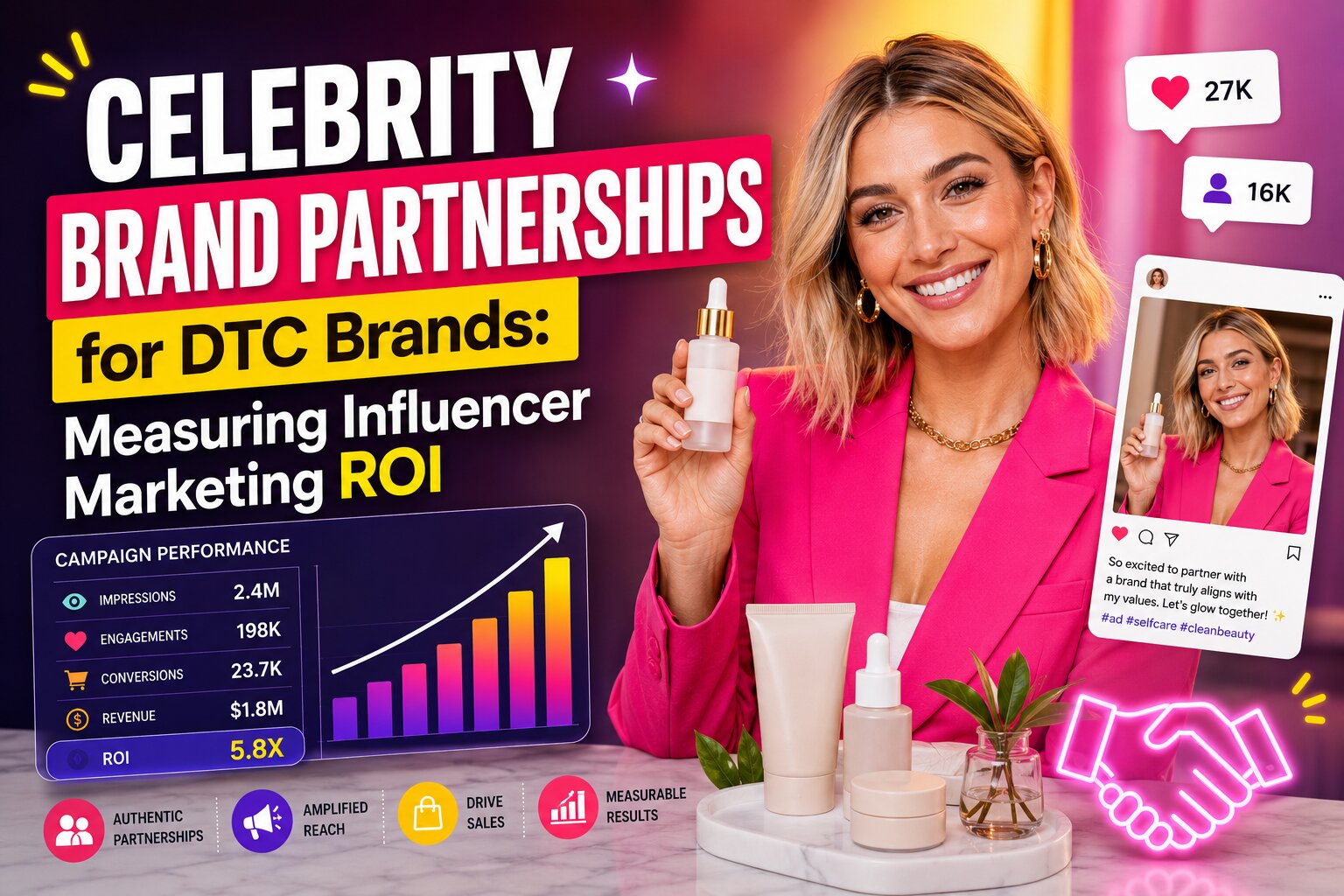
DTC brands can use celebrity partnerships strategically to drive brand awareness, credibility, and long-term growth instead of chasing vanity metrics.
Contents
Brands, on average, earn $5.78 on every dollar spent on influencer marketing. That’s more than five times the investment!
This is especially true when brands ensure a tight creator selection, proper tracking, and put paid spend behind content that is already getting traction.
These numbers are enough to shut down most board-level scepticism around the potency of influencer marketing.
But this is the industry average across all influencer tiers (nano-influencers with 2,000 followers, mid-tier creators with 200,000 followers, and celebrity influencers charging $1M per post).
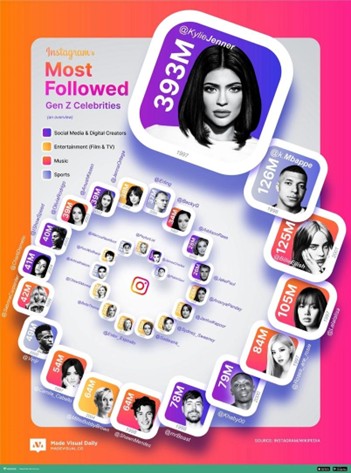
Therefore, the real question DTC brands need to answer is,
When does it make sense to invest in celebrity influencers?
Consider that several DTC brands operate on tight margins, where every dollar must justify itself in CAC, ROAS, or LTV.
Sure, celebrity influencer marketing costs big bucks, but in return, it promises something paid media can't, and that is cultural relevance.
So, when do celebrity brand partnerships make financial sense, and how can DTC brands structure them for ROI?
This guide breaks it down as a practitioner would, so that you get real benchmarks, case studies, and a framework for structuring celebrity brand partnerships optimally.
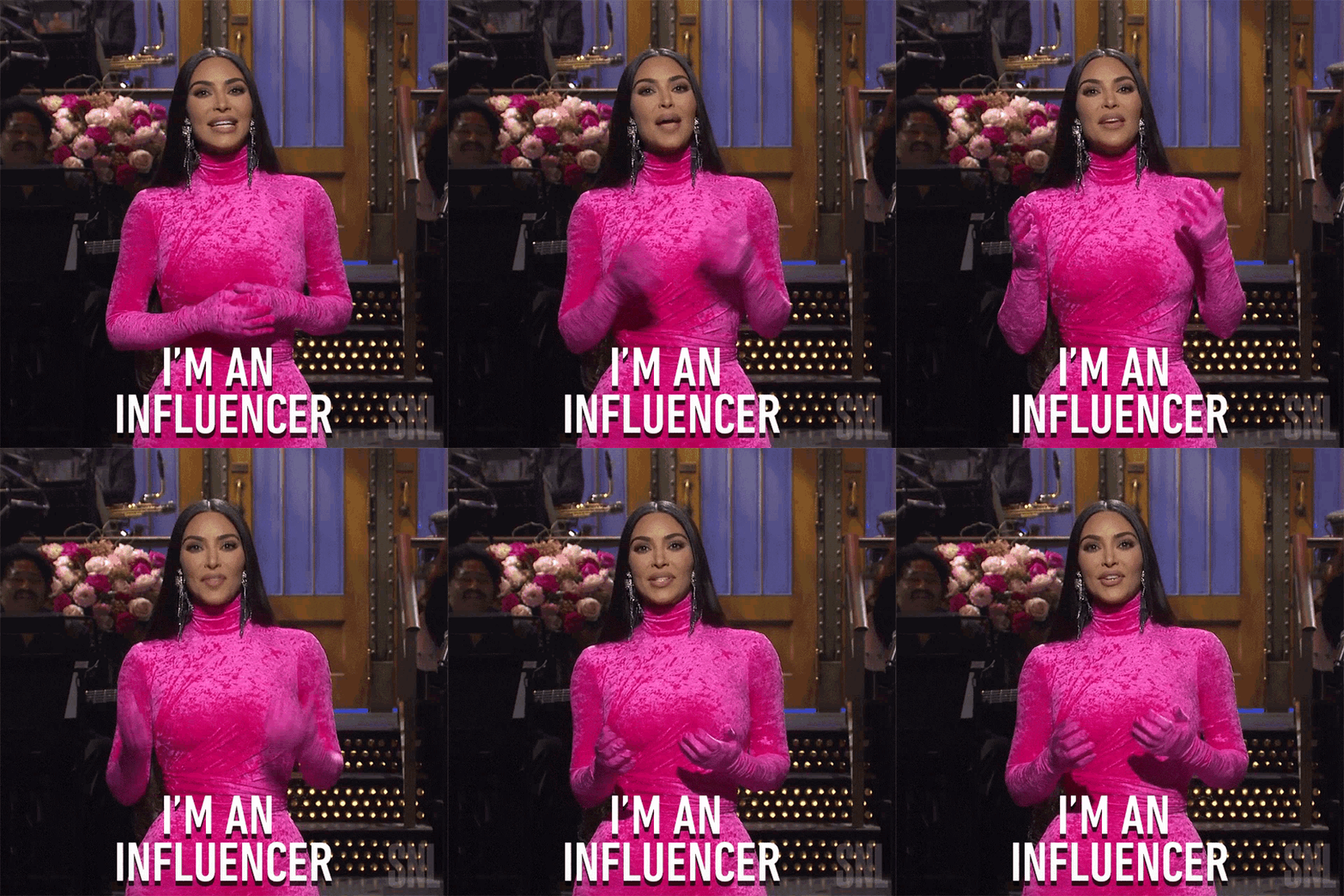
Celebrity influencers are creators and public figures with over a million followers across social media platforms. Their audience spans a wide age range and interest groups.
When brands collaborate or partner with said celeb influencers, they do it in four ways. And, all four models listed here carry very different ROI profiles.
Here, a DTC brand pays a celebrity to post about its product on their social media page(s). The celeb didn't help make the product and doesn't have a revenue share in it.
They simply get paid to show it to their audience through sponsored posts, appearances, or scripted ads. This celebrity brand partnership typically ends when the contract stipulates it should.
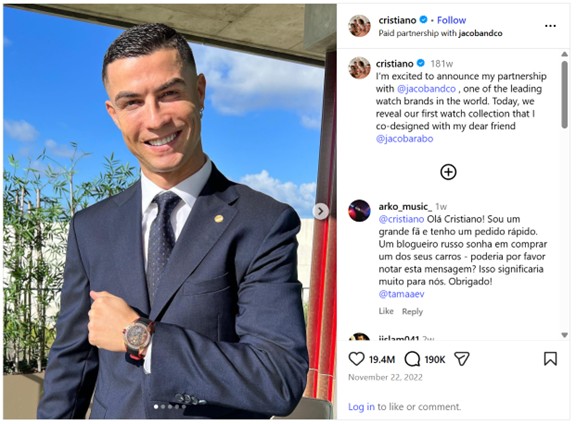
For example, Cristiano Ronaldo enters several brand partnerships, where, at $3.2M per sponsored Instagram post, he's the most expensive example of this model. For DTC brands, this model makes sense for a product launch or a cultural moment.
In this model, a celebrity influencer and the brand that approached them build something together. It can be a limited collection of a product or a new product altogether.
When celebrities collaborate with a brand to build something, they often become genuinely invested in its success. This also means there is a high chance they will promote it vigorously and creatively, rather than just posting in a templated manner because they got paid.
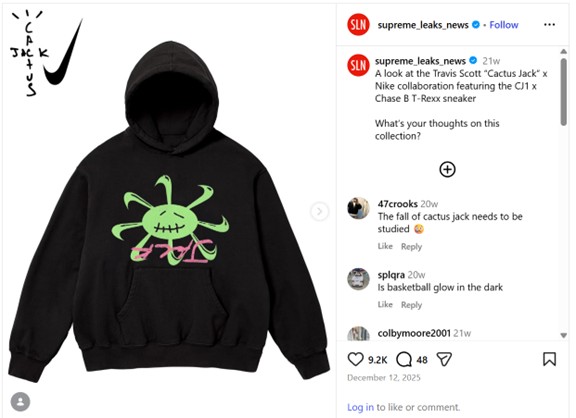
For example, Travis Scott and Nike designed the Air Jordan 1 "Cactus Jack," a shoe that sold out in minutes and resold for 3 to 5 times the retail price. Not only did Nike get cultural credibility with a younger audience, but Travis Scott also got a product he could call his own.
This model includes multi-campaign relationships with celebrity influencers. These celebs will appear across multiple touchpoints for your brand, such as social media ad campaigns, events, and retail store marketing, over months or years.
Keeping at it for longer allows audience trust to compound. Simply put, audiences stop solely seeing the brand-celebrity partnership and start associating the celebrity's credibility with your brand.

For example, George Clooney has been Nespresso’s ambassador since 2006! After two decades of ads, events, and campaigns, most people don't think of a "sponsored post" when they see him with a Nespresso machine. They just associate him with it.
Here, the celebrities themselves are a brand’s co-founder or founder.
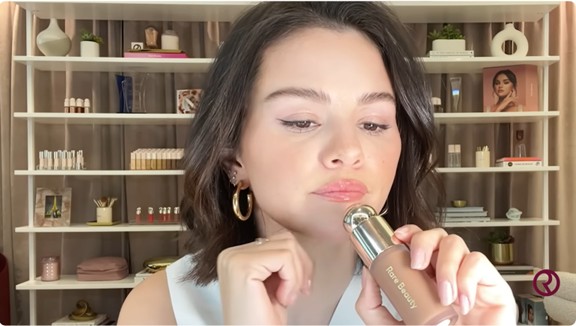
For example, SKIMS or Rare Beauty. “The celebrity is the brand”. Sure, in such cases, founders expect a high ROI, and some achieve it. But the execution is often complex, as it depends on the founder staying relevant and engaged.
If you read the numbers carefully, you’ll find that the data on celebrity campaigns is more compelling than most DTC brands give it credit for.
In 2024 alone, influencer content (including celebrity influencers) generated a thumping $236 billion in Earned Media Value. This means that if brands had tried to reach those same audiences through paid ads or traditional advertising, the bill would have been close to this amount.
Instead, they got it through creator partnerships at an average cost of $4.63 per thousand views. This is 37% cheaper, per thousand eyeballs, for content that carries the trust and credibility of a real person recommending your product.
Let’s simplify this further. Suppose your friend recommends a restaurant to 500 people, and they all show up; the restaurant didn't pay for a single one of those customers. But if they ran ads to reach 500 people, it would have cost them a substantial amount of money.
Add to this, a paid ad, whether on Facebook or TV channels, stops the moment you stop paying for it. However, a celebrity post keeps living because followers share it, save it, and comment on it, long after the campaign officially ends.
Smart brands aren't just running influencer campaigns and walking away. They are taking the posts that are already blowing up organically and putting ad spend behind them to push them even further.
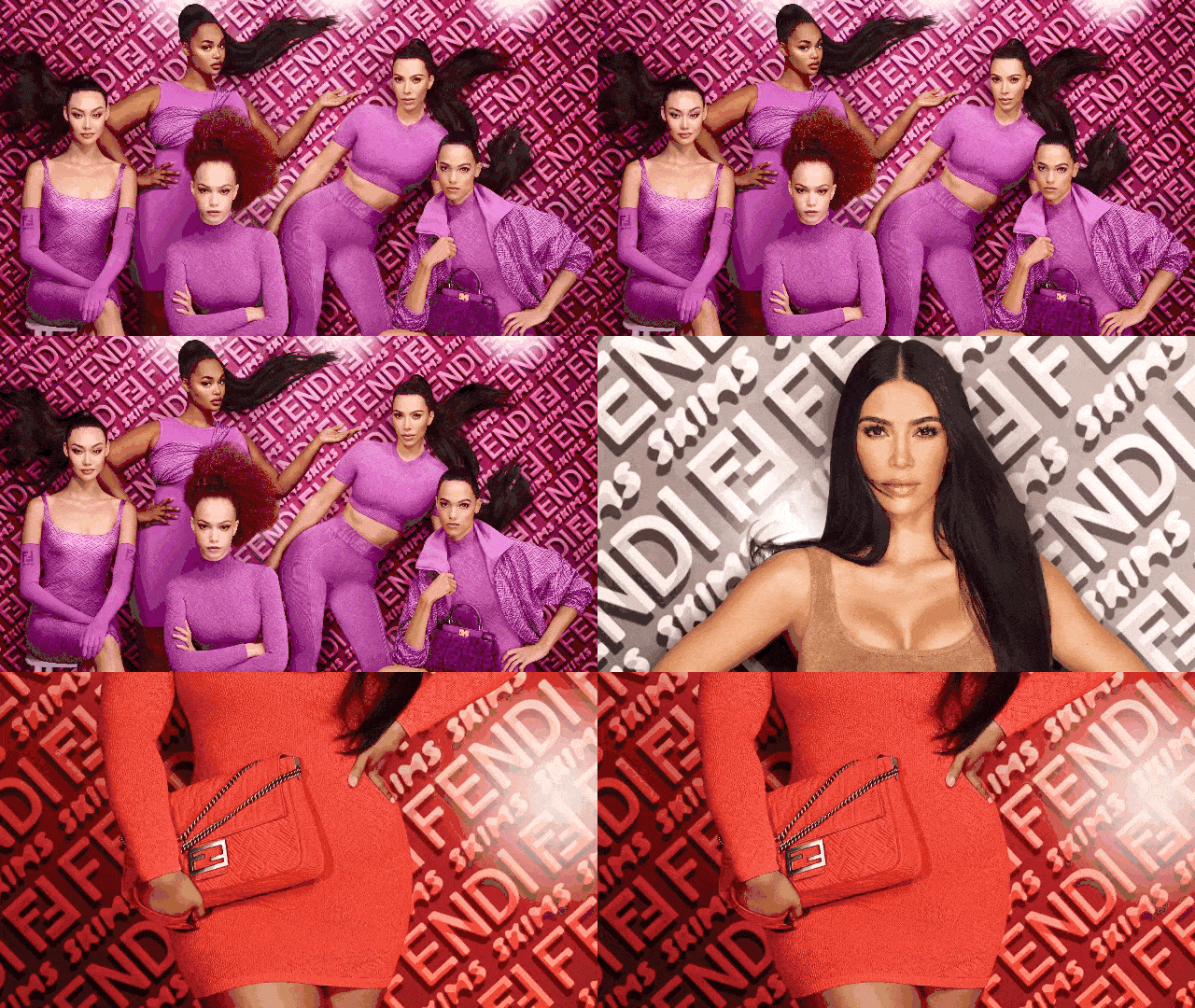
SKIMS was launched by Kim Kardashian in 2019. This brand reimagined shapewear through inclusivity and drop-style merchandising.
Within minutes of the launch, the merch sold out, touching $2M in opening sales. Furthermore, the brand hit a whopping $4 billion valuation by 2023.
What caused this initial success that ultimately led SKIMS to raise $225 million at a $5 billion valuation by 2025?
Two celebrity-brand partnerships explain this:
In October 2021, SKIMS secured a collaboration with the century-old luxury label Fendi, and they co-created a collection. As a result, SKIMS gained luxury credibility overnight, and FENDI gained relevance with a younger, newer audience.
Together, they made $1 million within the first minute of their launch.
Also Read: How Hailey Bieber's Influencer Strategy Made Rhode Worth $1 Billion
SKIMS dropped a men's collection timed to Usher's 2024 Super Bowl Halftime performance. The brand didn't manufacture the moment; the Super Bowl did. It was already the biggest conversation in the country.
As a result, SKIMS' collection sold out and also triggered a significant restock demand, driven entirely by timing and not paid media spend.
Key lesson: Embed your brand into a cultural moment your audience already cares about.
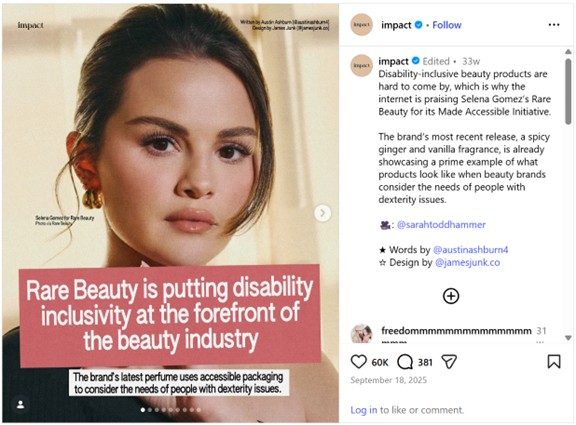
Research concludes that authenticity is the single biggest driver of whether a celebrity endorsement builds or erodes consumer trust.
Rare Beauty gets this right because of its founder, Selena Gomez's personal story. Be it navigating lupus, mental health struggles, and self-image issues. She didn't build a brand around a message. She built a brand around her life.
This is why Rare Beauty crossed a staggering $400 million in annual net sales by February 2024 and is already valued at $2 billion today.
Add to this, 1% of all sales go to the Rare Impact Fund for mental health, and her audiences know this! The philanthropic structure merged with her personal story, giving rise to Rare Beauty, a success story for all DTC brands.
Key lesson: Customers can tell the difference between a celebrity who built something and one who signed a cheque.
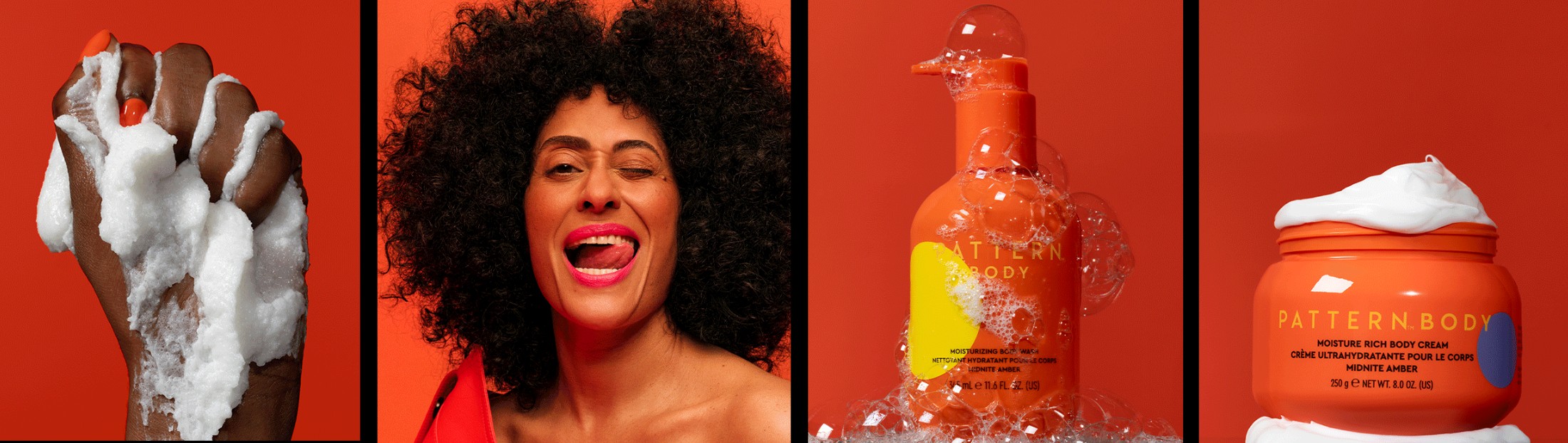
Pattern Beauty’s Tracee Ellis Ross launched her brand in 2019 in 12,000 Ulta stores on day one. Sure, this wasn’t possible overnight. She did the legwork to build audience trust and put in 10 years of hard work to get Pattern Beauty off the ground.
Now, she's not a global celebrity. She is an American TV actress who built genuine credibility with a community that mainstream beauty brands had ignored for decades. A community of women who have curly, unruly, coily hair, which was a $31 billion market she capitalised on.
Ross's customers aren't just buyers — they're advocates who share haul videos and recommend products across curl communities. The brand belongs to them as much as it belongs to her.
Key lesson: A celebrity with 11 million engaged, identity-aligned followers (a fraction of Selena Gomez’s 420 million) built a brand by owning a specific community rather than chasing a broad reach.
When it comes to celebrity brand partnerships, a common question DTC brands ask is,
Wouldn't the budget go further with micro-influencers? Honestly, yes and no. A robust DTC strategy usually requires a mix of both. Let’s understand this better with the following table.
We already know, the average influencer marketing campaign returns $5.78 per $1 spent. This is largely driven by micro-influencers. Celebrity-tier deals rarely hit those ROI multiples on a pure cost-to-revenue basis.
However, what they do deliver, and which you cannot buy with micro-influencers, is cultural legitimacy and reach that compound across earned media, press coverage, and organic social conversation.
What’s more, 73% of brands today prefer working with micro and mid-tier creators, dramatically outperforming celebrities. This may seem like DTC brands are spreading their budgets across dozens of smaller creators rather than betting everything on one big name.
But successful DTC brands that consistently report the strongest results often run a two-layer model. First, they forge celebrity brand partnerships for the halo effect at launch, generate awareness, and relevance. And then switch to micro-influencers to convert that awareness into sales.
The celebrity posts build brand search volume and social proof. The micro-influencer content running via dozens or hundreds of creators captures any demand and converts it.
DTC brands consistently report strong CAC improvements when combining paid ads with this type of creator content stack.

Celebrity brand partnerships fail not because the strategy is flawed, but because the team responsible for them made operational mistakes. For example, nobody secured content rights, nobody amplified the posts, and nobody tracked the downstream revenue.
Here's how to structure these partnerships, so none of this happens.
Trying to measure everything produces nothing useful. Therefore, choose one metric before you begin. It can be ROAS for acquisition, branded search lift for awareness, or LTV of referred customers for ambassador programs.
The metric you pick determines how you shoot the content, how you pay the celebrity, and how you know whether it worked.
The celebrity-product fit is paramount. You should not need to justify why a particular celebrity would use your product. If that happens, your potential buyers will feel the disconnect before the celeb can even articulate content.
So, before choosing a celebrity, audit their past sponsorships, audience demographics, and engagement authenticity using platforms like SARAL.
And, keep in mind that you don’t only inherit the celeb’s credibility and fame, you also inherit their controversies, if any. Therefore, vet them diligently before entering into a partnership.
Be sure to lock in paid amplification rights. These include the brand’s rights to run the celebrity's content as Instagram Partnership Ads and TikTok Spark Ads from your brand account.
You must stipulate the content reuse rights, as you should be able to put paid spend behind any celeb post garnering an organic following. That is where the real value compounds.
Learn from the SKIMS case study and don't run your campaigns in a vacuum. Drop them alongside a sports event, award season, or any cultural moment your audience is already paying attention to.
Simply put, a cultural moment already produces an organic conversation. Your job is to insert your brand into it via a celebrity partnership.
Make sure payouts, especially if you’re layering your campaign - from celeb to micro influencers, as a base fee plus performance bonuses tied to tracked outcomes.
You can do this through unique promo codes, UTM-tracked clicks, and affiliate commissions on attributable sales.
This aligns the celebrity's incentives with your revenue goals and quietly protects your margins if the campaign underdelivers.
If your brand’s post on the celebrity’s page is gaining traction, put paid spend behind it to further amplify its reach. This is how celebrity content will deliver compounding returns at a fraction of the cost of running a second campaign from scratch.
You must deliberately set up a framework to measure the ROI of your celebrity influencer marketing. Without one, you can’t figure out whether this marketing stream is working for your brand.
If brand awareness is your goal, track
If you want to launch your product, track
If you want to run long-term ambassador programs, track
This shows whether celebrity partnerships are attracting high-value, repeat customers or just short-term impressions.
In celebrity brand partnerships, audiences can tend to focus more on the celebrity than on your product. This is called the vampire effect, and it can hurt brand recall.
To avoid this, make sure the product is clearly integrated within their post. For example, if a celebrity posts their photoshoot with your logo tucked in the corner, people remember the celebrity, not your brand.
But if they are wearing your product during a major moment (like a game or event), the product becomes part of the story. This is what drives recall and sales.
To be honest, celebrities often carry controversies. This is an unfortunate happenstance of being a public figure, where your entire life is documented. Ergo, their actions can impact your brand.
To ensure brand safety, always include morality and behaviour clauses in contracts. They must define:
Make sure your legal team includes these points, rather than drafting generic clauses that don’t hold up when needed.
Before finalising a celebrity influencer, be sure to check how many active partnerships they already have.
Know that if a celebrity promotes too many brands at once, each endorsement feels less credible and more transactional. Taking on your brand in addition to several others they already promote can lead to brand dilution and overexposure.
At first, a celebrity may look like the right fit for your brand. But their actual audience can skew differently in terms of their age, location, or interests.
Therefore, always verify audience demographics before partnering with a celebrity. Influencer marketing tools like SARAL can help you analyse this data and avoid costly mismatches.
Make sure to set up your attribution systems before you deploy your campaign. In practice, this will include tracking your
Without these, you’ll either under-credit or over-credit a celebrity influencer’s performance.
Invest if:
You need brand or product awareness, as you would when launching a new product category or entering a new market. You must also have enough budget to amplify content with paid media.
Celebrity brand partnerships also make sense if you want to build brand credibility and already have micro-influencer benchmarks for performance comparisons.
Proceed with caution if:
Your margins are tight, and you don’t have content usage rights. Also, proceed with caution if you’re relying solely on last-click ROAS.
Celebrity campaigns rarely look useful on last-click. They truly show value in assisted conversions and LTV.
Avoid if:
You don’t have the tools to track performance properly, or your audience is too niche for the celebrity’s reach to matter. Also, avoid this medium if there are brand safety concerns.
Lastly, if you are under $1M in revenue, the investment required to run a celebrity influencer marketing campaign often puts ROI under pressure.
The winning approach is hybrid! Brands invest in celebrity partnerships for reach and halo. After that, they move on to micro-influencers to improve conversion and CAC efficiency.
Together, this creates a system in which awareness fuels conversion and community proof builds trust. Brands that win see celebrity brand partnerships as the top layer of a full-funnel strategy.
Want to run celebrity and influencer campaigns that actually drive ROI?
SARAL gives you everything! From discovery to tracking to attribution to performance. All in one place! Start your free trial or book a demo today.
Q1: What is the average ROI of celebrity influencer marketing?
Influencer marketing (including celebrity influencer marketing) averages $5.78 in return per $1 spent across all creator tiers. Optimized campaigns can reach $11–$18 per dollar. However, celebrity-tier deals rarely match these multiples on a direct cost-to-revenue basis. Their ROI is better measured in brand awareness, earned media value, and cultural credibility — metrics that compound over time and are harder to capture in pure ROAS.
Q2: How do celebrity partnerships work monetarily for DTC brands?
Most celebrity brand partnerships involve a flat fee. Brands also get the rights to run those posts as ads on their own social media handles. Advanced setups include performance incentives via promo codes, UTMs, or commissions.
Q3: What is the difference between a celebrity endorsement and a celebrity-owned brand?
Celebrity endorsements are paid promotions where a celebrity posts about or appears in a brand's campaign without any ownership or product development role. Celebrity co-created lines involve deeper collaboration — the celebrity helps design or name a product, often tied to a limited release. Celebrity-founded brands (like SKIMS or Rare Beauty) involve the celebrity as a founder or co-founder with equity, creative control, and long-term brand alignment. Each model carries a different cost structure and ROI profile.
Q4: How do you measure Celebrity influencer marketing ROI?
Measuring celebrity influencer marketing ROI depends on your campaign objective. For brand awareness campaigns, track branded search volume lift (via Google Trends or Search Console), earned media value, and share of voice. For product launches, monitor first-week sales velocity, add-to-cart rates from influencer-linked pages, and restock triggers like stockouts or waitlist spikes. For long-term ambassador programs, compare the customer lifetime value (LTV) of influencer-acquired customers against other acquisition channels.
Sign up for a 7-day email course on the unique "Predictable Influence" strategy used by top brands like Grüns, Obvi, Tabs Chocolate.
.avif)
If you’re skeptical about influencers driving sales, this eBook will change your mind. Influencer attribution isn't the same as paid ads—it's a whole different game. Get inside the minds of successful marketers and see how they really measure ROI.

If ditching the randomness of influencer campaigns and building a predictable, ROI-first influencer program sounds like a plan. Consider talking to our team!
