



Ready to drive incremental growth with influencers?
If ditching the randomness of influencer campaigns and building a predictable, ROI-first influencer program sounds like a plan. Consider talking to our team!


Meta
Here are the top Shopify affiliate tools compared across tracking, pricing, fraud prevention, and commissions to help Shopify brands scale profitably


Contents
Did you notice? The global affiliate marketing industry surpassed $18 billion in 2025, with U.S. spend alone approaching $13 billion in 2026.
And yet, several Shopify brands are failing at affiliate marketing. Not because this channel doesn’t work, but because they chose the wrong tool.
If you pick the wrong tool, you end up with affiliates who don’t get paid correctly, orders that don’t get tracked accurately, you struggle to detect fraud, and the payouts will eat up your weekends.
If you're still building your foundational knowledge, these affiliate marketing lessons are a good starting point before diving into tool comparisons.
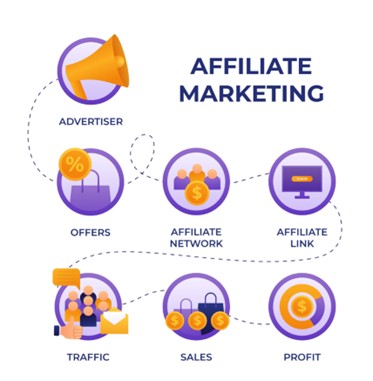
Choose the right tool, and you'll be rewarded with a performance-based acquisition channel that delivers a whopping 12:1 ROAS. Bear in mind, this is higher than Google Ads.
To pick the best affiliate marketing tool for your Shopify brand, you must know what to look for in one.
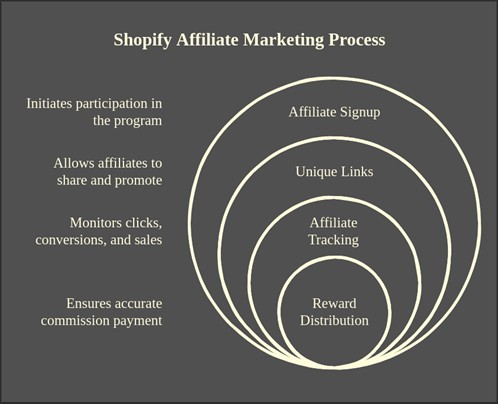
What separates a good affiliate tool from a great one? Keep reading to choose right in the first go
For starters, the tool you choose must directly and seamlessly connect to Shopify’s backend. This means you shouldn’t have to manually configure any webhooks or other features.
Native integration means that every order is recorded accurately and every refund is issued promptly. Simply put, your affiliate dashboard reflects your actual Shopify data in real time.
Third-party cookie deprecation is the current reality. Where iOS already blocks cross-site tracking, Google Chrome is also moving towards privacy-first default settings.
This means the affiliate tool you choose should support first-party cookie tracking, discount code attribution (as a fallback when cookies are blocked), and multi-touch attribution. This way, you can understand the complete customer journey.
A tool that relies solely on third-party cookies is a strict no-go.
Suppose you use a tool that only allows a flat 10% commission on sales. This will severely restrict your affiliate program. Robust platforms let you set dynamic:
If a tool only lets you set one universal commission rate, do not invest in it.
Manual payout management is a nightmare for each affiliate marketing program, especially when your affiliate count crosses 20.
Therefore, choose a tool that supports automated mass payouts and integrates smoothly with popular payment platforms like PayPal and Stripe. This way, paying affiliates at scale stays fast and hassle-free.
Also, check whether bulk payout automation is included in the base plan.
A good tool should allow you to create application forms to capture inbound requests can easily find you. It should work as a self-serve portal for your brand so affiliates can get their links hassle-free and check their stats without emailing you.
It should also have a strong, user-friendly onboarding flow that gets your affiliates active quickly. High affiliate signup rates mean nothing if onboarding and activation rates are terrible.
So, look for tools that let you automate your affiliate welcome sequence and offer built-in integrations with platforms like Braze or Klaviyo for effortless communication.
Authenticity is critical for the success of your affiliate marketing program. You need to know:
Therefore, the affiliate marketing tool you choose must have fraud prevention features like:
For example, websites like Honey and RetailMeNot spreading your affiliate's discount codes to everyone who searches is a very real problem. And, if your tool can't detect said code leaks, you will end up overpaying affiliates out of your own pocket for revenue they didn't actually generate.
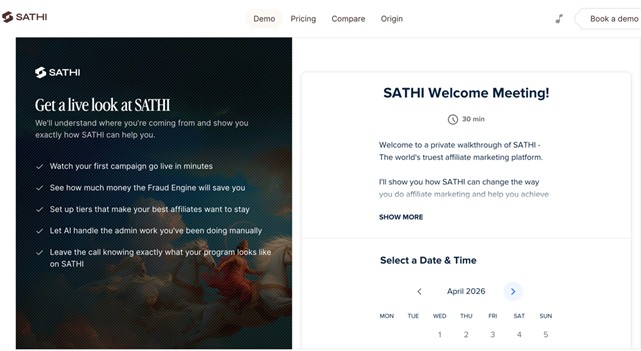
Verdict: The most complete affiliate marketing platform built specifically for Shopify brands
What is it, and who is it built for?
If you're a Shopify brand managing a mix of traditional affiliates and content creators, SATHI is for you. This feature-rich tool lets you manage and track a series of tasks from a single, unified dashboard.
Know that SATHI is not a generic SaaS platform bolted onto Shopify; it's a tool built on Shopify's commerce data.
It is created to help Shopify brands run a professional, scalable affiliate and influencer program without stitching together five different tools.
Key Features
Pricing
Tiered pricing starting at $199 per month.
Pros
Cons
Best for: Shopify brands that want to know if affiliates are driving incremental revenue, protect their codes from leaking, and keep their ambassadors engaged.
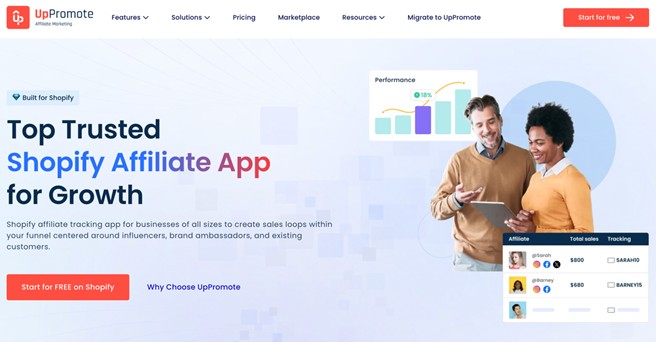
Verdict: A value-for-money tool for brands that wish to scale their affiliate marketing program without paying enterprise prices.
What is it, and who is it built for?
UpPromote is an effective tool for brands looking to better structure and scale their affiliate program. This platform covers the full stack at a price point that doesn't require your CFO's budget approval.
Key Features
Pricing
The base plan starts at $29.99 per month. But higher plans offer more affiliate seats and automated commissions, along with priority support. They also have a free plan for a very limited 200 referral orders per month.
Pros
Cons
Best for: Brands that wish to scale their affiliate marketing program from 10 to 500 affiliates.
Verdict: A sophisticated mid-market scale affiliate + influencer marketing tool.
What is it, and who is it built for?
Refersion sits in the mid-market sweet spot. It is more powerful than BixGrow and less complex and expensive than Impact.com.
If you operate in the CBD, Health & wellness, apparel, or beauty spheres, this tool is great for you. Why? These domains need granular product-level commission control, which Refersion provides seamlessly.
Key Features
Pricing
Refersion does not offer a free plan. Its base plan starts at $99/month for up to 50 affiliate orders per month.
Pros
Cons
Best for: Mid-market DTC brands that need product-level commission control.
Verdict: A great choice for Shopify brands that want instant access to a massive global publisher network rather than building an affiliate base from scratch.
AWIN is an affiliate marketing tool that connects over 25,000 advertisers with more than 1 million active publishers across 180 countries. They boast a network that includes bloggers, content sites, and influencers.
This tool can give you a ready-made marketplace of publishers who are actively looking for programs to promote.
AWIN integrates with Shopify seamlessly so you receive real-time order tracking, transaction syncing, and performance reporting through it.
AWIN’s base plan called Access, starts at $59 per month and has a 3.5% tracking fee on every referred transaction. There is also a one-time $549 joining fee on the Access plan. The higher plans, namely, Accelerate and Advanced are customer-priced.
Best for: Established Shopify brands, who want to tap into an existing publisher ecosystem.
Verdict: An enterprise-grade partnership platform for affiliate and influencer marketing.
What is it, and who is it built for?
While not primarily a Shopify app, Impact.com integrates well with the platform as an end-to-end affiliate and influencer marketing automation tool. It allows you to scale your affiliate program, B2B partnerships, and multi-channel attribution.
Key Features
Pricing
The base plan starts at $30 per month. But, if you’re operating at an enterprise level, you might want to invest in their “Essential” plan, which starts at $500 per month. Their Pro plan starts at $2,500 per month.
Pros
Cons
Best for: Enterprise-level Shopify brands managing at least 500+ affiliates, and influencers who need one platform to rule them all.
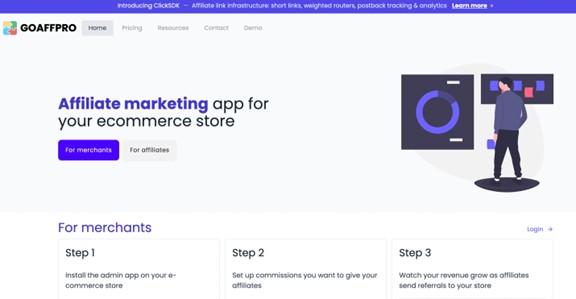
Verdict: The best free option for brands that are just starting out.
What is it, and who is it built for?
GOAFFPRO is not the flashiest tool, but it’s user-friendly, free, and powerful to start your affiliate marketing program.
With this tool, you get a branded affiliate portal, automated welcome emails when affiliates sign up, post-checkout pop-ups which prompt customers to become affiliates, referral link tracking, discount code tracking, refund syncing, and basic analytics.
This is a pretty neat setup for $0 per month.
Key Features
Pricing
While most features are free, GoAFFPRO also offers a Premium tier at $24/month with advanced features, such as basic fraud detection and an MLM (multi-level marketing) structure. The latter means that your affiliates can recruit other affiliates, and also earn a commission on the sales their recruits generate.
Pros
Cons
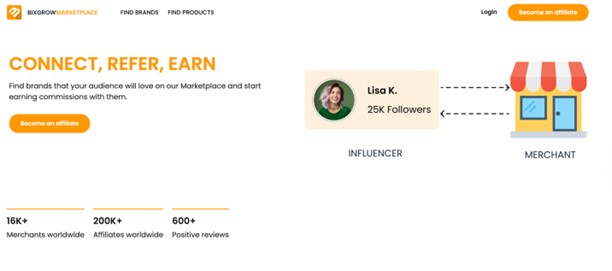
Verdict: A good budget tool for lean startups that wish to do both affiliate and referral marketing through a single tool.
What is it, and who is it built for?
If you are looking for a 2-in-1 affiliate and referral platform that punches well above its price point, choose BIXGROW. At a mere $14.99 per month, it gives you affiliate link tracking, coupon tracking, MLM structure, referral program capabilities, and PayPal payouts.
Key Features
Pricing
BIXGROW has a free plan. The monthly paid plan starts at $14.99 with more affiliate tracking capacity and advanced features. The pro plan comes at $24.99 per month.
Pros
Cons
Best for: Early-stage DTC startups that want affiliate + referral programs in one pocket-friendly package.
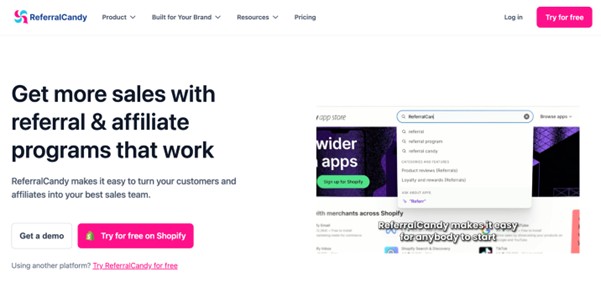
Verdict: If customer referral marketing is your primary channel, and affiliate is secondary, this tool works best.
What is it, and who is it built for?
ReferralCandy is one of the most battle-tested tools on this list. It’s been in the market since 2012. It handles both customer referral programs and affiliate programs with a reasonable depth on both sides.
So, if your priority is turning satisfied customers into advocates (referrals) and also want affiliate functionality layered on top, ReferralCandy should be your go-to.
Key Features
Pricing
The base version starts at $59 per month plus a 3.5% commission on referred sales. The Premium version starts at $299 per month with no percentage commission.
Pros
Cons
Best for: DTC brands that value referral marketing with affiliate marketing as their supporting channel.
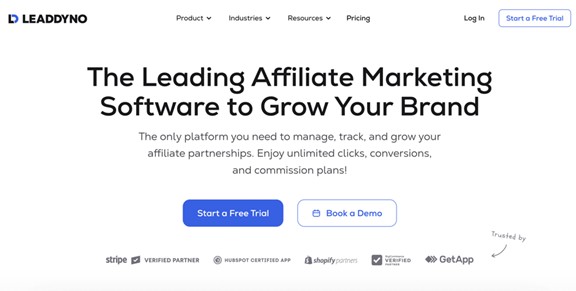
Verdict: A great tool for non-technical founders, as it’s very easy to set up and offers a good feature set.
What is it, and who is it built for?
LeadDyno's pitch is honest: “install it follow the setup wizard have a working affiliate program in 15 minutes.”
Once you set it up, you can create affiliate pages, build email templates, set up commission routines, and much more.
Key Features
Pricing
LeadDyno plans start at $49 per month, and this tier allows up to 3000 unique visitors. A higher volume (enterprise-grade) will attract higher customized costs.
Pros
Cons
Best for: Small teams who need a working affiliate program quickly, and without a steep setup curve.
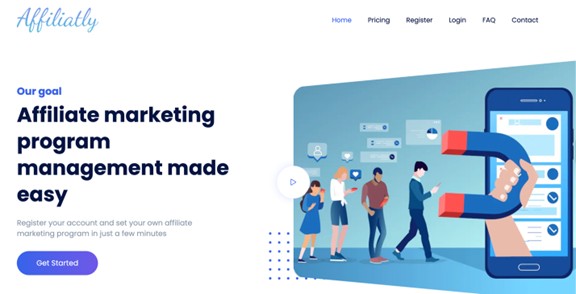
Verdict: A user-friendly affiliate tool for Shopify brands that is simple to use, is feature-rich, and does not cost a lot.
What is it, and who is it built for?
Affiliatly offers plans that scale by affiliate count, not by the features provided. This way, you always have access to the full feature set. It tracks affiliate clicks, attributes sales, and calculates commissions accurately.
For a small brand that wants clean, accurate tracking, Affiliatly is an excellent choice.
Key Features
Pricing
The base tier starts from $16 per month for up to 50 affiliates. After this, it scales only by affiliate count. Therefore, none of the features are locked out at any tier.
Pros
Cons
Best for: It is the right choice for small DTC brands that want straightforward affiliate tracking at a low cost.
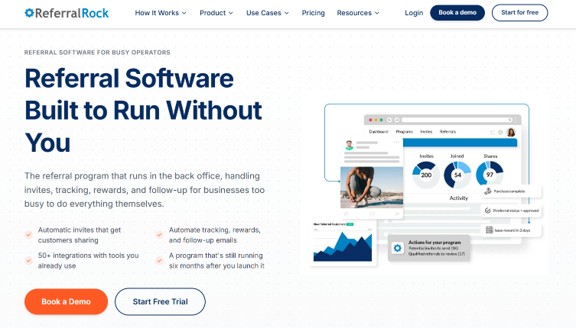
Verdict: The absolute best all-in-one platform if you want to run high-growth customer referral, partner, and professional affiliate programs seamlessly side-by-side.
Referral Rock is a heavy-hitting, multi-channel powerhouse built for brands that have outgrown simple, single-use tracking plugins. While most tools force you to choose between either a customer referral program or a traditional affiliate setup, Referral Rock runs both simultaneously without breaking a sweat.
It is designed for growing e-commerce and B2B brands that want to turn their entire ecosystem—loyal customers, high-profile influencers, and professional affiliates—into a unified, automated revenue engine. If you want enterprise-grade flexibility without the nightmare of a 6-month enterprise setup, this is your tool.
Plans start at $175 per month. Unlike other tools, there are zero transaction fees or commission cuts taken from your hard-earned referral sales, meaning your ROI scales cleanly as you grow.
Best for: Growing brands looking to unlock massive word-of-mouth scale by running automated customer referral and affiliate programs under one roof.
The right tool depends almost entirely on your growth stage and what kind of affiliate program you're actually running. So,
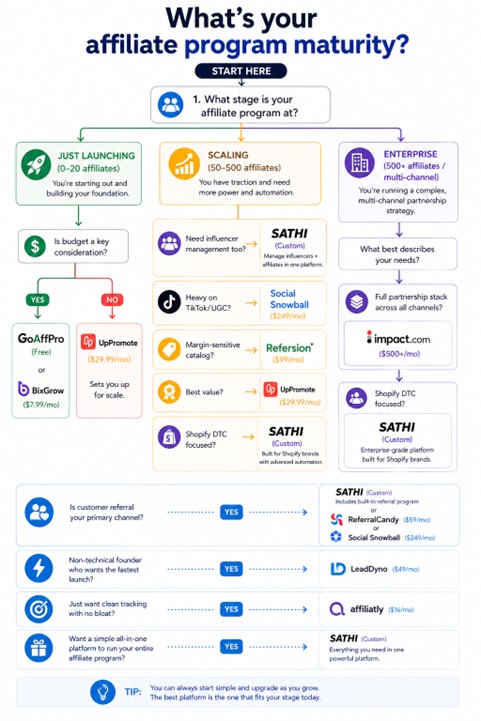
Know which tool you want to work with? Then, here is the next step that entails setting up an affiliate program on Shopify quickly.
Follow these steps to define your commission structure:
Match your growth stage as well as intent to the right tool on the list. Don't suddenly start on Impact.com if you have 15 affiliates, and avoid GoAffPro if you have 500.
Install the tool you chose in your Shopify store. This ideally does not take more than an hour. Once you have installed the tool, place a test order using an affiliate account and verify that the commission is displayed accurately. After this, go live!
To build a strong affiliate onboarding flow, ensure new affiliates at least have their:
When you keep these ready, you’ll find your affiliate activation rate goes up.
Now comes the tricky bit. How to recruit affiliates? The surest way to get the right ones is to start with your existing customers. They already know and like your product. Send a post-purchase email to buyers over the past 6 months, with a clickable link to join your affiliate program.
Additionally, check your social mentions across platforms to verify who is tagging you organically. These are your warm leads. Invite them to join your affiliate program.
To do this, set a minimum order value and a minimum affiliate age. After this, set payout eligibility. The typical standard for receiving payouts is 72 hours. Now, turn on IP blocking and device fingerprinting if your tool supports it.
Finally, enable leaked code detection if you're running discount codes. Doing this will ensure that Honey and RetailMeNot cannot find your codes within days of launch.
Pay very close attention to activation rates for at least the first 90 days. Ask and answer,
Double down on the affiliate types that drive a high average order value (AOV).
For a detailed playbook on improving these numbers, check out this affiliate activation guide.
Here’s some good news! The most common mistakes DTC brands make are all fixable once you know what to look for.
Sites such as Honey, RetailMeNot, and a dozen browser extensions actively scrape and redistribute coupon codes.
For example, if you issue a 15% discount code to your affiliates but don't have a leaked code-detection feature in your toolkit, that code will end up on every coupon site within days.
Therefore, ensure the tool you choose offers leak detection. But detection is not protection. For that, tools like SATHI generate affiliate-specific coupon codes. That way, even if a particular discount code leaks, it’s only one code and not your entire program’s code.
Without setting a minimum payout threshold, some of your affiliates could misuse the program. How?
By signing up friends who may not be your true customers.
By generating tiny sales, but withdrawing whatever small sum they make.
To ensure your affiliates stay true and don't game the program, set a minimum payout threshold of $25 to $40, along with a 30-day hold on commissions. This simple policy can eliminate most payout fraud.
Let’s understand this mistake with an example. A content creator with 50,000 engaged followers versus a coupon aggregator site with 1 million monthly visitors requires completely different management approaches. Why? Because they generate different customer quality.
Therefore, you must segment your affiliates, track the LTV of customers referred by each type, and optimize accordingly.
More often than not, the coupon sites drive the highest volume but attract the lowest-quality customers. While these sites may offer higher returns initially, you will find no repeat purchases later.
Know that the newly recruited affiliates are most motivated to sell in the first 48 to 72 hours after you approve them.
So, if your onboarding is just a "here's your link" email, your activation rates will dwindle. Don’t make this mistake. At a minimum, build a 3-email automated sequence, which includes:
Finally, check in with your top performers every 7 days to ensure they stay motivated.
You will always have affiliates who bring only one-time buyers, and others who bring repeat customers who spend more. If you only track the first sale made by an affiliate, you’ll not focus on your high-value affiliates and risk losing them.
Therefore, make sure to check customer lifetime value (LTV) by each affiliate every quarter, so you know where and with whom to invest more.
Q1: Does Shopify have built-in affiliate marketing tools?
Shopify offers some built-in creator and referral capabilities through tools like Shopify Collabs. But, it does not include an advanced commission structure, fraud detection, automated payouts, and deep performance reporting that a dedicated affiliate tool provides.
Brands that need deeper commission tracking, flexible payouts, fraud protection, etc. often use third-party apps.
Q2: Which Shopify affiliate tool has the best tracking accuracy for a cookieless environment?
SATHI is one of the strongest options for cookieless tracking because it uses first-party tracking, affiliate links, discount codes, and backup attribution methods. This means sales are tracked more accurately even when browsers block cookies.
Q3: What is the difference between affiliate marketing and referral marketing on Shopify?
Affiliate marketing is when creators, or websites, promote your products and earn money for each sale made through them.
Referral marketing is when your own customers refer friends or family to buy your products. In both cases, the respective entities receive a reward, cash, a discount, or store credit for each sale they make.
Q4: Which affiliate tool is best for Shopify Plus brands?
While this largely depends on your requirements, SATHI is worth considering if you want a Shopify-DTC-native platform with both affiliate and influencer management.
Q5: Can I run both an affiliate program and a referral program at the same time on Shopify?
Yes, you can! Several tools, such as SATHI, make this possible, and it's all from a single unified dashboard. Running both simultaneously is a smart acquisition strategy. Affiliate and referral programs target different stages of the customer relationship and complement each other well.
Sign up for a 7-day email course on the unique "Predictable Influence" strategy used by top brands like Grüns, Obvi, Tabs Chocolate.

Kim Biddle, Co-Founder of Clutch Affiliate, shares real examples from her experience managing affiliate programs for CPG brands and provides actionable insights for both emerging and established brands.

If ditching the randomness of influencer campaigns and building a predictable, ROI-first influencer program sounds like a plan. Consider talking to our team!
