


Ready to drive incremental growth with influencers?
If ditching the randomness of influencer campaigns and building a predictable, ROI-first influencer program sounds like a plan. Consider talking to our team!


Relationship Management
Creators don’t stop posting overnight. Burnout shows up earlier, quietly, and it costs brands more than they realize. Here’s how to spot and fix it.


Contents
Burnout is not about a bad day, low motivation, or temporary frustration. It happens over time when someone keeps doing the work but very little comes back in return, whether that return is money, clarity, growth, or creative satisfaction.
Creator burnout is that same condition, applied to creator–brand work.
A creator is burned out when working with a brand starts to feel draining persistently. They may still like the audience's response. But the collaboration itself becomes something they have to ‘just do,’ and don't enjoy it anymore.
Spotting and addressing it early protects not just creator relationships, but the efficiency and consistency of your influencer program as a whole.
This article breaks down what creator burnout actually looks like, how it develops over time, and what you can do to prevent it before performance drops.
When creators are burned out, their work suffers. They stop trying new angles. They stop putting in that extra thinking that makes content authentic. It stops convincing people that your product is worth trying.
All this leads to content that might not be reusable for your ads or social media. One of the biggest benefits of influencer marketing is getting content that you can repurpose. When that breaks down, you end up filling the gap yourself, spending more time and more money to replace what should have already been working.
An even bigger issue is consistency.
Burnout leads to longer gaps between posts about your brand. They don’t repeat messages enough for recall to set in. So you get isolated mentions that fade quickly. The relationship with influencers never compounds.
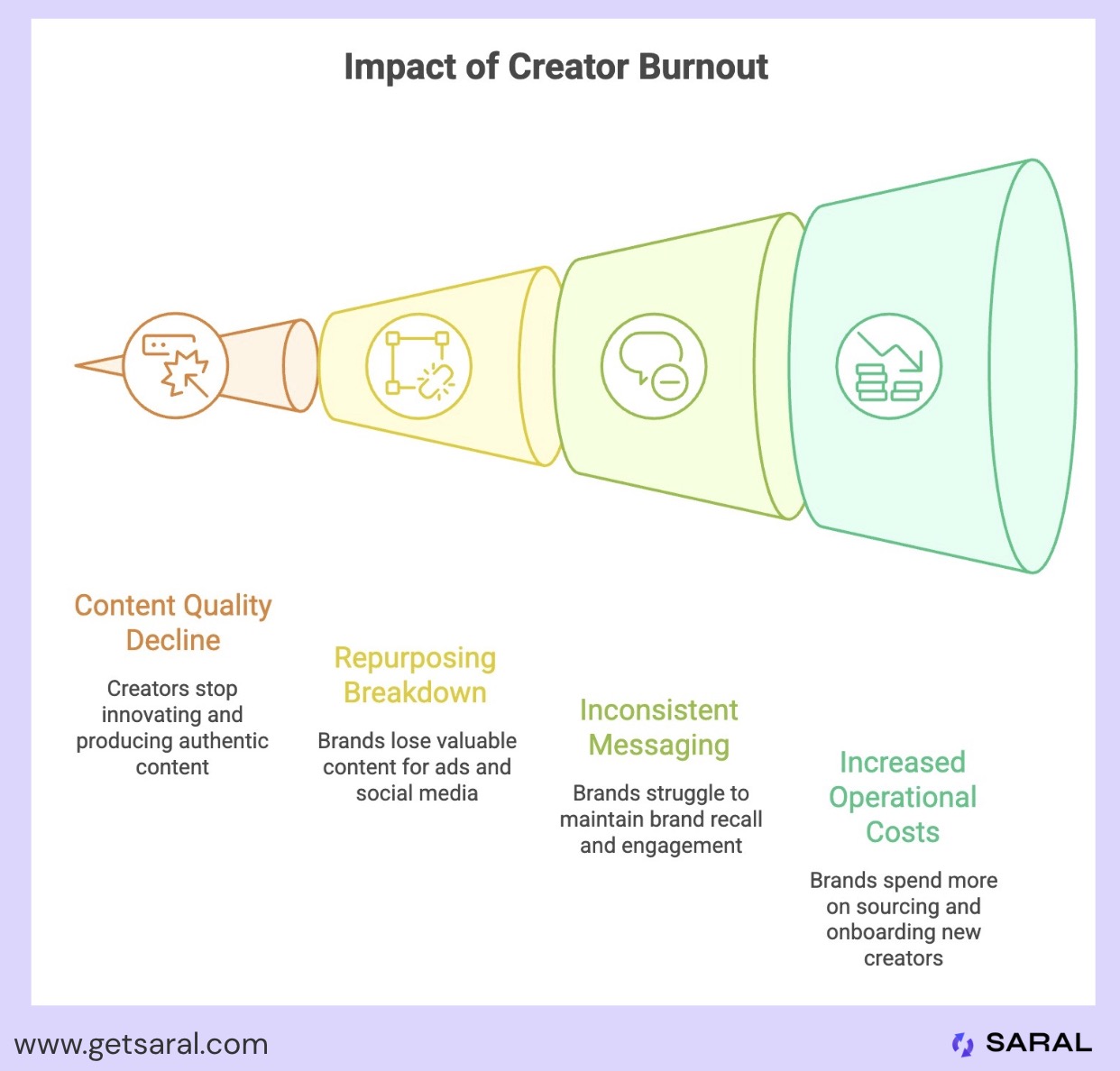
That forces brands into a constant replacement cycle. More sourcing. More outreach. More seeding. More onboarding. All to maintain the same level of output. The cost of running the influencer program goes up, while the impact per creator goes down.
At scale, this turns into an efficiency problem. Programs feel “busy” instead of effective. And leadership starts questioning why influencer marketing isn’t delivering the way it should.
Creators rarely tell you they’re burned out. Most won’t label it that way, and many won’t say anything at all.
What helps is noticing the pattern early, before things stall or fall apart.
Creator burnout doesn’t happen in one moment. It builds gradually, and the earlier you recognize it, the more room you have to fix it. These aren’t definitive, just examples of the kind of changes worth noticing:
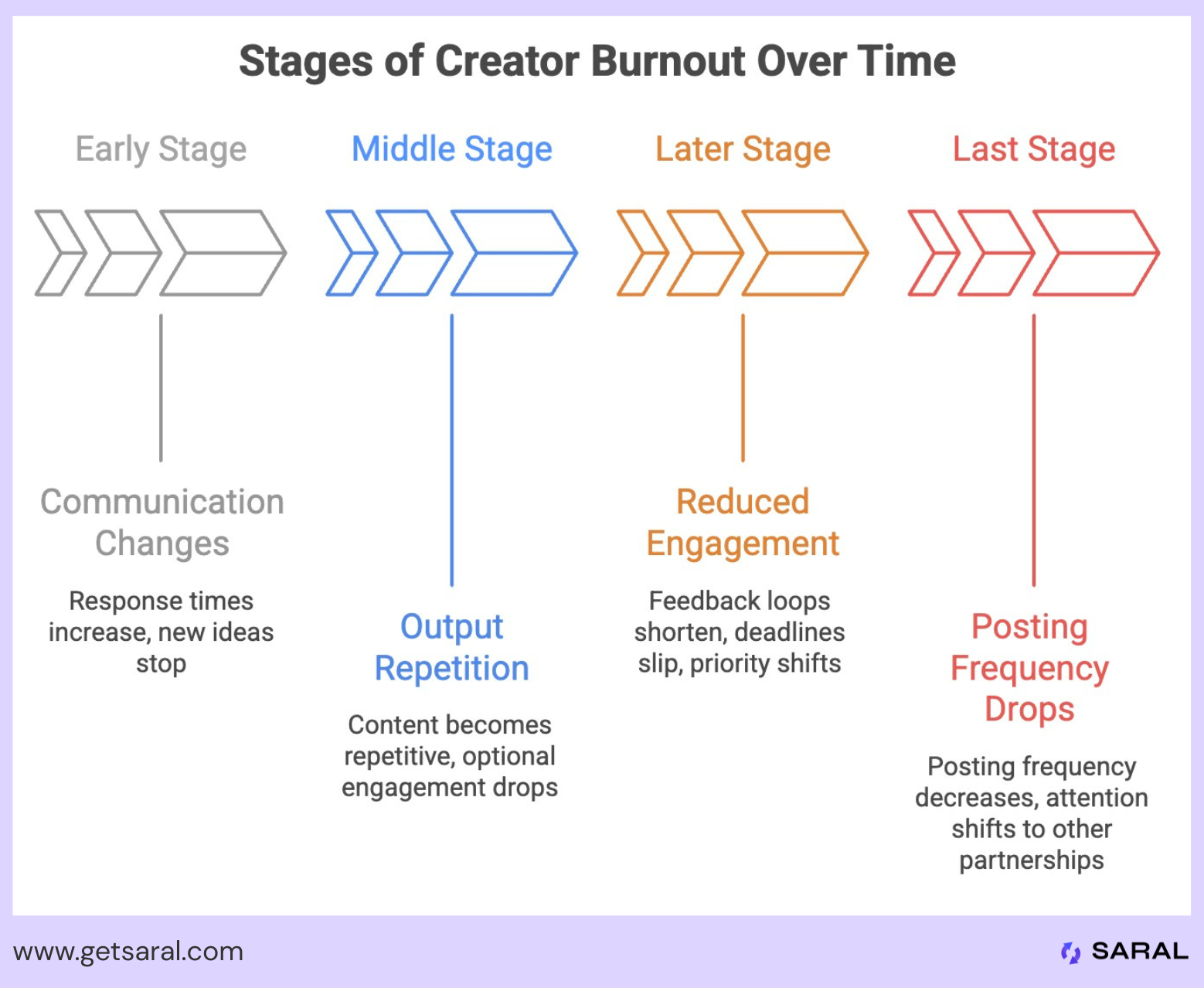
At the last stage, posting frequency usually drops, with longer gaps between posts or the creator shifting more of their attention to other partnerships.
Kayla Tycholiz, influencer marketing consultant at (un)matched marketing, points out that creators rarely disengage all at once. Instead, the shift shows up quietly in how they communicate.
“The earliest signs I’ve seen are changes in communication. Creators go from being excited and engaged, sharing ideas and responding quickly, to slower replies, less enthusiasm, or no response at all."
She also highlights how surface-level signals can be misleading, especially in emotionally intense life stages.
“I worked with creators who had just become new moms. They were excited before giving birth, but afterward, communication dropped completely. Online, everything looked fine. In reality, many weren’t ready to move forward. What people show publicly doesn’t always reflect what they’re dealing with privately.”
The points below focus on the parts that are fully in your control, and where small changes make a big difference over time 👇
Burnout can come from cognitive load, aka the mental effort someone spends just trying to figure out what to do, before they even start doing the work.
For creators, this shows up when they have to guess what the brand wants, piece together instructions from multiple messages, or worry about whether they’re doing it “right.” Over time, that constant uncertainty becomes draining.
Here's how you can reduce cognitive load and prevent burnout:
When creators don’t have to think through logistics or second-guess decisions, they can focus on the creative work itself. That makes working with your brand more sustainable over time.
According to Kayla, burnout isn’t always about low pay or lack of motivation. It often comes from the mental effort creators have to expend navigating unclear or conflicting expectations.
“Brands often say they want creators to have creative freedom, and that creators know their audience best. But when it comes time to execute, that belief doesn’t always hold.
I’ve seen brands send too detailed creative briefs, with strict guidelines. Then there's a request for a re-record when creators take a different approach. That disconnect is confusing and exhausting. You can’t ask for autonomy and then expect the execution you have in mind.”
She adds that much of this friction could be avoided earlier in the process.
“When brands collaborate with creators upfront on direction and intent, it reduces revisions, builds trust, and lowers the mental load for everyone involved.”
When creators agree to work with you, they’re making a decision based on what you tell them upfront. In their head, there’s a clear picture of what the collaboration will look like. How much work it is, what kind of content they’re making, and what they’re getting in return.
Problems start when that picture changes after they’ve already said yes.
For example, you approve a content format, then later decide it doesn’t work anymore. Or you say one post is enough, then add “just one more” because the results are slow. Or what felt like a defined collaboration starts to feel open-ended.
Even small changes can feel frustrating when they weren’t part of the original agreement.
Over time, creators stop taking the initial agreement at face value. They start bracing for extra tasks, hidden scope, or last-minute changes. That constant need to stay alert and protect their boundaries is a form of burnout, too.
Here is what you can do to prevent this type of burnout:
There’s no guarantee that every creator you pick will turn out to be a strong fit for your brand. It’s not a mistake by the brand or the creator. It can happen because of a couple of reasons:
Trying to fix the mismatch usually creates more friction. The creator keeps adjusting. You keep correcting. Both sides spend energy without getting better results. That back-and-forth is what leads to burnout.
When this keeps happening, creators aren’t excited to create. They’re focused on not getting it wrong. That ongoing friction is what leads to burnout in these partnerships.
Once you're sure that it's a creator-brand mismatch, stop forcing alignment. Don’t wait three months hoping it improves. There's no point in putting a band-aid or trying different approaches here.
What you can do is reduce how often those mismatches happen in the first place.
You won’t always have new products or big launches. And creators can burn out when it feels like they’re saying the same thing again and again. It leads to creative burnout.
What you can control is whether creators have new reasons to show up and engage, even when the product stays the same. One way to do this is by coming up with new ideas to bring your creators together or give them a reason to post.
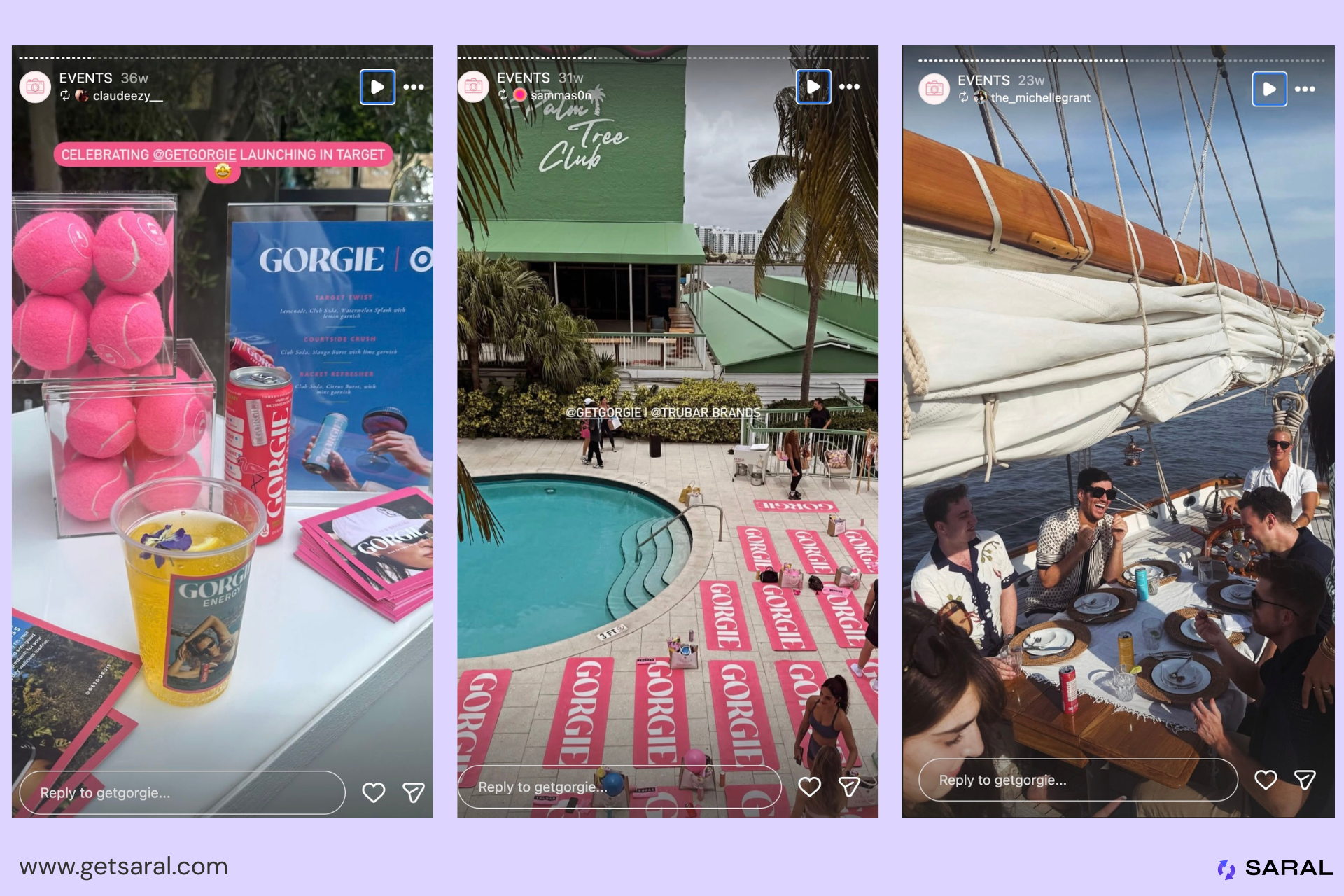
For example, Gorgie keeps creators engaged by inviting them to different types of events. These can be a poolside yoga to launch a new flavor, or lunch on a boat to celebrate launching into a retail store, or a tennis match to showcase some merchandise.
Here are some more ideas to keep your creators involved:
A lot of creator burnout problems can be prevented when you spend more time building relationships with creators, knowing exactly what they're going through, and helping them when needed. But that’s hard to do when most of your energy goes into manual work and coordination. And no matter how optimized your Google Sheets or templates are, they don’t make creator relationships easier to manage at scale.
To run successful influencer programs, you need tools like SARAL.
It is an influencer marketing tool built to help brands manage creator relationships without getting buried in operations. It gives teams one place to communicate with creators, share briefs and assets, track deliverables, and keep context across campaigns.
Book a consultative demo with us. We’ll walk through what you can do better with your influencer program by just switching to a tool that's made for it.
Sign up for a 7-day email course on the unique "Predictable Influence" strategy used by top brands like Grüns, Obvi, Tabs Chocolate.

If ditching the randomness of influencer campaigns and building a predictable, ROI-first influencer program sounds like a plan. Consider talking to our team!
