



Ready to drive incremental growth with influencers?
If ditching the randomness of influencer campaigns and building a predictable, ROI-first influencer program sounds like a plan. Consider talking to our team!


Meta
Find UGC creators, negotiate collaborations, secure usage rights, and turn their content into Meta partnership ads with SARAL's end-to-end creator workflow.

Contents
Finding creators who are willing to make content for your brand isn't particularly difficult. Getting content that's actually worth using in your ads is.
You can send products to 100 creators and still end up with a handful of usable videos. Some won't post. Some will send content that doesn't quite fit your brand. Others might create something brilliant, but you'll have no idea how to get permission to use it in your ads.
And even when you do get good content, the work doesn't stop there. You need to test it, figure out which creators are driving results, and decide who deserves a bigger partnership.
That's why building a UGC creator pipeline requires more than finding people willing to accept free products.
In this guide, we'll walk through the entire process using the example of an apparel brand that wanted to source cozy lifestyle content for its ads.
From finding relevant creators and negotiating collaborations to shipping products, collecting content, requesting usage rights, and launching Meta partnership ads, we'll cover everything you need to build a repeatable UGC workflow using SARAL.
Let's get into it.
The best way to find UGC creators is to start with the kind of content you want to create, then look for people who already make it.
If you're selling skincare, you probably want creators who make skincare routines, product demonstrations, and honest reviews.
If you're selling kitchenware, you'd look for cooking videos, kitchen organization content, and everyday product demonstrations.
And if you're selling cozy apparel and lifestyle products?
You want creators who are already making content around cozy routines, homebody lifestyles, winter essentials, and product finds.
That's exactly where our example apparel brand started.
The brand used two broad keyword groups to find relevant creators.
These keywords helped the brand find creators who already had the kind of content environment in which its products would feel natural.
Open Discovery in SARAL and search for these keywords to start building your creator list. Explore the results, open relevant profiles, and save creators into separate lists based on their content style.
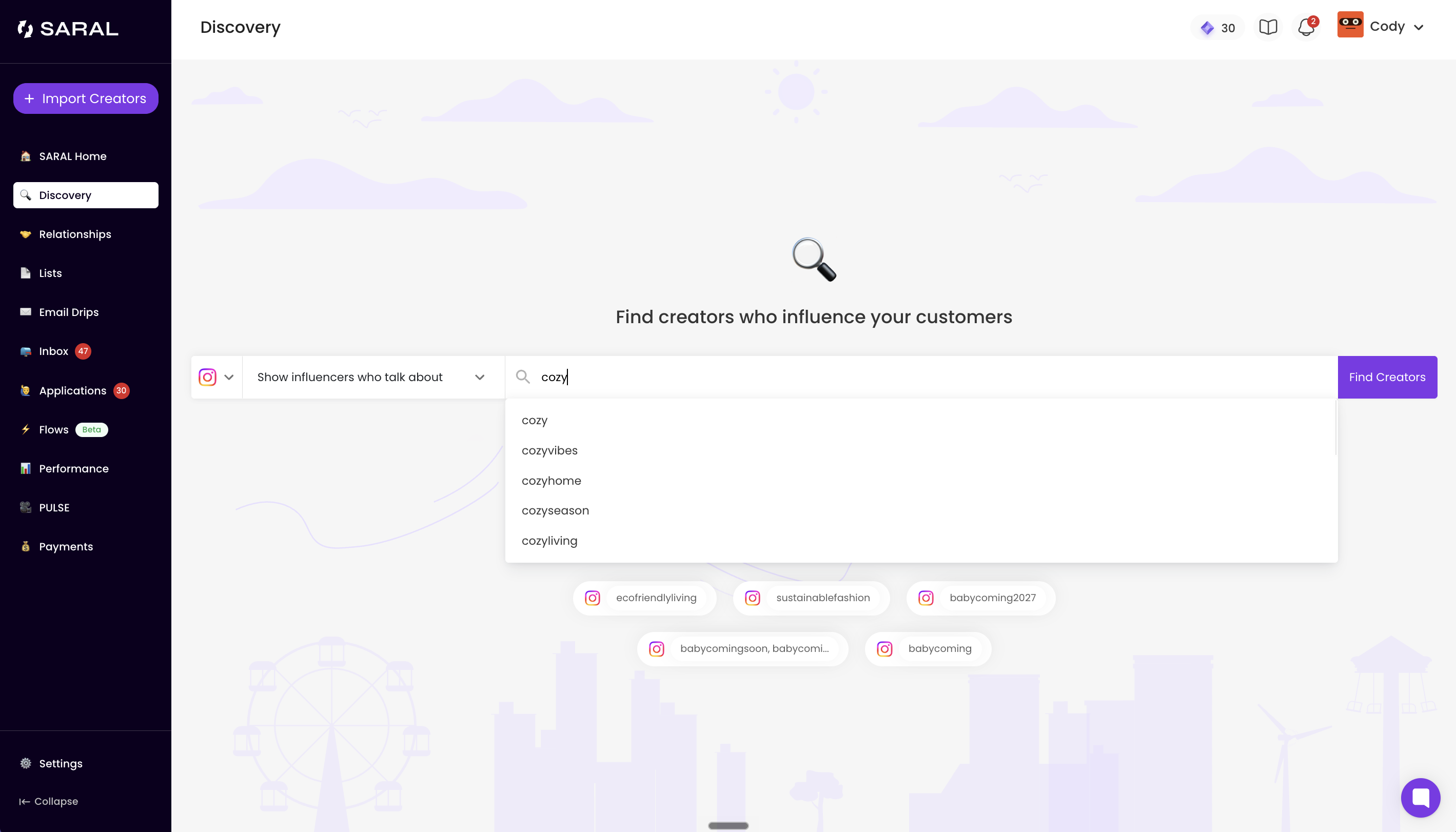
Found a creator who looks interesting? Don't add them to your list just yet. Watch a few of their recent videos.
Here's what to look for:
Don't make follower count your primary selection criterion. A creator with a smaller audience who knows how to demonstrate a product can be a great source of ad creative.
Open their profiles in Discovery, review their content, and save relevant creators into separate lists.
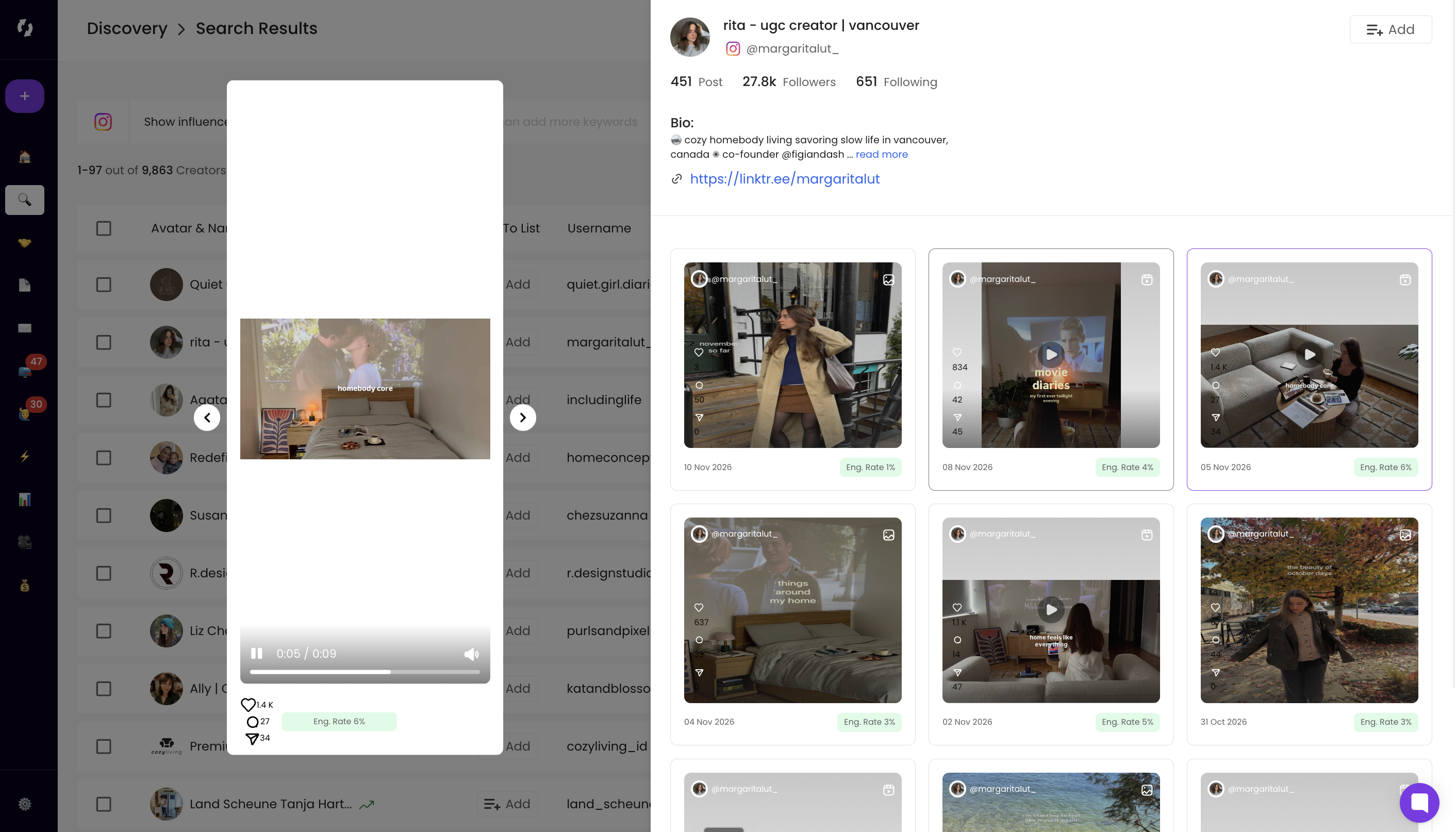
Organize creators by content angle so you can personalize outreach later.

For example, you could have one list for cozy lifestyle creators and another for product-finds creators.
This gives you a more targeted starting point for outreach and makes it easier to compare which content angles work better once you start running ads.
Once you've built your list, it's time to reach out.
A good UGC outreach email should explain why you're contacting the creator, what your brand does, what kind of content you're looking for, and what's in it for them.
Instead of a long introduction, send a message that makes the creator interested enough to reply.
Here's an example of the outreach email used by the apparel brand.
Subject: Cozy UGC collab with [Brand]?
Hey {{first_name}},
Love your cozy lifestyle content! Think you'd be a great fit for [Brand].
We make super comfy, cozy apparel and are looking for creators to shoot authentic, cozy-at-home videos for our ads.
We spend over $100K/month on ads and pay creators 10% of the ad spend behind their videos. One of our creators is already making over $6,000/month through this!
So instead of getting paid once, you can keep earning as we scale your content in our ads.
We'd love to send you some products to try! What's the best shipping address for you?
Notice what this email does:
The compensation proposition is particularly interesting. Instead of offering only a one-time payment, the brand introduces an opportunity for creators to earn as their content receives advertising spend.
This is the brand's own ad-spend-based compensation arrangement, separate from SARAL's AdShare model, which we'll cover later.
Not everyone will respond to your first email. That's why it's worth setting up a short follow-up sequence rather than manually remembering whom to contact.
Here are two simple follow-ups:
Hey {{first_name}},
Circling back on the [Brand] collab. Happy to send over a product if you're interested!
Last check from me. Would cozy-at-home content with [Brand] be a fit for you?
When you're contacting dozens or hundreds of creators, sending these emails individually becomes repetitive.
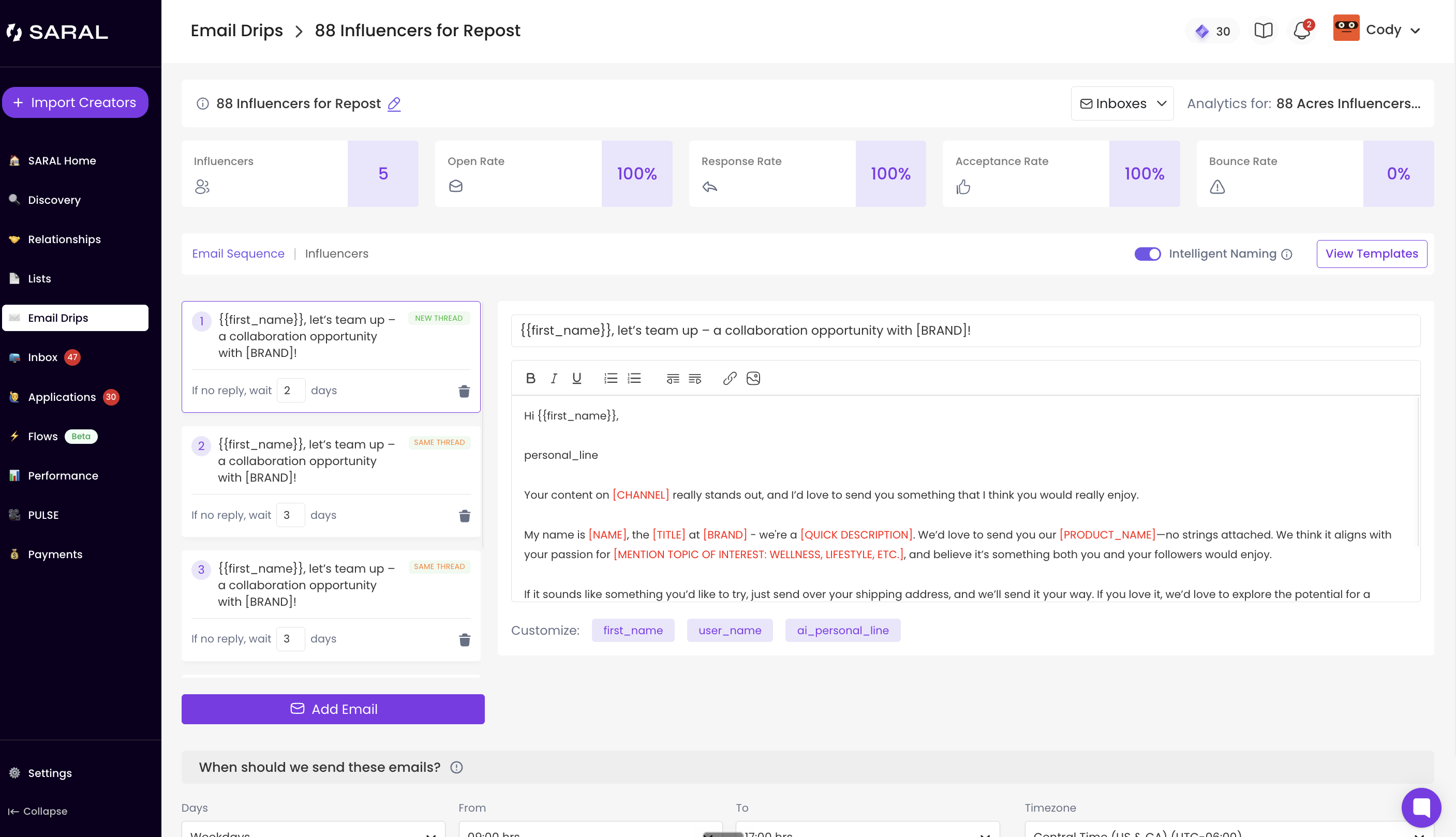
In SARAL Email Drips, select the creator list you've built in Discovery, add your opening email, and schedule your follow-ups. Personalize each message using creator details, connect your sending inboxes, review the sending settings, and launch your campaign.
Once replies start coming in, manage the conversations directly in SARAL Inbox.

This is especially useful when different creators are negotiating different collaboration terms. You can keep track of who accepted gifting, who asked for an upfront fee, who needs more information, and who is ready to receive a product.
You can also use SIA to help personalize outreach and draft responses based on the conversation context.
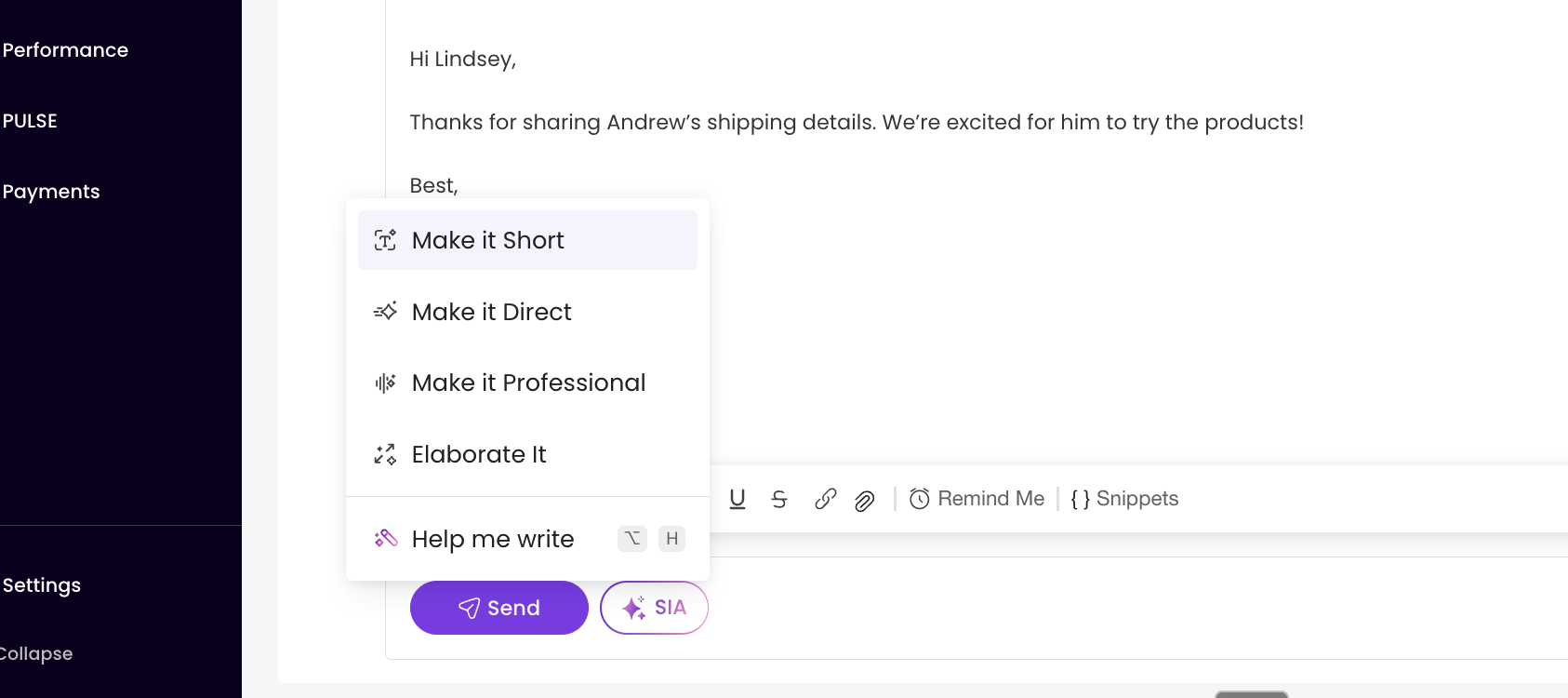
The goal is to spend less time on repetitive email work so you have more time to build relationships with your creator partners.
Not every creator will accept product gifting, and that's completely fine. Creating content takes time, effort, and skill.
But that doesn't mean you have to agree to every upfront fee either.
The right approach depends on the creator, your budget, and what you're expecting to receive.
If you're genuinely offering a no-obligation gift, make that clear.
You can reply:
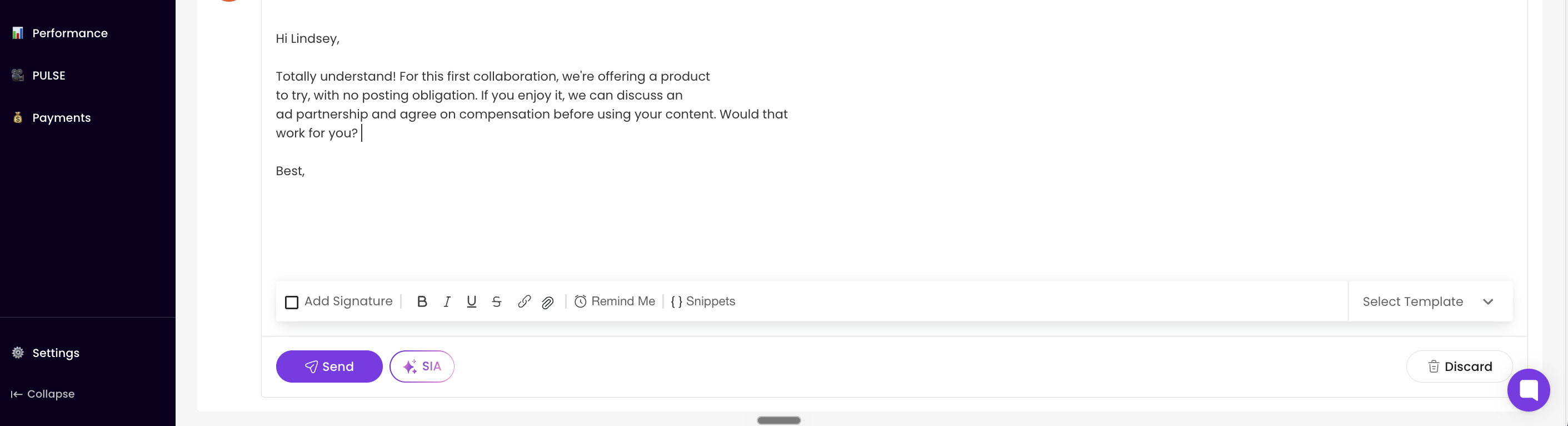
"Totally understand! For this first collaboration, we're offering a product to try, with no posting obligation. If you enjoy it, we can discuss an ad partnership and agree on compensation before using your content. Would that work for you?"
This lets the creator experience the product before either side commits to a larger collaboration.
Just remember: if you want a specific video in return, agree on that deliverable and its compensation upfront. Don't present a mandatory content request as an unconditional gift.
If the creator is a particularly good fit, ask for their rates and clarify what those rates include.
You can reply:

"Thanks for sharing! Could you send two relevant examples and confirm what your rate includes? We'd like to start with one vertical video and [duration] of paid usage. Would [budget] work for that scope?"
Before agreeing, clarify:
You can also negotiate a hybrid arrangement: product gifting plus a smaller production fee and separately agreed advertising rights.
Sometimes the economics just don't make sense.
You can reply:

You don't have to force a deal that doesn't fit your budget.
Thanks for clarifying. We can't meet that rate for this test, but I'd love to keep you in mind for a paid brief later.
If the fee is too high, reduce the scope or pass. The important thing is to be respectful and transparent about what you're offering.
As these conversations happen, keep the agreed collaboration terms and creator details organized in SARAL Inbox.
Once a creator accepts, confirm their product preferences, size, shipping address and agreed deliverables directly in the conversation. This gives your team a clear record of what was promised before anything is shipped.
Before sending anything out, make sure you have the basics covered:
For gifted collaborations without a posting obligation, don't assume that shipping a product guarantees content.
For paid or commissioned content, make sure the deliverables and terms are agreed before shipping.
Once the collaboration details are confirmed, arrange fulfillment and keep the shipment status connected to the creator record so you know which products have gone out and which creators are ready for the next step.
Now it's time to make sure the creators know what kind of content you're looking for.
A good UGC creative brief gives creators enough direction to communicate your product's value without making every video look scripted.
You want consistency in the message, and definitely NOT identical videos.
For the apparel brand, the creative direction was simple: create authentic, cozy-at-home content featuring its products.
Your brief should cover:
Here's a suggested brief based on the apparel brand's campaign.
Campaign: Cozy-at-home UGC
"We'd love to see [Brand] in your usual at-home content.
Pick the angle that feels most natural:
• Your morning or night routine.
• A cozy work-from-home moment.
• An unboxing.
• A winter product find.
For the agreed video, film vertically in good light. Show yourself using or wearing the product and include close-up shots of its key features.
Start with the moment or problem that makes you reach for it, then share your honest experience in your own words.
Please use accurate product details and the agreed gifting or paid-partnership disclosure. If we're using the video in ads, avoid music or other material we don't have permission to use.
Deliverable: [Format and length]
Due date: [Date]
Revisions: [Agreed scope]
Tag: [Brand handle]
Send the post link when it's live and [file link, if a clean video file is part of the agreement]."
A few things should be clearly defined before filming:
But don't over-script the video.
Creators know their audience and their content style. Give them the product information and the outcome you want, then let them decide how to tell the story.
If you're gifting a product with no posting obligation, present these as optional content ideas. If you're commissioning a specific video, agree on the deliverables and payment first.
Once the creator starts filming, collect their submissions through the creator dashboard in SARAL rather than relying on scattered email attachments and DMs.
Creators can upload their content directly, and your team can review the submissions, approve them, or request changes.
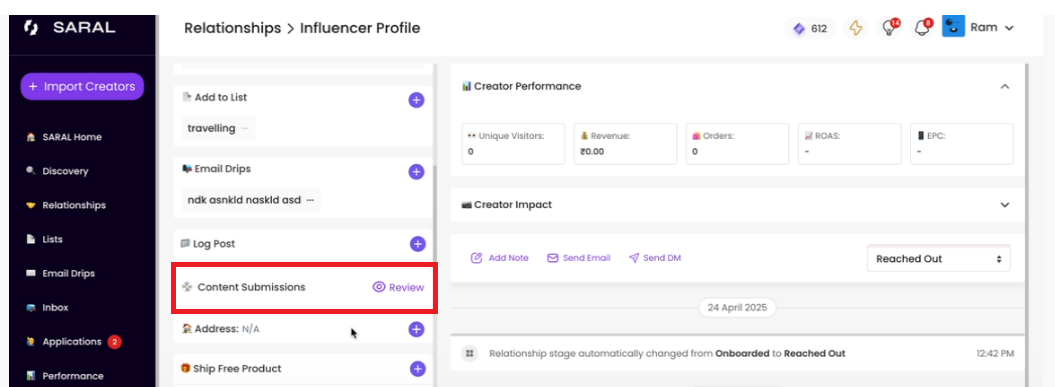
This is particularly useful when you're working with creators who are producing UGC for your brand without necessarily publishing it on their own social profiles.

Now that content is coming in, you need a way to identify which videos are worth using.
Getting creators to post is only half the battle.
The next challenge is figuring out what they've published, which videos are worth using, and which creators are actually delivering.
If you're working with 30 or 50 creators, manually checking every social profile isn't a sustainable way to manage your campaign.
When a creator publishes a video, don't immediately assume it's worth turning into an ad.
Review it for:
Views and engagement can help you shortlist content, but they don't prove that a video will generate sales.
Open PULSE in SARAL and review tracked brand mentions and creator content.
Use the content feed to identify posts, review the actual videos, and shortlist content that might be worth testing.
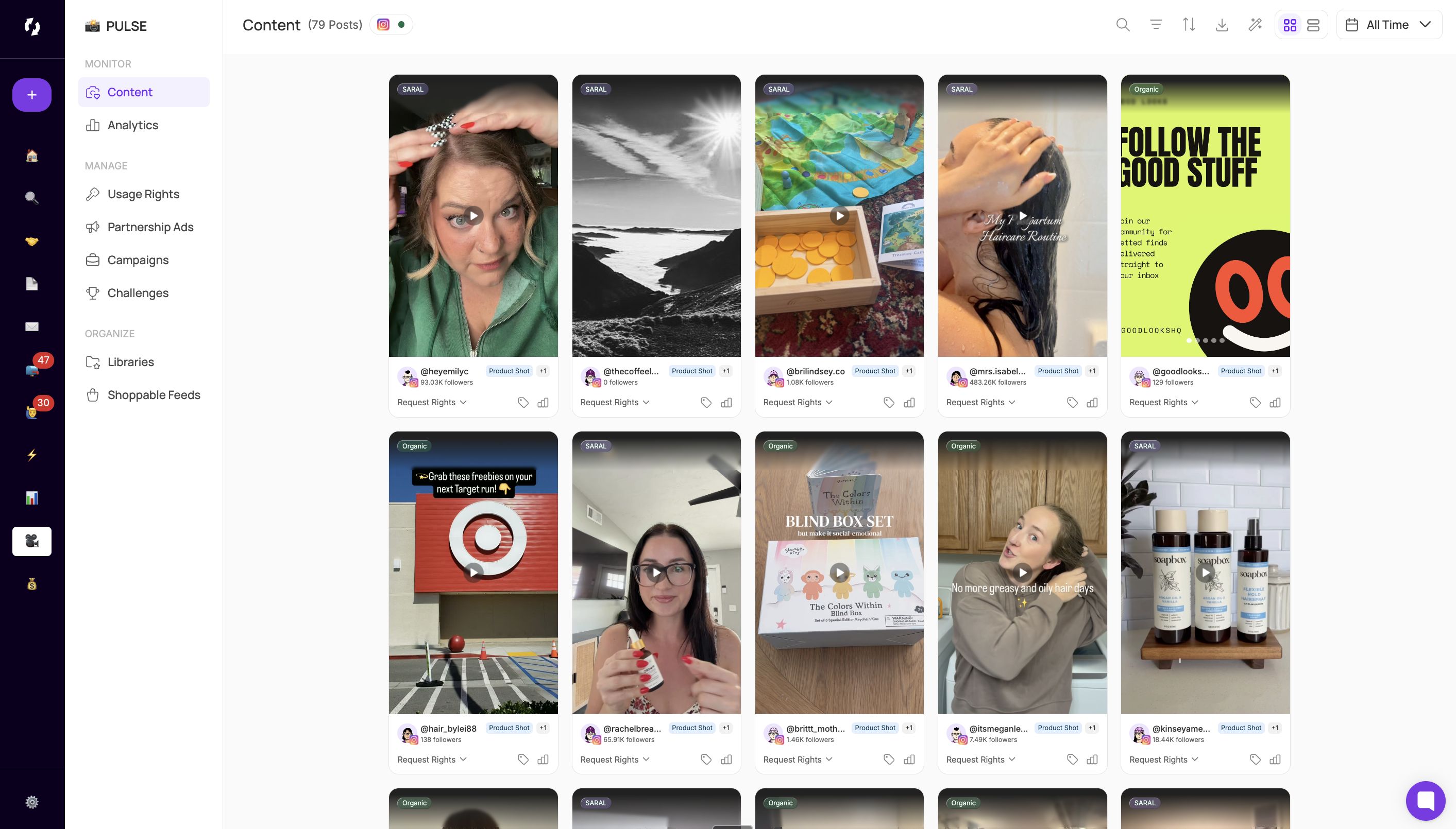
Open promising posts to review the video, comments and available performance signals.
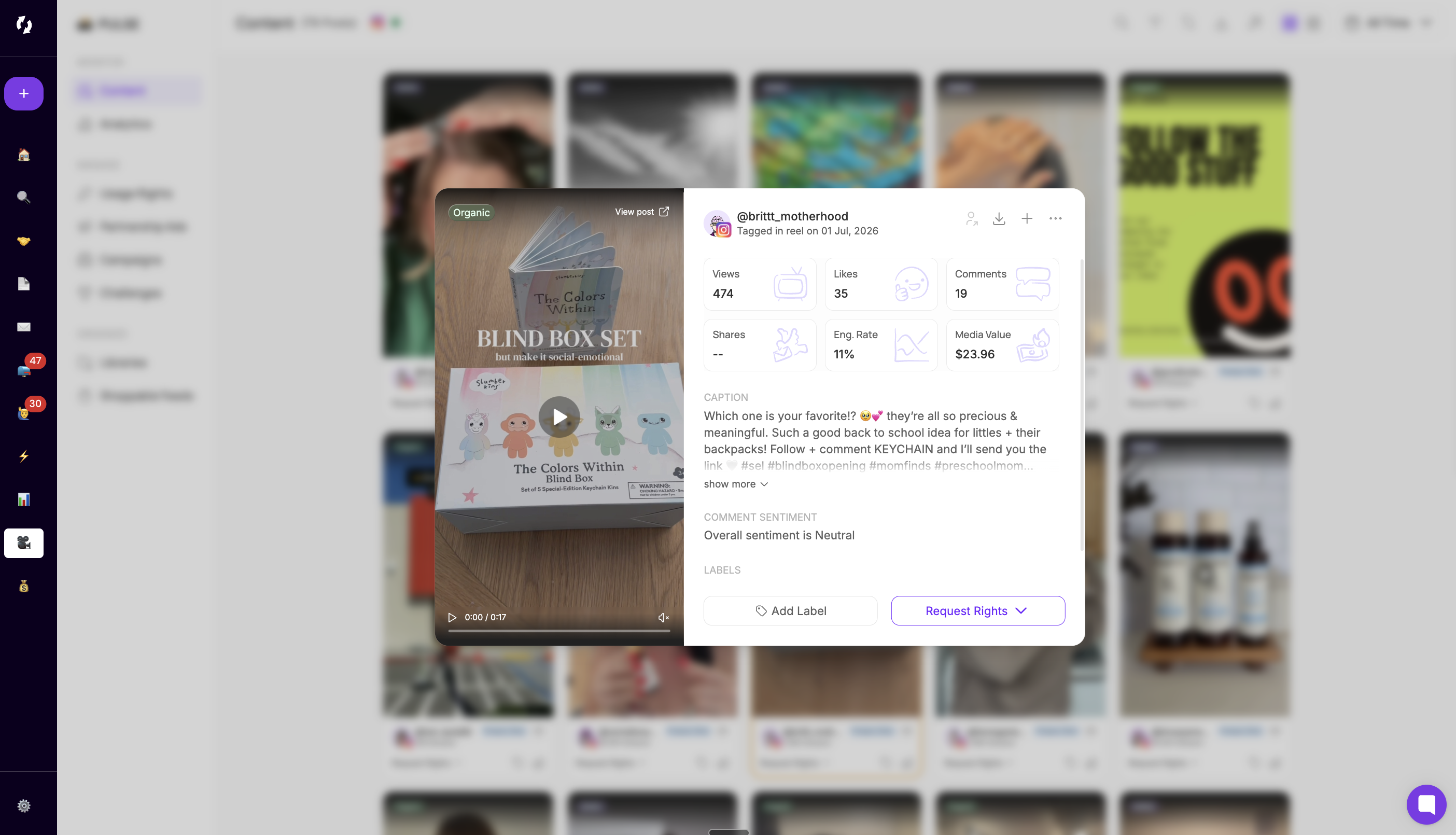
And if the creator was commissioned to produce an unpublished video, collect the file directly instead of waiting for a social media post.
The important thing is to have a clear view of the content your creators are producing, regardless of whether it's published on their own profiles or submitted directly to your brand.
Once you've found content worth using, there's one more thing to do before launching an ad: secure the necessary permissions.
A creator publishing a post doesn't automatically give your brand permission to use it in paid advertising.
You need to agree on how the content can be used and obtain the appropriate permissions before putting advertising spend behind it.
There are two different permissions to understand.
UGC usage rights: Permission to reuse creator content on agreed brand-owned channels and marketing placements.
Partnership ad authorization: Permission to advertise eligible creator content through the creator's social media identity.

Before you can run a creator's content as a partnership ad, you'll need their authorization. In SARAL PULSE, open the creator's post, click Request Rights → Partnership Ads, and send the request. The creator receives a notification and can approve it. Once approved, you're ready to move ahead with ad creation.
Once you've found good content and secured the required permissions, you can take it beyond the creator's organic audience.
Meta partnership ads let brands amplify eligible creator content through paid advertising while displaying the creator's identity.
This gives you another creative format to test alongside your usual brand-produced ads.
Think about the possibilities:
Open the Partnership Ads section in PULSE and find the creator whose content you've received permission to advertise.
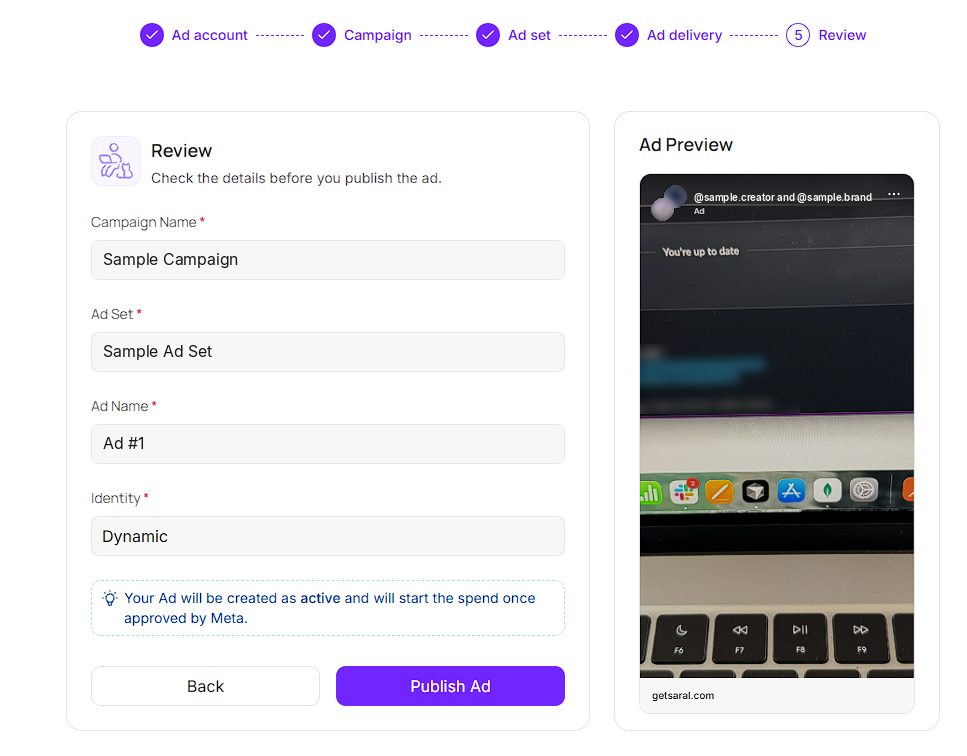
From there, you can work through the ad setup:
Before launching, double-check that the creator has completed the required Meta authorization and that the post is eligible for partnership advertising.
Meta's account, content and advertising policies still apply.
Now you have creator content running as paid advertising.
But there's another question worth considering: how do you compensate creators when their content generates sales?
One way to structure creator compensation is to give creators a share of the sales generated by their advertising content, subject to an agreed payout cap.
This gives creators an opportunity to participate in the upside when their content drives sales.
With SARAL's AdShare and AdCap workflow, you can configure the agreed creator revenue share and payout cap for eligible partnership ads.
AdShare lets brands set a percentage of eligible sales generated by an ad as creator compensation.
For example, imagine you've agreed on a 10% revenue share and a $200 creator payout cap.
Here's how the calculation works:
Once the payout reaches the agreed cap, the creator's compensation is limited to that amount under the agreed terms.
AdCap is the payout cap used to limit creator compensation under the agreed arrangement.
The important distinction: the creator compensation cap is separate from your Meta media budget.
Your advertising spend needs to be managed independently. Don't assume that reaching the creator payout cap automatically pauses your Meta campaign.
Set the agreed percentage and payout cap in the AdShare and AdCap controls when configuring your partnership ad.
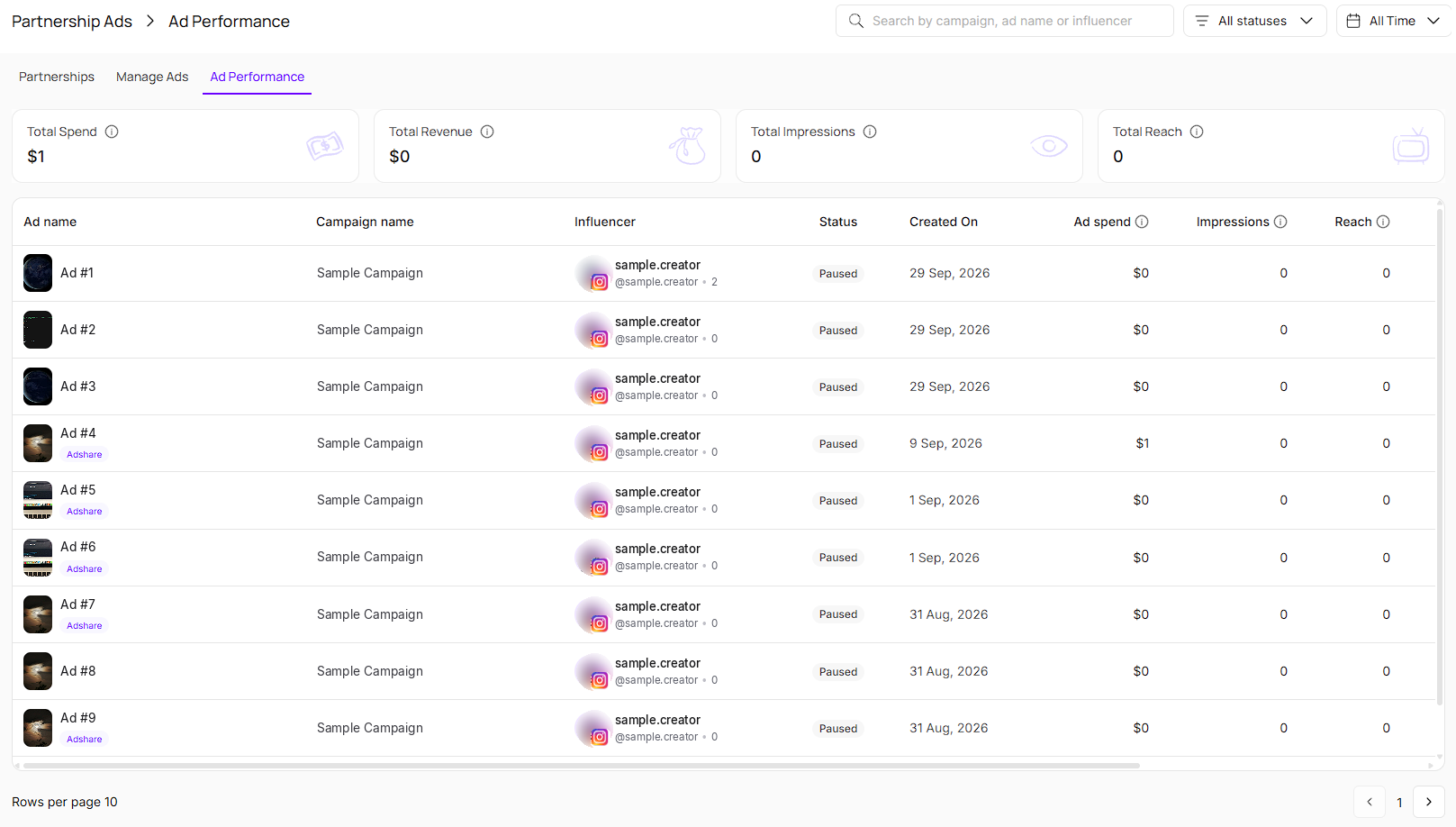
Once your partnership ads are live, don't stop at views and engagement.
You need to understand whether the content is actually contributing to your acquisition goals.
Start by monitoring:
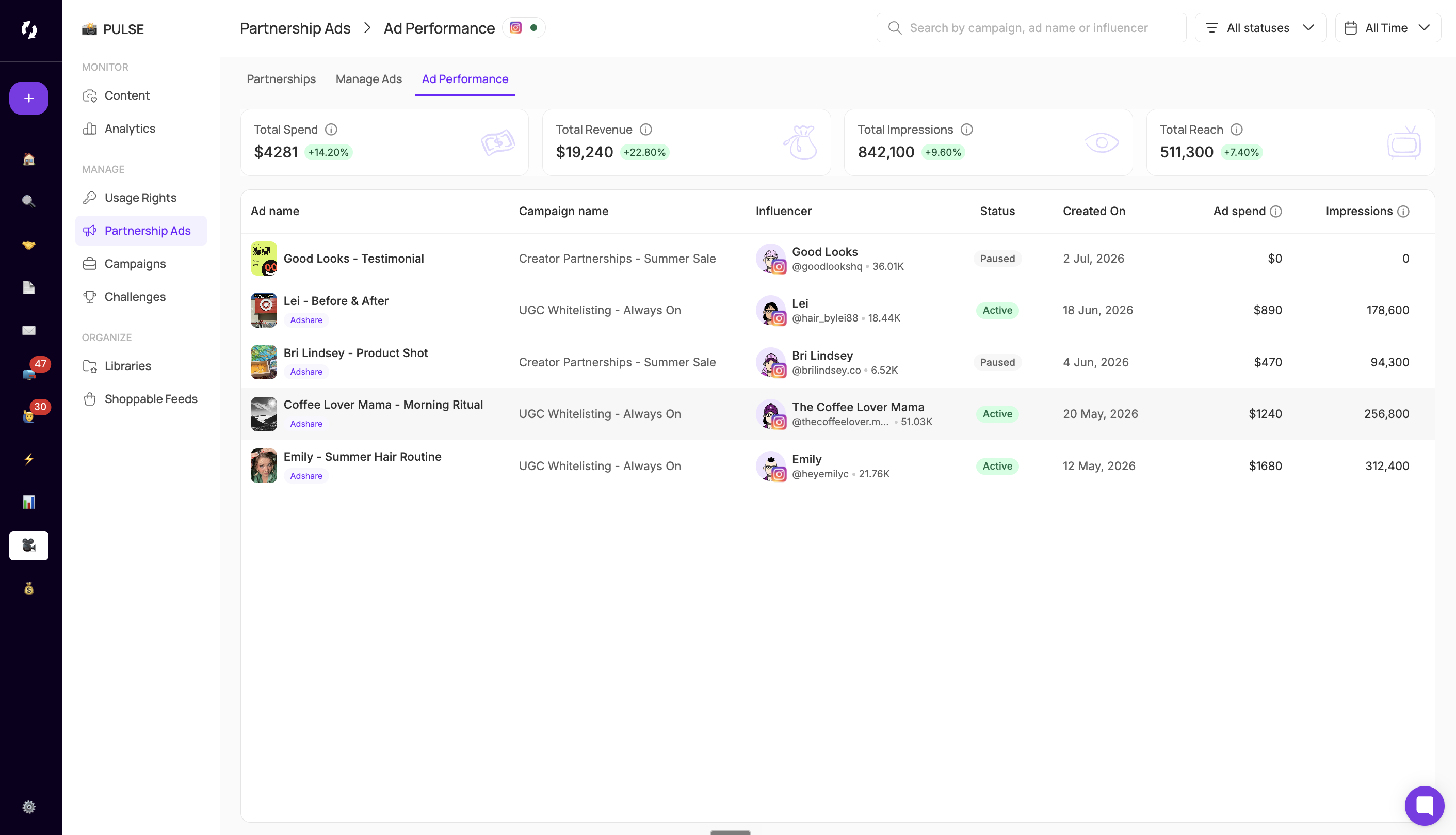
Compare creator content against your existing ads.
Which videos are getting people to click? Which ones are driving purchases? Which creators are consistently producing strong content?
Continue the tests that meet your acquisition economics, pause the ones that don't, and ask promising creators to explore new angles.
Remember to include product costs, shipping, creator compensation and other relevant expenses when evaluating the overall economics of a collaboration.
Keep one simple tally for every creator batch:
Creators contacted → Positive replies → Products shipped → Content received → Rights approved → Ads launched.

This helps you identify where the process needs improvement.
For example, if plenty of creators reply but very few publish, you might need to revisit your collaboration terms or follow-up process.
If creators are publishing but very few posts get approved for advertising, you might need to improve your creative brief.
And if your ads are getting clicks but not purchases, the problem might be the offer, landing page or audience rather than the creator.
The point is to improve the entire process, not just keep finding more creators.
You've now got a process for finding UGC creators, getting content made, tracking posts, securing rights and turning that content into Meta partnership ads.
Found a creator whose content consistently performs? Don't start looking for someone new every time you need fresh UGC. Build a longer-term partnership with the creators who've already proven themselves.
Here's how:
Create a Long-Term Partners list in SARAL and add creators whose content quality, reliability and ad performance make them worth investing in.
Instead of negotiating every video individually, agree on a recurring monthly payment in exchange for a consistent volume of content. You can automate recurring creator payments through SARAL.
Depending on the creator, agree on 5-25 videos per month, with clear briefs, delivery schedules, revision terms and usage rights.
Your monthly retainer covers content production, but you can also offer creators a percentage of eligible sales generated by their ads. With AdShare, you can structure this performance-based compensation and remove AdCap where appropriate, giving creators the opportunity to earn more as their content drives more sales.
So, instead of constantly sourcing new creators, you have a reliable network of partners who understand your brand, produce content consistently and have an incentive to help your ads perform.
Finding creators is just one part of the process.
The opportunity is building a repeatable system that takes you from discovering creators to generating content, testing it in paid ads, and developing your best relationships into long-term revenue partnerships.
Book a demo of SARAL and see how to build a creator program that does more than generate content.
Sign up for a 7-day email course on the unique "Predictable Influence" strategy used by top brands like Grüns, Obvi, Tabs Chocolate.

Many eCommerce brands make the mistake of hiring UGC actors from marketplaces but don't realise how bad 'fake UGC' can be. Learn how to avoid this and get real, authentic content from influencers that actually converts.

If ditching the randomness of influencer campaigns and building a predictable, ROI-first influencer program sounds like a plan. Consider talking to our team!
