





Ready to drive incremental growth with influencers?
If ditching the randomness of influencer campaigns and building a predictable, ROI-first influencer program sounds like a plan. Consider talking to our team!


Influencer Marketing
See how creator commissions and platform fees can turn a 15% reduction in Meta CPA into an 8% increase in total acquisition costs, and what to do instead.

Contents
Trybe pitches performance-based UGC, where creators make videos for your brand and get paid when those videos drive sales. Since there are no flat fees upfront, it feels like a low-risk way to get content and test it on Meta. But those payments get added to the cost of every customer you acquire, on top of the Meta spend it takes to find the winners, and your time it takes to coach them.
And somewhere in that cycle, brands miss a much bigger opportunity: building relationships with creators who can generate organic sales and give them a better idea of which content is worth putting money behind.
The real question is whether Trybe’s performance-based model is reducing your customer acquisition cost or moving it somewhere less visible.
Let's look at the economics behind that promise and what happens when you build your creator program around organic content that can later become profitable ads.
Because Trybe’s model is performance-based, these creator and platform costs apply to every customer the content brings in, so they grow as your ad spend grows.
Suppose your brand has:
Now you start running partnership ads and your Meta CAC improves by 15%.
That's a reasonable illustrative assumption. Meta has reported that partnership ads produced an average 19% lower cost per acquisition than regular campaigns in its own testing.
Your advertising cost drops from $40 to $34 per acquired customer.
But here's what happens when you add creator compensation.
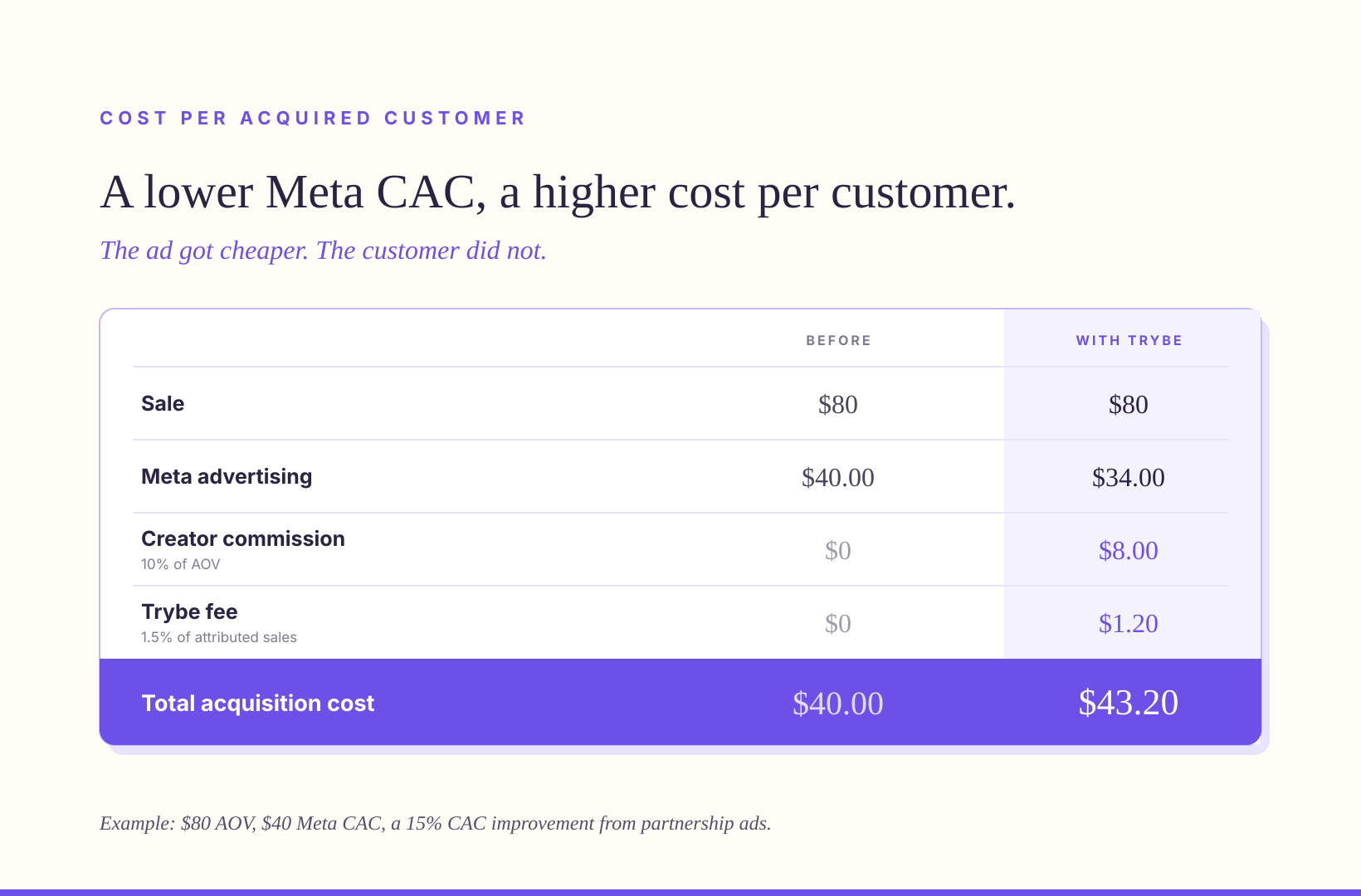
Your Meta CAC went down 15%. Your acquisition cost, including creator and platform fees, went up 8%.
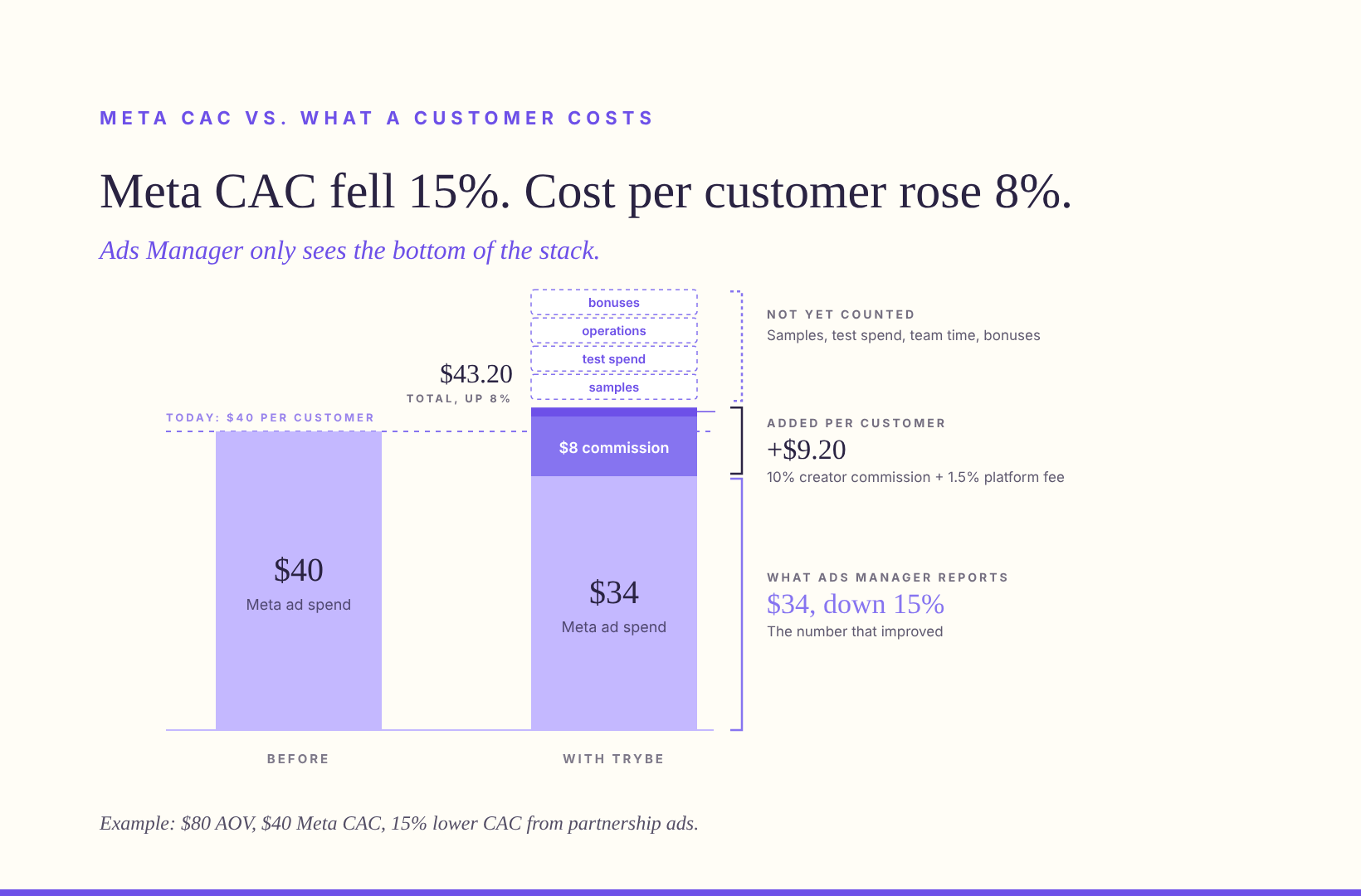
And we still haven't accounted for other program expenses:
The numbers show why the answer can't come from Meta CAC alone.
In this example, the brand would need at least a 23% reduction in Meta CAC just to cover the creator's 10% commission and Trybe's 1.5% fee. Any additional program costs raise that threshold.
The larger lesson is that a lower advertising CAC doesn't tell you whether your acquisition strategy has become more profitable.
Performance-based pricing protects you from paying creators for videos that flop. It does nothing about the Meta budget you spend discovering which videos flop.
Getting 50 creator videos for free sounds good. But the business benefit depends on how many become profitable ads and how much ad spend it takes to identify them.
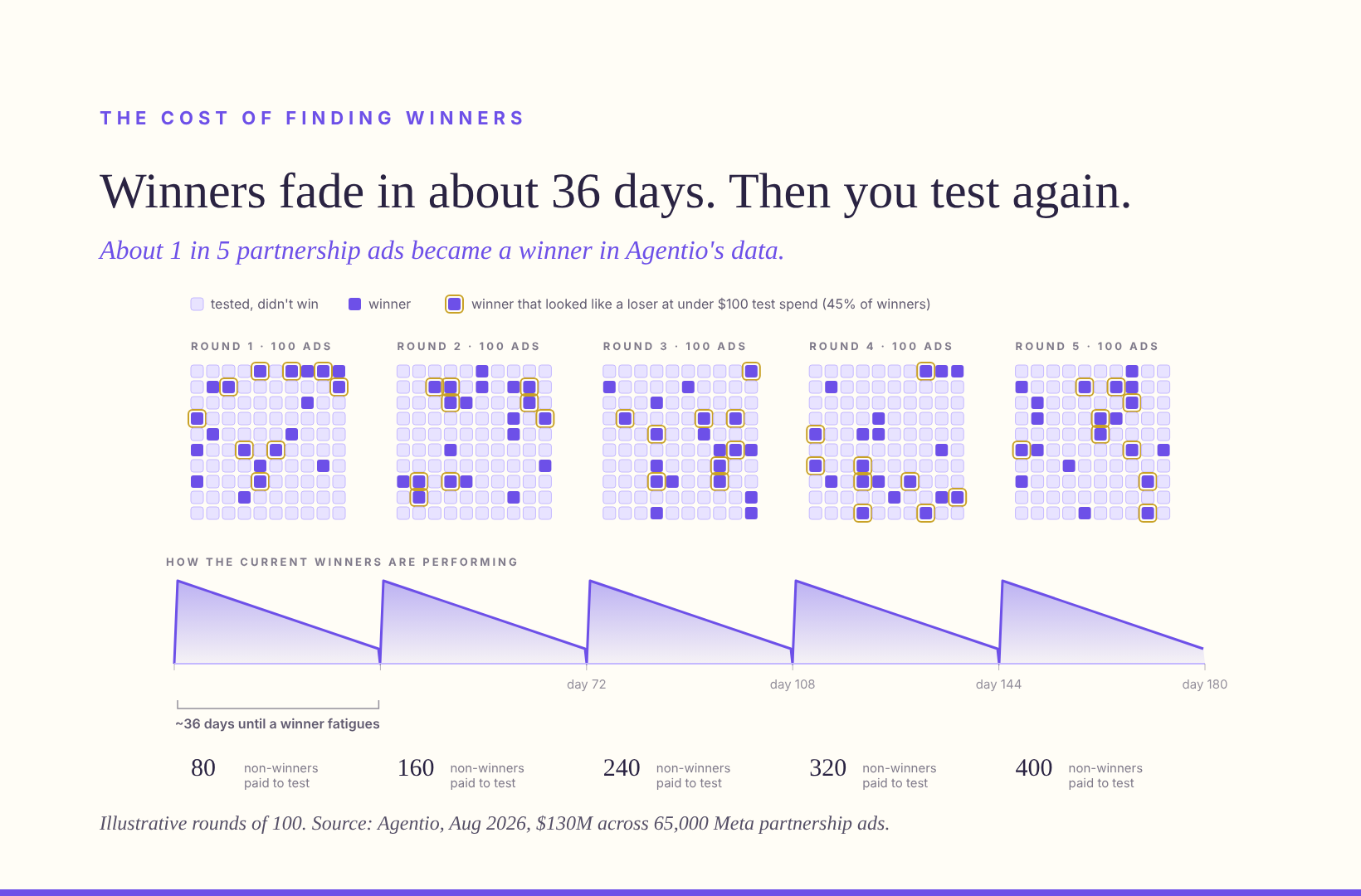
If you produce 100 ads and only 20 become winners, you still have to account for the spending associated with the other 80. And those 20 winners don't necessarily last more than 3-4 weeks.
Within weeks, you may need another round of content to maintain performance.
Trybe makes it easier to keep feeding this process with new submissions. But reducing the cost of producing creative doesn't eliminate the media budget needed to test it and the incremental ROAS math doesn’t seem to work given our analysis above.
This creates a behavioral problem.
When creative becomes easier to acquire, marketers have less reason to question whether they need another batch of ads. Producing more content becomes the default response to declining performance.
The brand can get very good at generating UGC volume while making little progress toward reducing its total cost of customer acquisition.
The problem with producing UGC specifically for advertising is that you're often paying Meta to find out whether the content is any good. You recruit creators, send products, prepare briefs, and collect videos. Then you put money behind those videos to see which ones convert.
Some work. Many don't. And when your winning ads eventually fatigue, you're back to sourcing and testing more content.
Trybe makes parts of this process cheaper and easier. But it doesn't fundamentally change how you're discovering winning creative.
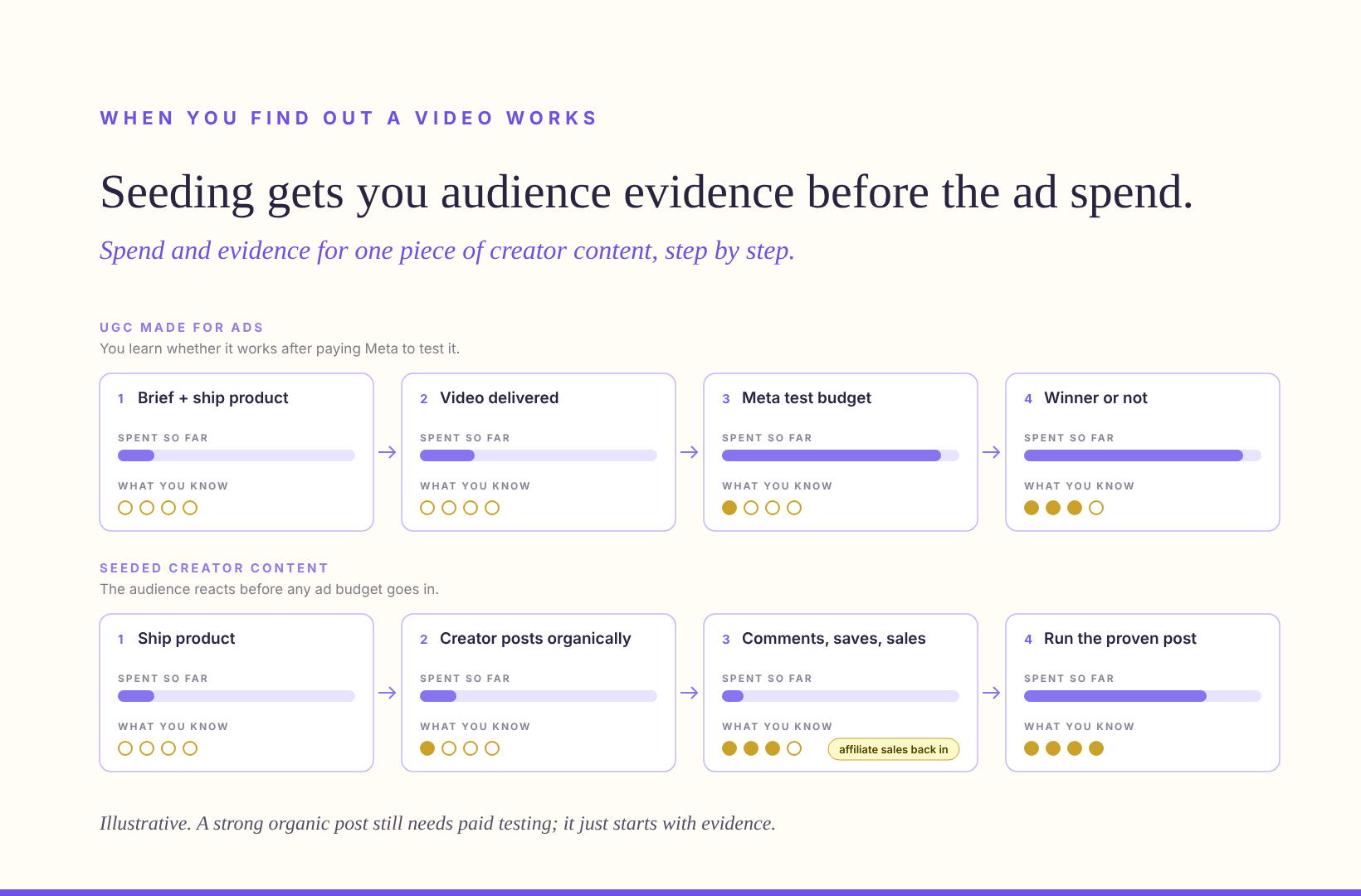
That's the advantage of building an organic influencer program. When you seed products to relevant creators, their posts generate real audience reactions before you spend on ads. You can see:
Organic performance doesn't guarantee paid performance. You'll still need to test the content as an ad, but you're starting with some evidence of audience interest.
And here's where the economics get interesting.
Suppose a creator makes a video that performs well organically. It generates affiliate sales. You then get permission to run it as a partnership ad, and it performs well there too.
Now you know something valuable about that creator. You can explore the messages that worked, and collaborate on more content based on what you've learned.
Each successful collaboration gives you more information to work with on the next one. And the organic sales can help cover the cost of running the creator program.
That's how the economics of creator marketing can improve over time. Your investment builds an ongoing source of content, customer relationships, and organic distribution that can make your paid advertising more effective.
The way to improve your acquisition economics is to get more value from every creator you work with, even before you spend money promoting their content.
Instead of recruiting creators primarily to produce ads, build an ongoing seeding and affiliate program. Let creators introduce your products to their audiences organically, see what content resonates, and then put advertising dollars behind the strongest posts.
Here's how that works:
With SARAL's Pulse, you can track creator posts, review performance, request usage rights, and launch Meta partnership ads.
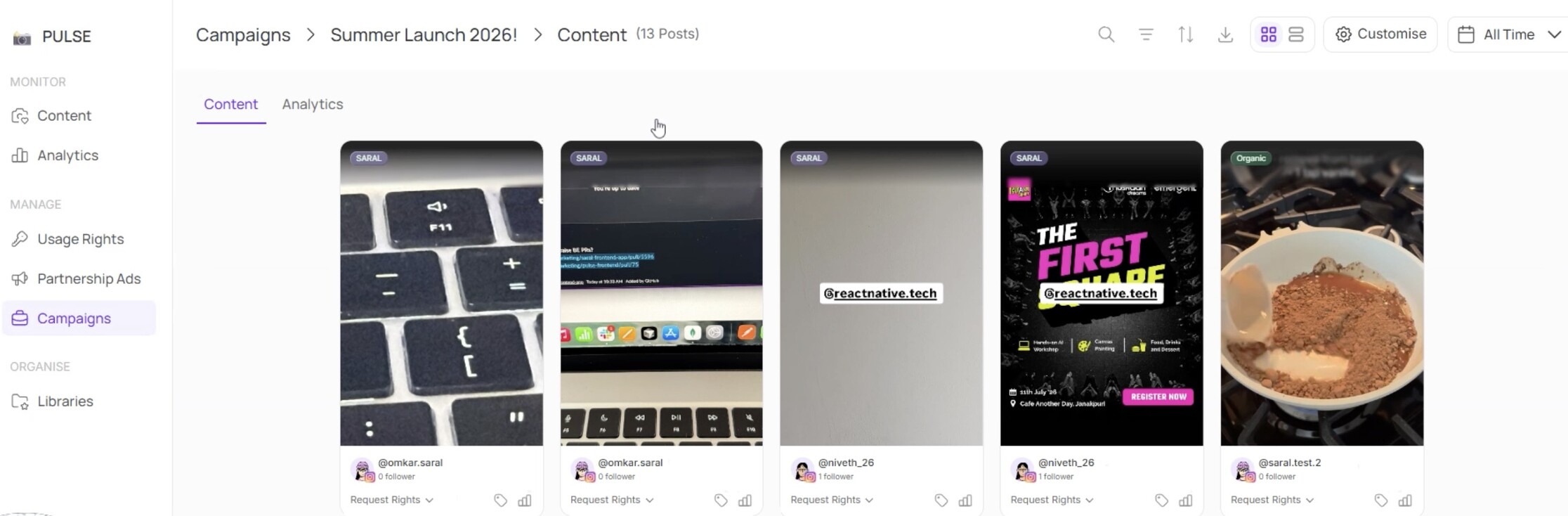
You can also structure Ad Share compensation with payout caps. Meanwhile, keep working with creators who perform well, so you're continually learning what content to produce next.

The economics become interesting once these activities start supporting one another.
Your organic affiliate sales can help fund the creator program. Your creators keep introducing your brand to their audiences. Their content gives you fresh creative ideas and evidence of what people respond to.
And when you invest in Meta ads, you're working with content that has proven to be effective.
Over time, you also build a network of creators who know your products, understand their audiences, and can keep producing content without starting every collaboration from scratch.
Spacegoods, a UK wellness brand, used to send 200–300 products to influencers every month. They got some posts and awareness, but the relationships rarely developed into anything long-term.
So they changed their approach. Using SARAL, Spacegoods built an affiliate community where creators could earn from organic sales and continue posting about the brand. That content also became a source of creative for their Meta ads.
"The idea of the affiliates is to try to de-risk the paid spend." — Dan Stevenson, Influencer Marketing Lead, Spacegoods
Within nine months, the brand had:
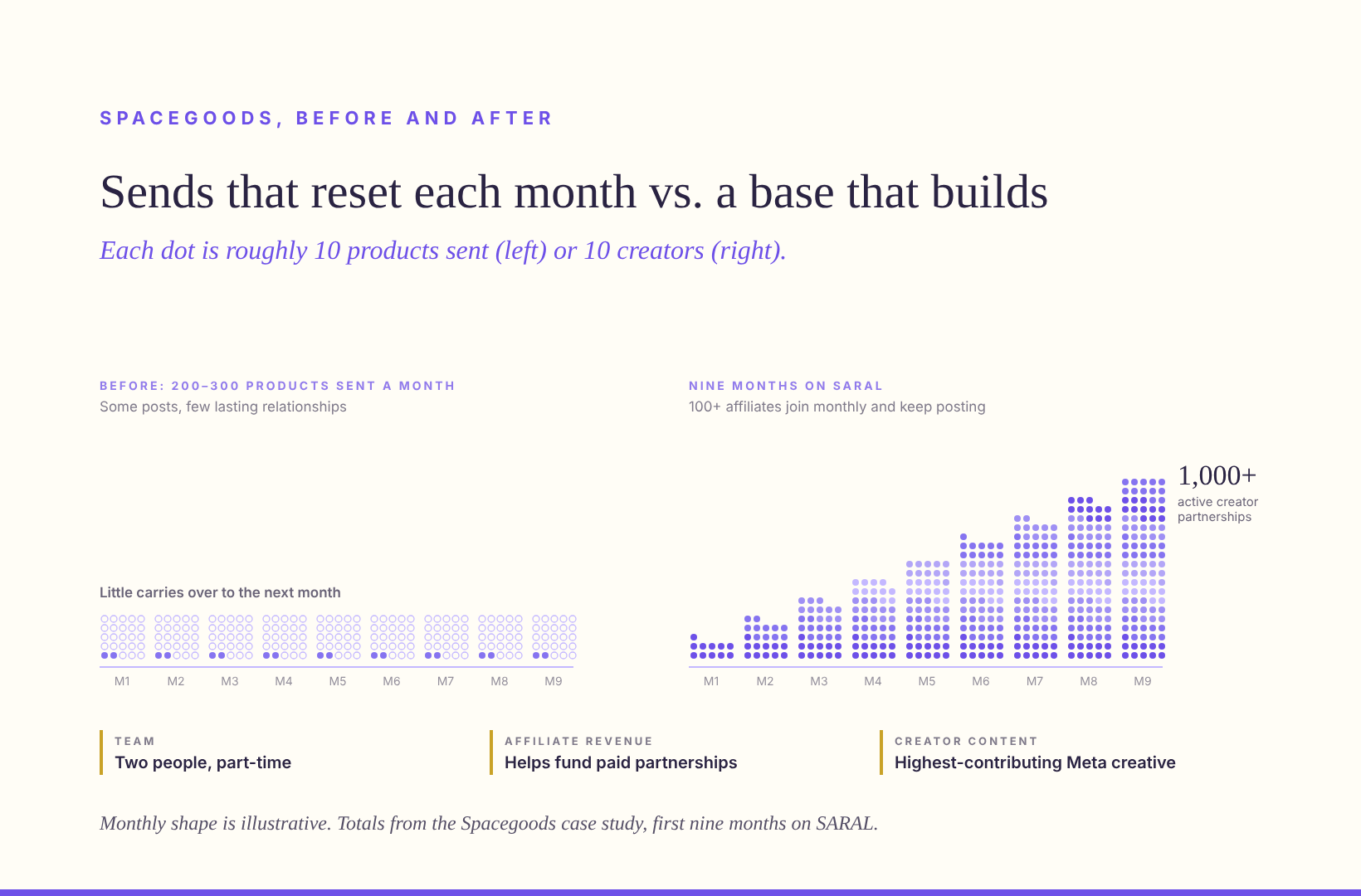
Spacegoods has built a system where its creator investments can produce returns beyond an individual ad campaign.
Trybe’s value proposition emphasizes performance-based compensation, no upfront creator fees, and easier production. Those features can make an advertising workflow look efficient.
But an advertising workflow is only one part of customer acquisition.
The more useful financial question is whether the money invested in creator marketing improves the brand's overall contribution profit. That requires looking at the program as a whole:
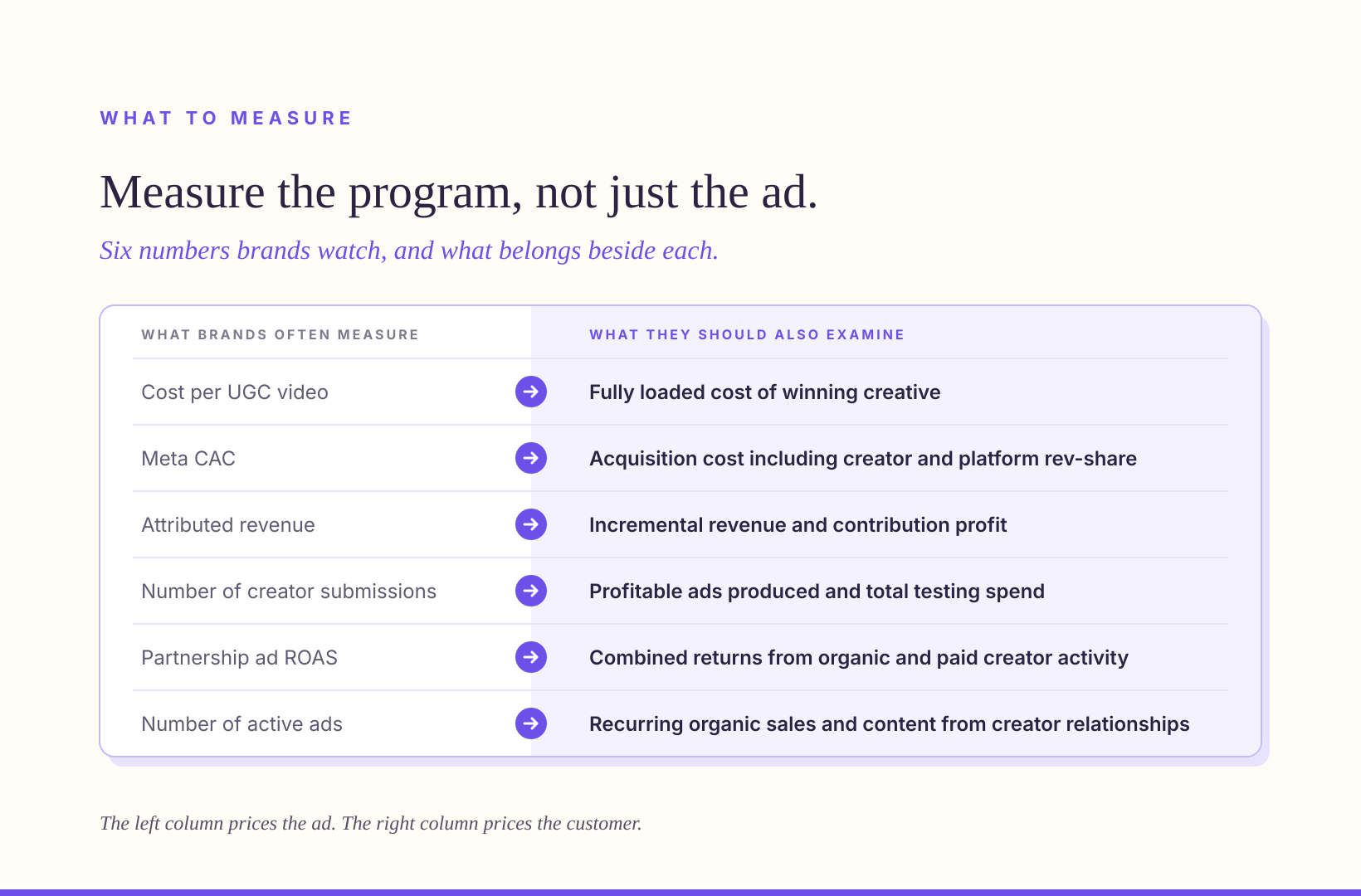
Testing more creative makes sense. But there's a difference between running more experiments and learning enough from each one to make the next experiment smarter.
Before investing in your next batch of UGC, ask yourself: Are we building a system that gets better at acquiring customers, or are we simply getting better at producing ads?
At SARAL, we help brands build creator programs that generate organic sales, reveal promising creative, and feed better-informed experiments into Meta. If you're already spending on UGC and Meta ads, talk to us.
Sign up for a 7-day email course on the unique "Predictable Influence" strategy used by top brands like Grüns, Obvi, Tabs Chocolate.

If ditching the randomness of influencer campaigns and building a predictable, ROI-first influencer program sounds like a plan. Consider talking to our team!
